
The Twenty-fifth Sedra
4-10, 15-22 Nisan 5786
[Please scroll down for Pesach]
FROM THE TORAH
Leviticus 6:1-8:36
Although the offerings have been classified and described in preceding sedras, Sedra Tsav provides a climax in appreciating the service that will be provided through Aaron and his sons. It includes a detailed description of their ordination by Moses during the seven days of their consecration.
Instruction of the Kohanim
PROVISION OF INSTRUCTION
6:1-2a
The Eternal tells Moses to charge (Tsav) Aaron and his sons with instruction regarding the placement and handling of offerings.
INSTRUCTION FOR BURNT OFFERING
6:2b-6
The Kohen shall burn wood upon the Altar every morning and arrange the burnt offering (olah) upon it. He shall turn the fats of the well-being offerings (shelamim) to smoke. The fire that is upon the Altar shall be maintained and not be allowed to go out.
The burnt offering shall remain at the place of its burning upon the Altar all night until morning, and the fire of the Altar shall remain burning upon it. The garment of the Kohen (Priest) shall be of linen, as shall be the breeches next to his body, and he shall take up the ashes of the burnt offering from the Altar and place them next to the Altar. Then he shall change his clothes and bring the ashes to a pure place outside of the camp.
INSTRUCTION FOR MEAL OFFERING
6:7-11
The sons of Aaron shall present the meal offering (mincha) before the Eternal in front of the Altar. A fistful of its fine flour and of its oil shall be taken from it, along with all of the frankincense which is upon the meal offering, and it shall be turned to smoke upon the Altar, a pleasant aroma, its token, for the Eternal. Aaron and his sons shall eat the remainder as unleavened cakes in a sacred place, in the Courtyard of the Tent of Meeting. It shall not be baked with leaven.
I have granted it as their portion from My fire offerings. It is most holy (kodesh kodashim), like the sin offering (chatat) or like the guilt offering (asham). Any male among the children of Aaron may eat it, an everlasting statute throughout your generations. Anything that touches it shall become holy.
INSTRUCTION FOR ANOINTMENT OFFERING
6:12-16
The Eternal instructs Moses on the offering of Aaron and his sons on the occasion of Aaron’s anointment. A tenth of an ephah of fine flour, a regular meal offering, half of it in the morning and half of it in the evening, shall be prepared on a griddle with oil, well mixed; bring it as a meal offering of pieces, with a pleasant aroma for the Eternal. It is a whole offering. Turn it entirely into smoke. It shall not be eaten. This practice shall be continued as an everlasting statute for all successors of the anointed Kohen.
INSTRUCTION FOR SIN OFFERING
6:17-23
The Eternal tells Moses to impart instruction to Aaron and his sons regarding the sin offering (chatat). It should be slaughtered in the place where the burnt offering is slaughtered before the Eternal. It is most holy. The Kohen who offers it shall eat it, within the Courtyard of the Tent of Meeting. Whatever touches its flesh shall become holy. Any part of a garment that receives its blood shall be washed in a sacred place. If the meat was boiled in an earthen vessel, the earthen vessel must be broken; if in a copper vessel, the vessel must be scoured and rinsed with water.
Any male among the Kohanim (Priests) is qualified to eat of a sin offering; it is most holy. If the blood of a sin offering is brought to the Tent of Meeting to seek atonement in the Sanctuary, the offering may not be eaten, rather it should be burned in fire.
INSTRUCTION FOR GUILT OFFERING
7:1-10
The guilt offering (asham) is most holy. It shall be slaughtered where the burnt offering is slaughtered, and its blood shall be dashed around the Altar. All of its fat shall be offered: the tail and the fat that covers the entrails, the fat covering and surrounding the entrails, the two kidneys and the fat upon them at the loins, the appendage on the liver which shall be removed with the kidneys. The Kohen shall make them smoke on the Altar, an offering of fire to the Eternal, a guilt offering. Any male among the Kohanim may eat it in a sacred place; it is most holy.
As with the sin offering, the guilt offering shall belong to the Kohen who seeks atonement through it. Similarly, to the Kohen who offers a man’s burnt offering goes its skin. Further, the meal offering goes to the Kohen, whether baked in the oven or prepared in a pan or on the griddle. But any other meal offering, whether mixed with oil or dry, belongs equally to all the sons of Aaron.
Offerings of the Children of Israel
INSTRUCTION FOR WELL-BEING OFFERING
7:11-36
If the well-being sacrifice (zevach shelamim) is being offered for thanksgiving (todah), then together with it shall be unleavened cakes mixed with oil, unleavened wafers spread with oil, and fine flour well mixed in cakes mixed with oil. His offering shall be made together with cakes of leavened bread. One of each offering shall be presented as a sacred gift to the Eternal, and it shall belong to the Kohen who dashes the blood of the well-being offering. The meat of the sacrifice of thanksgiving shall be eaten on the day of its offering and may not be left over until the morning.
If the sacrifice of his offering is the fulfillment of a vow (neder) or if it is voluntary (nedava), it shall be eaten on the day that it is offered, and that which may remain must be eaten on the morrow. If any still remains on the third day, it shall be burned with fire. If some of the meat of his well-being offering is eaten on the third day, the sacrifice is not accepted, it is an offense, and the one who eats of it shall be held guilty.
Only one who is ritually pure may eat of the meat of the sacrifice of well-being offerings, which are the Eternal’s. Disqualified is one in a state of impurity, one who touches anything impure, whether of man or of beast; if he does eat of the sacrificial meat, that person shall be cut off from his people. If the sacrificial meat should touch something impure, it may not be eaten but should be burned in fire.
The Eternal tells Moses to impart to the Children of Israel not to eat the fat of an ox or a sheep or a goat. While fat from an animal that dies or that is torn can be put to use, you may not eat it either. Anyone who eats the fat of an animal that could be made a fire offering to the Eternal shall be cut off from his people.
You shall not eat any blood in all of your settlements, either of bird or of beast. Anyone who violates this law shall be cut off from his people.
The Eternal directs Moses to instruct the Children of Israel that the one who offers his sacrifice of well-being offering to the Eternal must bring his offering himself. His own hands shall bring the fire offerings of the Eternal, presenting the fat with the breast, which is to be waved before the Eternal. The Kohen shall cause the fat to smoke upon the Altar, and the breast shall go to Aaron and his sons. You shall present the right thigh as a gift to the Kohen; the Kohen who offers the blood and the fat shall receive the right thigh as his portion. For I do take the breast of waving and the sacred gift of the thigh from the Children of Israel, from their well-being sacrifices, and I give them to Aaron the Kohen and to his sons, for an everlasting statute.
These accrue to Aaron and his sons upon their anointment to minister to the Eternal, as the Eternal requires of the Children of Israel, for an everlasting statute throughout their generations.
SUMMARY OF INSTRUCTION
7:37-38
Such is the instruction for the burnt offering, for the meal offering, for the sin offering, for the guilt offering, for the ordination (milluim), and for the sacrifice of the well-being offerings, which the Eternal commanded Moses on Mount Sinai on the day of His commanding the Children of Israel to bring their offerings to the Eternal, in the Wilderness of Sinai.
Ordination
INSTALLATION OF AARON AND HIS SONS
8:1-36
The Eternal tells Moses to bring Aaron and his sons, together with their vestments and the Anointing Oil (Shemen Mishcha), the bull of sin offering, the two rams, and the basket of unleavened bread, before the congregation gathered at the entrance of the Tent of Meeting. Moses declares to the congregation, “This is what the Eternal has commanded to be done” (Leviticus 8:5; cf. Exodus 29:1ff.)!
Moses brings near Aaron and his sons and washes them with water. He dresses Aaron with the Tunic (Kuttonet), the Sash (Avnet) and the Robe (Me’eel), and he puts the Ephod on him, girding him with its decorated band. He then puts the Breastplate (Choshen) on him and puts in it the Urim and Tummim. He places the Headdress (Mitznefet) upon his head and in front of the Headdress the Golden Plate (Tzeetz Zahav) for Sacred Consecration (Nezer Hakodesh) as the Eternal commanded him (cf. Exodus 28:1-43; 29:4-9a).
Moses takes the Anointing Oil to anoint the Tabernacle and its contents, thereby sanctifying them. He sprinkles some of it on the Altar seven times and anoints the Altar and all of its implements, the Laver (Kiyyur) and its base, to sanctify them. He pours some of it upon Aaron’s head to sanctify him. Then Moses brings near Aaron’s sons: he clothes them with Tunics, girds them with Sashes, and winds Turbans (Migba’ot) upon them, as the Eternal commanded him (cf. Exodus 30:17-33).
Then he brings forward the bull of sin offering, upon which Aaron and his sons place their hands. After it is slaughtered, Moses puts its blood around the four corners of the Altar with his finger, thereby purifying it from sin; and he pours the blood at the base of the Altar, thereby sanctifying it for seeking atonement upon it. He makes the Altar smoke with the fat covering the entrails, the lobe over the liver, the two kidneys, and the fat over them. He burns with fire the rest of the bull, its skin, its flesh and its fecal matter, outside of the camp, as the Eternal commanded him (cf. Exodus 29:10-14).
Then he brings forward the ram of burnt offering. Aaron and his sons place their hands upon its head. After it is slaughtered, Moses dashes the blood around the Altar. The ram is cut into pieces, and Moses makes the head, the pieces and the suet, smoke upon the Altar. The entrails and the legs are washed with water, and Moses makes all that remains of the ram smoke upon the Altar, a burnt offering, for a pleasant aroma, a fire offering to the Eternal, as the Eternal commanded him (cf. Exodus 29:15-18).
Then he brings forward the second ram, the ram of ordination, and Aaron and his sons place their hands upon its head. After it is slaughtered, Moses puts some of its blood upon the tip of the right ear of Aaron and upon his right thumb and upon the great toe of his right foot. Moses then brings forward Aaron’s sons and does the same for them, then dashes the blood around the Altar. He takes its fat, fat tail, the fat that covers its entrails, the lobe of its liver, its two kidneys and the fat which is upon them, and its right thigh; and from the basket of unleavened bread which is before the Eternal he takes a single loaf of bread, a single loaf of oiled bread, a single wafer, and puts them upon the fats and the right thigh; and all of them he sets upon the palms of Aaron and his sons, and he lifts them up as a wave offering before the Eternal. Moses then removes all from their palms and makes all of it smoke upon the Altar over the burnt offering. They constitute an ordination offering for a pleasant aroma, a fire offering to the Eternal. From the ram of ordination Moses takes the breast and raises it as a wave offering before the Eternal—it is Moses’s portion—as the Eternal commanded Moses (cf. Exodus 29:19-28).
Then Moses takes some of the Anointing Oil and some of the blood that is upon the Altar and sprinkles them upon Aaron and his vestments as well as upon his sons and his sons’ vestments and thereby sanctifies all of them.
Moses then instructs Aaron and his sons to boil the meat at the entrance of the Tent of Meeting and to eat it there together with the bread that is in the ordination basket, as Moses was commanded (cf. Exodus 29:31-32). Whatever remains of the meat and the bread shall be burned with fire (cf. Exodus 29:34). They shall remain at the entrance of the Tent of Meeting for seven days, day and night, the complete period of their ordination. During those days they shall repeat what was done on this, the first day, to seek atonement for themselves. “You shall keep the charge of the Eternal, that you not die, for thus was I commanded” (Leviticus 8:35; cf. Exodus 29:35), and so do Aaron and his sons.
WHERE I CAN FEEL YOUR PRESENCE
For the past six sedras we have followed the building and furnishing of the Mishkan (Tabernacle), the classification of sacrificial offerings to be dispatched from it, and the equipping of its Kohanim (Priests). From the beginning, in Sedra Terumah, its purpose was disclosed: “Let them make for Me a Sanctuary so that I may be present in their midst” (Exodus 25:8). The Mishkan of Moses would be the model of Solomon’s Temple, “that I will be present in the midst of the Children of Israel” (I Kings 6:13), the last words of the Haftarah of Sedra Terumah. While the physical Temple is both memory and aspiration in the prayers of Israel, its ruins affirm current divine Presence only in Rabbinic imagination.
Recently a friend of mine invited some of us to attend his private piano recital at home. Since I had rarely visited his family at home on a day that lacked the kedushah (holiness) of Shabbat or Yom Tov, I did not know whether or not I would need to wear a kippah, so I just kept one in my pocket. As it turned out, no one else was covered of his or her head. Here was a man who had once eschewed his child prodigy status for a different path, now retired and developing his enduring musical talent both for his own fulfillment and a modest artistic priesthood. Here was my friend at whose holy Shabbos or Yontev dining-room table and basement shul I and my family were blessed many times over the years duchening (dispensing) the prodigious beauty of Schumann, Mozart and Tchaikovsky, at the altar of his family’s piano, in the sanctuary of their living room.
It was a service that deserved removal of kippah from pocket to head, because it was kedushah. Even when I wander from confidence in God’s walking with me, as I feel He has for all of my life in its ups and downs, to the borders of an accidental universe, who can ignore the wonder of human creativity or even just the human appreciation of music and art as suggestive of the transcendent! This wonderment is nothing new to me, but its unfamiliar format in my friend’s familiar living room brought tears to my eyes for its boon disclosure of God’s presence in our weekday-morning midst.
I also divined a sermon. My friend addressed us at the outset, before performing, of his dependence upon the written score in contrast to the easy memorization of the music he enjoyed as a youth. He hoped that he would not make “mistakes” in his imminent performance but did not feel certain that he would not. While this recognition of his fallibility did not hold him back, it clearly weighed upon him. Withal his performance reminded me of the enjoyment I receive from my favorite concert pianist’s recordings for his unremitting feeling for the music above apparent technical proficiency. That contrast between my friend’s humble prior notice and ensuing glorious performance reminds me of a story I once heard about a family who worshipped regularly at a synagogue led by a meticulous rabbi who inspired strict adherence to correctness in the rules of cantorial performance and scriptural chant. Two of their older children had just returned from a Shabbaton in a neighboring synagogue whose culture was far less exacting. Asked by their parents how they found it to be, the children answered: You know how, in our shul, everything is done correctly and no one seems to be happy? Well, at Beth Almoni, they did everything wrong, but they really enjoyed it!
My friend’s private recital, without any pretension, captured the spirit of Exodus Rabbah 33:1, in which the Holy One, blessed be He, says to Israel: I have given you My Torah, but not so that I would part with it. Instead, wherever you go, take Me, by making for Me a house in which to dwell, as He said to Moses, “Let them make for Me a Sanctuary so that I may be present in their midst” (Exodus 25:8). When there was no more “Sanctuary” or Temple, the synagogue became God’s house in which to dwell. But nowhere does the darshan draw the line. Nor need we. As David put it, rhetorically, “Is there any place that I can escape from Your spirit? Where can I flee from Your presence” (Psalms 139:7)?
∞
FROM THE PROPHETS
Haftarah for Shabbat Hagadol
Malachi 3:4-24
Great Day of Judgment and Healing
The offering of Judah and Jerusalem
shall once again be pleasing to the Eternal
as it was in the past.
When I come near to you,
it shall be in judgment.
I shall be a witness
against sorcerers,
against false swearers,
against oppressors
of wage-earners,
of the widow and the orphan,
against those who turn away the stranger,
against those who fear Me not,
declares the Eternal of Hosts!
From the days of your fathers
you have turned aside from My laws.
Turn back to Me,
and I will turn to you,
declares the Eternal of Hosts!
What have we done wrong,
that we need to turn back?
you ask.
You have robbed Me,
neglecting your tithe and terumah,
depleting the store of food
in the store-house.
You have spoken
harsh words against Me:
“It is vain to serve God;
what profit is there
that we should keep
the charge of the Eternal?”
(Malachi 3:14; cf. Leviticus 8:35)
You boost the arrogant
and build up
the workers of wickedness.
But there is a book of remembrance
before the Eternal
for those who fear Him
and consider Him.
“They will be Mine
on the day that I am preparing,
My own treasure;
I shall spare them
as one spares
a faithful son.”
(Malachi 3:17)
On that day
you shall again discern
between the righteous and the wicked.
For, behold, the day is coming—
it burns as a furnace—
when all the wicked
shall be set ablaze,
leaving of them
neither root nor branch.
But on that same day,
the sun shall arise for you,
the sun of righteousness,
with healing in its wings:
you shall tread down the wicked,
and they shall be ashes
under the soles of your feet.
In all this remember
the Torah of Moses, My servant,
which I commanded him
at Horeb:
laws and ordinances!
In the meantime
I am sending you
Elijah the Prophet
before the coming
of this great (Hagadol) and awesome
day of the Eternal,
before I strike the Land
with utter destruction.
He shall turn the heart
of parents to children
and the heart of
children to their parents!
(Malachi 3:23-24)
∞
FROM TALMUD AND MIDRASH
Sedra Tsav and Shabbat Hagadol
Leviticus Rabbah 7:2
Sacrifices of Righteousness
“The Eternal tells Moses to charge Aaron and his sons
with instruction regarding the placement and handling of sacrifices…”
(Leviticus 6:1ff.)
“Said David to Solomon:
My son, it was my intention
to build a House for the Eternal my God.
But the word of the Eternal came upon me:
As you have spilled much blood
and waged many wars,
you shall not build a House to My Name.
For much blood have you spilled to the ground before Me!
Instead, a son shall be born to you,
a man to whom I shall grant relief from all of his enemies.
Solomon [Shelomo] shall be his name,
signifying peace [shalom] and quiet upon Israel in his time.
He shall build a House to My Name.
He shall be to Me for a son,
and I shall be to him for a father.”
(I Chronicles 22:7-10a)
“Eternal God, open up my lips,
that my mouth may declare Your praise,
for You do not desire sacrifice,
otherwise I would offer it.
The sacrifices of God are a broken spirit;
a broken and contrite heart, O God, You will not despise.
May it please You to make Zion prosper;
rebuild the walls of Jerusalem:
Then You will enjoy sacrifices of righteousness [zivchey tzedek]—
all of these sacrifices will be offered on Your Altar!”
(Psalms 51:17-21)
̶ꟷ
Zavdi ben Levi and Rabbi Yosi ben Petras and the Rabbis—
According to one of them, “Eternal God, open up my lips…”—This was David addressing the Holy One, blessed be He: I have endeavored to rule over my evil inclination and repent before You. If You would accept my (lips’) teshuvah (repentance), then shall I be confident that Solomon my son will arise and build the Temple and build the Altar upon which the offerings will be made to smoke as commanded in the Torah (cf. Leviticus 6:5 et seq.). “For You do not desire (my) sacrifice, otherwise I would offer it; (but actually) the sacrifices of God are a broken spirit: (my) broken and contrite heart, O God, do not despise. May it please You…; build the walls of Jerusalem: then may You enjoy sacrifices offered in righteousness [zivchey tzedek]…!”
According to another of them, “Eternal God, open up my lips…”—This is anyone who does teshuvah: Even though he is not David or Solomon, he is considered as one who has gone up to Jerusalem and built the Temple and built the Altar and offered upon it all of the offerings that are commanded in the Torah (cf. Leviticus 6:1ff.). “For You do not desire sacrifice (at this time), otherwise I would offer it; (but actually) the sacrifices of God are a broken spirit: (my) broken and penitent heart, O God, do not despise. May it please You…; rebuild the walls of Jerusalem: then may You enjoy sacrifices which are righteousness [zivchey tzedek]…!”
According to the Rabbis, “Eternal God, open up my lips, that my mouth may declare Your praise…”—This is one who comes before the Ark to lead the Congregation in prayer: He should include a benediction which mentions the sacrificial service (like Avodah, the 17th bracha of the Shemoneh-Esrey, which begins with the word R’tsey) with bowed head. “For You do not desire sacrifice (at this time, having allowed the enemy to destroy the Temple), otherwise I would offer it; (but actually) the sacrifices of God are a broken spirit—and it is in that broken spirit of contrition that I bow my head: (my) broken and contrite heart, O God, do not despise. May it please You to make Zion prosper (as before); rebuild the walls of Jerusalem: then may You enjoy sacrifices which are justified [zivchey tzedek]—may all of these sacrifices be offered on Your Altar!”
̶ꟷ
Rabbi Abba bar Yudan: Whatever the Holy One, blessed be He, invalidated in the offering of an animal—“blind or broken or maimed or having a growth” (Leviticus 22:22)—He preferred in the offering of man—“The sacrifices of God are a broken spirit; a broken and contrite heart, O God, You will not despise!”
Rabbi Alexandri: Even the commonest of people eschew broken utensils, but broken are the instruments of the Holy One, blessed be He—“The Eternal is near to the broken-hearted” (Psalms 34:19a)—“Who is the Healer of broken hearts” (Psalms 147:3a)—“and the contrite and fallen of spirit” (Isaiah 57:15b)—“The sacrifices of God are a broken spirit; a broken and contrite heart, O God, You will not despise!”
“This is the instruction for the burnt offering;
it is the burnt offering…”
(Leviticus 6:2)
Why did He add, “It is the burnt offering…?”
Rabbi Abba bar Yudan in the name of Rav Yudah bar Rabbi Simone: Compare this to a king who is traveling through the desert, where he encounters one of his devoted subjects. The subject presents the king with a basket of figs and a jug of wine. The king wonders aloud: If you were intending to honor me, is that really enough?! The subject responds: My lord king, for the time being this is how I must honor you. But when you are in your palace, then shall you see how I shall honor you! Thus said the Holy One, blessed be He, to Israel, “It is the burnt offering”: Is it the burnt offering?! Is that really enough?! Israel responded: Master of the Universe, for the time being this is what we must offer You. But when it ”pleases You to make Zion prosper and rebuild the walls of Jerusalem, then You will recognize all of these sacrifices as righteousness—all of these sacrifices will be justified [zivchey tzedek] by You on Your Altar!”
Leviticus Rabbah 9:1,3
Offerings that Honor God
“This is the instruction for the burnt offering…” (Leviticus 6:2)
“This is the instruction for the meal offering…” (Leviticus 6:7)
“This is the instruction for the sin offering…” (Leviticus 6:18)
“This is the instruction for the guilt offering…” (Leviticus 7:1)
“This is the instruction for the sacrifice of well-being offerings,
which one shall offer to the Eternal;
if one offers it for thanksgiving…”
(Leviticus 7:11)
This is what is meant by the verse:
“He who sacrifices an offering of thanksgiving
honors Me,
and to one who plans his way
I shall show him [ar’ehnu b-] the salvation of God.”
(Psalms 50:23)
Why not “He who sacrifices a sin offering honors Me?” Why not “He who sacrifices a guilt offering honors Me?” A sin offering comes because of sin, and a guilt offering comes because of sin, but an offering of thanksgiving does not come because of sin: “He who sacrifices an offering of thanksgiving honors Me…” (Psalms 50:23)!
“…and to one who plans his way I shall show the salvation of God” (ibid.): Rabbi Yannai was out walking and saw a man who appeared to be very distinguished, so he invited the man to be his guest. Rabbi Yannai showed his guest the hospitality of food and drink. He probed to determine what the guest knew of Scripture—nothing, what the guest knew of Mishnah—nothing, what the guest knew of Aggadah—nothing, and what the guest knew of Talmud—nothing. He invited him to lead the Blessings After the Meal, to which the guest responded: Let Yannai lead the blessings in his own home! Said Yannai: Can you say the words after me? The guest responded that he would. Whereupon Yannai said: Say, “A dog has eaten Yannai’s bread!” The guest stood up and, grabbing Yannai, said to him: You are refusing me my inheritance that is in your custody! Yannai responded: What is your inheritance that is in my custody? The guest explained: Once I was passing in front of the school, and I heard the children’s voices reciting, “The Torah commanded us by Moses is an inheritance of the Congregation of Jacob” (Deuteronomy 33:4). Rabbi Yannai acknowledged: “The Congregation of Yannai” is not written, but “the Congregation of Jacob” is!
But now, asked Yannai, tell me how you come to eat at my table. The guest explained: For all of my days I have never repeated gossip or refrained from making peace between two who are quarreling. Rabbi Yannai expressed his embarrassment: All of your kind behavior, and I managed to call you a dog! He applied to him the verse, “…and to one who plans his way I shall show him [ar’ehnu b-] the salvation of God” (Psalms 50:23): “One who plans his way…” refers to one who plans his actions and words in consideration of the needs and feelings of others; “…I shall show him [ar’ehnu b-] the salvation of God” is one of those verses that imply that the salvation of God Himself depends upon the prior salvation by Israel. “I see through him [ar’ehnu b-] the salvation of God, viz. My Own salvation” (ibid.): When Israel behaves in such a way that considers the needs and feelings of others, in that saving behavior shall be reflected God’s own salvation!
Tanchuma Tsav 14
Virtual Offerings
“This is the instruction for the burnt offering…” (Leviticus 6:2)—
literally, “This is the Torah of the burnt offering—
in choosing the words “Torah of” here,
God intends to teach a lesson about the study of Torah:
See how beloved is the study of Torah before the Holy One, blessed be He, in the requirement for every person to commit all of his wealth to the teaching of Torah both for himself and for his children, as was said, “Charge Aaron and his sons with the Torah of the burnt offering…” (Leviticus 6:2), that is, that they should say to the Children of Israel that they should engage in the Torah study of the burnt offering! For while they should sacrifice the burnt offering, they should also engage in the study of it, in order to merit both its offering and its study.
Moreover, Rabbi Samuel bar Abba taught that the Holy One, blessed be He, was saying to Israel: Although the Temple would be destroyed and the sacrifices suspended, do not forget the Seder (Procedure) of Offerings, rather be careful to review their Torah, both Written (Biblical) and Oral (Rabbinic), and if you do, I shall ascribe it to you as if you had engaged in the actual offering.
Said Rabbi Asya: Why do elementary school children begin their study of Torah with the Book of Leviticus? (That seems out of order, because they are beginning with the third book of the Torah rather than with Genesis, the first!) Because it contains all of the offerings, which are purification from sin, even though young children have not yet known the taste of sin. So the Holy One, blessed be He, is saying: Let them begin their studies, while still in a state of purity, on the subject of purity. Then I shall ascribe it to them as if they were presenting the offerings before Me. He also teaches us thereby that even though the Temple has been destroyed and the sacrifices suspended, even without the burnt offering, were it not for the children who study the Seder of Offerings, the world could not stand.
Leviticus Rabbah 10:1,3
Aaron and Abraham, Champions of the People
“The Eternal speaks to Moses, saying:
Take Aaron and his sons…”
(Leviticus 8:1-2)
Out of all the tribe of Levi,
why Aaron for the High Priesthood?
“Your throne, of God, is for ever and ever;
your royal sceptre is the emblem of truth.
You have loved righteousness,
and you have hated wickedness.
Therefore God, your God, has anointed you
with the oil of gladness above your fellows.”
(Psalms 45:7-8)
Rabbi Berechia in the name of Rabbi Abba bar Kahana interpreted the Davidic verses in reference to Aaron. When Moses ascended the Mountain of God to receive the stone Tablets with the Torah and the Mitzvot, he left Aaron and Hur in charge (cf. Exodus 24:12-14). Then, when Israel sought to build the golden calf, they went first to Hur (cf. Exodus 24:14) and demanded, “Get up, make for us a god” (Exodus 32:1)! When he refused, they killed him. Then they turned to Aaron with the same demand. When Aaron heard their demand of him, he was afraid:
“Aaron saw [vayar] and built [vayiven] an altar [mizbeach] before it [lefanav]…”
(Exodus 32:5a)
What did Aaron “see” that would cause him to build an altar “before it?”
He had already taken their gold
and knowingly formed it into a molten calf (ibid. 4a)!
Rather, interpret the verse:
Aaron feared [vayeerah] from discerning [vayaven]
a slaughtered man [mizavuach] before him [lefanav]!
Now what shall I do? thought Aaron. They have already killed Hur, who was a Prophet; now, if they kill me, a Kohen, they would have committed the unthinkable, “Shall both Kohen and Prophet be slain in the Sanctuary of the Lord” (Lamentations 2:20)? If that were the case, they would be culpable for exile centuries before the verse originally applied!
Alternatively, what did Aaron “see?”
He “saw” alternative outcomes. He realized that if they built it, they would work together to complete it quickly. But if he built it, he could delay its completion until Moses came down from the Mountain and rejected the work in progress as idolatry.
Also he thought: If I build the altar, I can build it in the Name of the Holy One, blessed be He, as was said: “…Aaron built the altar and announced, ‘Tomorrow is a Festival to the Eternal’” (Exodus 32:5b)!
He also realized that if they built it, then the offense would be attributed to them: Better that the offense be attributed to me, he thought, and not to Israel!
“I address my verses to the king…
You love righteousness and you hate wickedness;
rightly has God, your God, chosen to anoint you
with oil of gladness over all of your peers!”
(Psalms 45:2,8)
Rabbi Berechia in the name of Rabbi Abba bar Kahana
interpreted these verses as associated with Aaron:
“You love righteousness” in that you love to defend and justify My children, “and you hate wickedness” in that you hate to see them condemned. “Rightly has God, your God, chosen to anoint you with oil of gladness over all of your peers”: therefore has God chosen to anoint you as Kohen Gadol over all of Israel out of all of the tribe of Levi!
̶-
Rabbi Yudan in the name of Rabbi Azariah associated the same verse (Psalms 45:8) with Abraham our Father when he sought mercy for the Sodomites (Genesis 18:16-33):
Abraham said before Him: Master of the Universe, You promised that you would not bring a flood ever again (cf. Genesis 9:11), but are You saying that while you would not bring a flood of water, you would bring a flood of fire? Would you thus evade your oath? Suppose some of the people of Sodom are righteous: Would You still destroy and not save the place for the sake of the few righteous who are in it? “Far be it from You to do such a thing, to wipe away the righteous with the wicked…shall not the Judge of all the earth do justice” (Genesis 18:25)? But the last words can also be read: “The Judge of all the earth shall not do justice!” Abraham was pressing God to suspend justice and spare the entire city—an act of mercy (not justice)—for the sake of a minority of righteous (cf. Genesis 18:26)! This is as if he were arguing before God: If it is only justice that You want, You will not have a world; but if You do want a world, then you cannot in this case have justice. You are trying to pull the rope from both ends: You want a world and You want only justice. If You don’t give a little, Your world will not be able to endure.
Therefore said the Holy One, blessed be He, to Abraham: “You love righteousness” in that you love to defend and justify My children, “and you hate wickedness” in that you hate to see them condemned! “Rightly has God, your God, chosen to anoint you with oil of gladness over all of your peers” (Psalms 45:8)! What did He mean by “over all of your peers?” God said to Abraham: By your life, for ten generations from Noah until you I spoke not with any of them, but now with you “over all of your peers” do I speak!
Yerushalmi Moed Katan 3:5
Seven Days
“You shall sit at the entrance of the Tent of Meeting
day and night for seven days,
and you shall keep the charge of the Eternal.”
(Leviticus 8:35)
Whence do we derive from the Torah that the mourner observes (shiva) for seven days? (Korban Ha-Eydah, David ben Naphtali Frankel, 18th cent.: Even though the seven days of mourning are a Rabbinical law, the Rabbis would not have prescribed them if they had not found some support for them in the Torah.) From: “He (Joseph) observed mourning for his father (Jacob) for seven days” (Genesis 50:10).
But this practice occurred before the Torah was given. Do we learn the law from before the Torah (which is the law!) was given?
Rather, Rabbi Jacob bar Acha in the name of Rabbi Zeira derived from the verse, “You shall sit at the entrance of the Tent of Meeting day and night for seven days, and you shall keep the Eternal’s watch” (Leviticus 8:35): Just as the Holy One, blessed be He, kept watch over His world for seven days, so shall you keep watch for seven days over your brothers (Nadav and Avihu, who would lose their lives on “the eighth day,” the day after the seven days of ordination, cf. Leviticus 10:1-2)!
But whence do we derive that the Holy One, blessed be He, kept watch over His world for seven days?
“Then there was a period of seven days before the waters of the Flood came upon the earth” (Genesis 7:10)!
But doesn’t that imply that we mourn before the person dies?!
No, the Holy One, blessed be He, knowing what the future would bring, kept watch over His world for seven days before, but human beings, not knowing what the future will bring, mourn only after a person dies.
There are those who prefer to explain the period of seven days before the waters of the Flood (cf. Genesis 7:10) as seven days of mourning for Methusaleh the Righteous (cf. Genesis 5:25-29). According to Rav, we learn from this that mourning for the righteous prevents punishment that would otherwise come in the future (Talmud Sanhedrin 108b). (Korban Ha-Eydah clarifies that, according to this explanation, the seven days of mourning for Methusaleh, grandfather of Noah, were established to encourage repentance in order to avert the Flood.)
In that case Rabbi Hoshaya derived from the verse, “From the entrance of the Tent of Meeting you shall not go out…as the anointing oil of the Eternal is upon you…” (Leviticus 10:7): Just as you have been saturated with the anointing oil of the Eternal for all seven days, so shall you keep watch over your brothers for seven days! (Korban Ha-Eydah: He interprets the instruction not to go out from the Tent of Meeting as acknowledging that the application of the anointing oil was repeated throughout the seven days. Cf. Leviticus 8:34)
…
Rabbi Yona and Rabbi Chiya and Rabbi Shimon ben Lakish in the name of Rabbi Yudan Nasi derived from the verse, “I will turn your festivals into mourning” (Amos 8:10): Just as the days of the “Festival” (the term by which the Rabbis referred to Sukkot) number seven (cf. Leviticus 23:34), so are the days of mourning seven!
“Remembered for Good”
“In the meantime I am sending you Elijah the Prophet
before the coming of the great and awesome day of the Eternal,
before I strike the Land with utter destruction.
He shall turn the heart of parents to children
and the heart of children to their parents!”
(Malachi 3:23-24)
“May the Compassionate One send us
Elijah the Prophet
remembered for good
and may he deliver to us
good tidings…”
(Blessing After the Meal)
Whom else did the Rabbis remember for good?
Joshua ben Gamla
Innovative Educator
Talmud Bava Bathra 21a
“Place these, My words, upon your heart…
and teach them [otam] to your children…”
(Deuteronomy 11:18-19)
Rav Judah said Rav said: Remember this man for good, and Joshua ben Gamla is his name, for if it were not for him, Torah would have been forgotten from Israel, for at first, whoever had a father, he would teach him Torah, and whoever did not have a father would not learn Torah. What is the Scriptural interpretation for this? “And teach you yourselves [atem] your children…” (Deuteronomy 11:19). They then made a takkanah that teachers of children should be appointed in Jerusalem. What is the Scriptural interpretation for that? “For out of Zion shall go forth Torah, and the word of the Eternal from Jerusalem” (Isaiah 2:3)! Yet, whoever had a father, he would bring him up and have him taught; whoever did not have a father would not go up and learn. So they made another takkanah that they should be appointed in each and every province; they admitted them at the age of 16 or 17, and if the master got angry at one of them, he would rebel and leave. Whereupon Joshua ben Gamla came and made a further takkanah that teachers of children should be appointed in each and every district and in each and every city and they admitted children at the age of 6 or 7. Rav said to Rav Samuel bar Shilat: Below the age of 6 do not admit them, above that admit them and feed them like an ox. And Rav said to Rav Samuel bar Shilat: When you strike a child, strike him only with the strap of a shoe. The one who learns will learn; the one who does not learn—pair him with a partner.
Rabbi Judah ben Bava
Courageous Ordainer
Talmud Sanhedrin 13b-14a
Rav Acha son of Rava asked Rav Ashi: Is a Rabbi ordained by the act of laying on of hands? He answered him: A Rabbi is ordained by the conferral of authority; he receives the title of Rabbi; and he is granted license to judge cases of punitive fines (kenas).
Are three required for the ordination? Is one not sufficient? Did not Rav Judah report that Rav said: But a certain man shall be remembered for good, and Rabbi Judah ben Bava is his name! For were it not for him, the adjudication of fines would have been lost for Israel.
How so? There was a time when the Roman authority sought to outlaw Rabbinic ordination: Whoever ordained a Rabbi would be killed, whoever was ordained a Rabbi would be killed, any city in which ordination was performed would be destroyed, including the extended Sabbath limit outside of the city. What did Rabbi Judah ben Bava do? He sat down between the cities of Usha and Shefaram, outside of the Sabbath limit of either one, and ordained five with the title and authority of Rabbi: Rabbi Meir, Rabbi Judah, Rabbi Shimon, Rabbi Yosi, and Rabbi Elazar ben Shamua—Rabbi Aviya adds: Rabbi Nechemia.
When they were informed on, Rabbi Judah ben Bava said: My children, run! They turned to him: But, Rabbi, what about you? He averred: I shall lie before them like a stone which no one can move. But the Romans were unmoved and pierced him with three hundred iron spears.
It turns out that Rabbi Judah ben Bava did not act alone, but the identities of the others were not mentioned in order to honor him.
Chananiah ben Hezekiah
Diligent Reconciler
Talmud Shabbat 13b
Various of the Sabbath laws were promulgated by the Rabbis in the upper chamber of Chananiah ben Hezekiah ben Gurion when they went up to visit him. On one day their count reflected a majority of the School of Shammai over the School of Hillel, and they promulgated eighteen laws, regarding purity and regarding the Sabbath.
The Rabbis asked: Who wrote the Scroll of Fasting (a compendium of calendar dates on which fasting is prohibited)? They answered: Chananiah ben Hezekiah and his associates, who cherished the redemption from persecutions and other dangerous events, desired to preserve memory of the miracles in praise of the Holy One, blessed be He. So they recorded the miraculous days to serve as festivals and in order not to fast thereon. — Said Rabbi Shimon ben Gamaliel: We also cherish the redemption from persecutions and other dangers. But what can we do? If we try to record those days, there are too many for us to observe them all! — Alternatively, a fool does not feel assailed!
“The deceased’s children honor him, but he is unaware;
they are pained, but he has no idea.
Only [ach] his kin [besaro] suffer over him
and his estate [nafsho] mourn his demise.”
(Job 14:21-22)
Alternatively, the flesh of the dead does not feel the scalpel! — But is that really true? For Rav Isaac said: Worms are as painful for the dead as a needle in the flesh of the living, as he interpreted: “But [ach] his flesh [besaro] feels pain upon him, and his own spirit [nafsho] mourns over his demise” (ibid. 22)! — Then say instead: Dead flesh in a living person does not feel the scalpel!
Rav Judah reported that Rav said: In any case, remember that man for good, and Chananiah ben Hezekiah is his name, for were it not for him, the Book of Ezekiel would have been excluded from the Prophets because some of its words are at variance with words of the Torah. What did he do? Three hundred measures of oil (for illumination and for meals) were brought up to him while he sat in the upper chamber and reconciled the inconsistencies.
Rashi: For example: “The Kohanim shall not eat of any bird or beast that which dies of itself (neveylah) or that which is wounded (tereyfah)” (Ezekiel 44:31), but specifying Kohanim for the prohibition would imply that the larger class of which they are a part, Israelites, are permitted, in contradiction of the Torah’s prohibition (cf. Exodus 22:30 and Deuteronomy 14:21). Another example: “On the first day of the first month take a bull of the herd to purify the Sanctuary, and the Kohen shall apply blood of the sin offering…and so shall you do on the seventh day of the month…” (Ezekiel 45:18-20), but where is such an offering on the seventh day of the first month even implied in the Torah?
For some examples of how the Rabbis of the Talmud reconcile certain apparent contradictions between Ezekiel and the Torah, see “Exceptional Specifications” From Talmud and Midrash in Sedra Summary: Shemini & HaChodesh 5784.
Rav
Scholar of Scholars
Talmud Chullin 54a, 137b
When Rav Chiya bar Yosef went up from Babylonia to the Land of Israel, he found Rabbi Yochanan and Resh Lakish at the yeshiva discussing the kashrut of a wounded animal and arguing that the animal needed to be examined in the area of the intestines. He exclaimed to them: My God, Rav’s teaching (back in Babylonia) includes that area! Said Resh Lakish: Who in the world is this “Rav?” I have not heard of him! Rabbi Yochanan turned to him: But don’t you remember that student who was trained by Rabbi (Judah Hanasi, compiler of the Mishnah) and Rabbi Chiya Rabbah (Rav’s uncle), and, by God, during all of those years in Rabbi’s Yeshiva, I stood seventeen rows behind Rav while Rav sat directly in front of Rabbi as sparks of fire jumped out of the mouth of Rav into the mouth of Rabbi and from the mouth of Rabbi into the mouth of Rav. Rashi: They were arguing back and forth over the law. And I did not understand what they were saying! Resh Lakish: In what was he proficient? Rabbi Yochanan: In what was he proficient? He was proficient in everything!* In that case, said Resh Lakish, now recalling his memory of Rav, remember that man for good, as the following teaching may be attibuted to him: If, after slaughtering, the animal’s wind-pipe is discovered to be dislocated, it is kosher, because it is impossible for a dislocated wind-pipe to have been properly severed; therefore it must have been intact and thereby not disqualified at the time of slaughtering.
Rabbi Yochanan argued, however, that the precaution should be taken of bringing the slaughtered animal and making a comparative second cut. If both the first cut and the second, comparative cut, appear similar, then the first cut is shown to have been made, like the second cut, in a dislocated wind-pipe, proving the slaughter to have been not kosher.
Rav Nachman argued, additionally, that the teaching applies only if the slaughterer did not grasp the indicative organs (in this case the wind-pipe) as he performed the slaughtering; for if he had grasped the indicative organs, then even if the wind-pipe had been dislocated before the slaughtering, it could have been severed as if it had not been dislocated (because of the support of his grasp), and therefore would have to be assumed as not kosher.
*An example of Rav’s multidisciplinary proficiency might have been his practical training in judging blemishes in animals: “I spent eighteen months living with cattle shepherds in order to learn how to distinguish between permanent and transient blemishes” (Talmud Sanhedrin 5b). Rav sought Rabbinic authorization from the Nasi in the Land of Israel, before he moved to Babylonia in order to recognize there disqualifying blemishes in firstborn animals (after the Destruction of the Temple) and thereby allow them to be slaughtered for food.
Shopkeeper
Conscientious Competitor
Talmud Bava Metziah 60a-60b
MISHNAH:
Rabbi Judah says: The shopkeeper should not give out parched ears and nuts to the children because he is influencing them thereby to come to his shop over another. The Sages permit it.
GEMARA:
Why do the Sages permit the shopkeeper to give out treats to the children? Because that shopkeeper could say to another: I am giving out nuts, you can give out plums! In other words, there is nothing unfair in the practice: other shopkeepers are not precluded from engaging in the same practice.
MISHNAH:
Rabbi Judah says: The shopkeeper should not discount his prices. Bartinoro: Because he is taking customers away from other shopkeepers, thereby impairing their livelihood. The Sages say: May he be remembered for good!
GEMARA:
Why do the Sages bless the shopkeeper who discounts his prices, with the words, “May he be remembered for good?” Because his selling goods for less than their full market value makes them more affordable and influences the suppliers to lower their prices as well.
Testator
Preferring Virtue over Blood
Talmud Bava Bathra 133b
MISHNAH:
If one writes a will leaving his estate to strangers rather than to his children, what he does is done (it is valid), but the Sages are not comfortable with him. Rabbi Shimon ben Gamaliel says: If his children did not conduct themselves in a proper manner, may he be remembered for good!
GEMARA:
Do the Sages agree with Rabbi Shimon ben Gamaliel, or would they be uncomfortable with the testator even if his children did not conduct themselves in a proper manner?
Consider the case of Joseph ben Yoezer. He had an attic full of money. He also had a son who did not conduct himself in a proper way. So he consecrated his money for the Temple.
The son went away and married the daughter of King Yannai’s wreath-dresser. When she gave birth, he purchased for her a fish, which he cut open and found therein a pearl. She said to him: Do not bring it to the king, because they will take it from you for a small amount of money. Instead, bring it to the Temple treasurer (as if you intended to consecrate it to the Temple). But don’t you suggest its value to the Temple treasurer, because you would be appraising it thereby to the Most High, and what you appraise to the Most High is tantamount to a final sale in any other transaction. Instead let them appraise it, because if they appraise it, you would not yet be committed to consecrate that amount!
So he brought it to the Temple, and they appraised it for thirteen attics full of money. Then they told him: Of the total appraisal amount—thirteen attics full of money—seven are available and six are not. He said to them: Give me the seven, and the six are hereby consecrated to Heaven. So did the record reflect: Joseph ben Yoezer brought in one attic full of money (as told above), and his son brought in six attics full of money (the portion of the found pearl’s value that he actually consecrated). Since the son, who was disinherited because he did not conduct himself in a proper way, ultimately changed his behavior to consecrate many times more to the Temple than he could have from his father’s bequest, the Sages would have to agree with Rabbi Shimon ben Gamaliel in blessing the father, “May he be remembered for good!”
Alternatively, there are those who argue that the record could just as well have read: Joseph ben Yoezer brought in one attic full of money, and his son took away seven. His son’s “taking away” seven is not a reflection of merit, especially when compared with what his father’s disinheriting consecration “brought in.” From this perspective, then, the Sages would not have been comfortable with the father’s disinheriting his son, even this one who did not conduct himself in a proper manner, and would certainly not agree with Rabbi Shimon ben Gamaliel in blessing him.
Talmud Bava Batra 121b
Talmud Berachot 3a
Pesikta Rabbati 35
Pirkey d’Rabbi Eliezer 43
Vigilant Elijah
“A fiery chariot and fiery horses
came between Elijah and Elisha,
whereupon Elijah ascended
in a storm-wind to heaven.”
(II Kings 2:11)
Our Rabbis taught: Elijah is still alive!
It is taught that Rabbi Yosi recounted: One time, as I was walking, I entered one of the ruins of Jerusalem to pray. Elijah, remembered for good, came and waited for me at the entrance until I finished my prayer. “Peace be unto you, Rabbi,” he said to me, and I responded, “Peace be unto you, my Rabbi and Teacher!” He asked me, “My son, why did you enter this ruin?” I answered him, “To pray,” and he said to me, “It would have been better for you to pray on the road.” I responded, “But I was afraid that passersby would interrupt my prayer.” “It would have been better in that case,” he said, “to offer an abbreviated prayer.” In that encounter I learned three things from him: I learned not to enter a ruin, I learned rather to pray on the road, and I learned that one who prays on the road should offer an abbreviated prayer.
Then he asked me, “My son, what kind of sound did you hear in the ruin?” I said to him, “I heard a divine dove-like voice, lamenting, ‘Woe to My children for whose sins I destroyed My House and burned My Temple and whom I sent into exile among the nations!’” And he said to me, “Be assured, by your life, that not only at this hour does the voice so lament, but every day three times a day does it so lament! But that is not all: When Israel enter their houses of prayer and study and answer, ‘May His great Name be blessed!’ the Holy One, blessed be He, shakes His head and says, ‘Happy is the King whom they praise in His House! What more can be expected for a father who has exiled his children? And woe to those children who have been banished from the Table of their Father!’”
“Behold upon the mountains
the feet of one bringing happy tidings,
of one declaring peace…”
(Nahum 2:1)
“How beautiful upon the mountains
the feet of one bringing happy tidings,
of one declaring peace,
bringing tidings of good,
declaring salvation,
saying to Zion, ‘Your God shall reign!’”
(Isaiah 52:7)
When the Holy One, blessed be He, redeems Israel, three days before the Messiah comes, Elijah will come and stand upon the mountains of Israel weeping and mourning over them, “O mountains of the Land of Israel, how long will you stand in ruin and desolation?” and his voice will be heard from one end of the world to the other. After that, he will say to them, “Peace has come to the world,” as the Prophet declared, “Behold upon the mountains the feet of one bringing happy tidings, of one declaring peace” (Nahum 2:1)! When the wicked hear his announcement, they are cheered and tell each other: Peace has come to us! Then, on the second day Elijah will stand once again upon the mountains of Israel, and he will announce, “Good has come to the world,” as the Prophet declared, “How beautiful upon the mountains the feet of one bringing happy tidings, of one declaring peace, bringing tidings of good…” (Isaiah 52:7)! And on the third day he will say, “Salvation has come to the world,” as the Prophet continued, “…declaring salvation…” (ibid.)! But, seeing that the wicked are still congratulating each other over their false expectations of peace for themselves, Elijah completes the Prophet’s words, “…saying to Zion, ‘Your God shall reign’” (ibid.), thereby teaching us that salvation comes to Zion and to her children but not to the wicked!
“I am sending you
Elijah the Prophet
before the coming
of this great (Hagadol) and awesome
day of the Eternal…
He shall turn [heshiv] the heart
of parents to [al] children
and the heart of
children [al] to their parents!”
(Malachi 3:23-24)
Rabbi Judah taught: Israel will be redeemed only if they repent of their sins, and that will happen only as a result of their suffering, yet their repentance [teshuvah] will not be complete until the coming of Elijah, as the Prophet said:
“I am sending you
Elijah the Prophet
before the coming
of this great (Hagadol) and awesome
day of the Eternal…
He shall cause repentance [heshiv] in the heart
of parents concerning [al] children
and in the heart of
children concerning [al] their parents!”
(Malachi 3:23-24)
Pesikta Rabbati 44
God Awaits our Return
“Return, O Israel,
towards
the Eternal your God…”
(Hosea 14:2)
This may be compared to a prince who was distant from his father the king by a journey of a hundred days. His supporters encouraged him: “Return, to be close to your father!” “How can I?” he objected. His father sent word to him: Come back to me as close as is within your power; then I will meet you the rest of the way! Thus said the Holy One, blessed be He, to Israel:
“Turn back to Me,
and I will turn to you,
declares the Eternal of hosts!”
(Malachi 3:7)
Pesikta Rabbati 41
The Day is Near
“Those who are distant from You
will perish;
You annihilate
whoever is untrue to You.
But as for me
nearness to God is my good;
I have made the Lord God
my Refuge
to tell of all Your works (malachotecha).”
(Psalms 73:27-28)
What does he mean by “as for me?”
Both Balaam and the Prophets of Israel were asked the question: When will salvation come?
Balaam said it is far off: “I see it, but not now; I behold it, but it is not close” (Numbers 24:17). He put off the end of days.
But when they asked the Prophets of Israel, they said: It is close! “Their day of disaster is close” (Deuteronomy 32:35)!
When Isaiah came, he said: “Cry aloud, for the day of the Eternal is near” (Isaiah 13:6)!
When Malachi came, he said: It is near, “for, behold, the day is coming—it burns as a furnace—when all the wicked shall be set ablaze, leaving of them neither root nor branch” (Malachi 3:19)!
When Joel came, he spoke like them: “Blow a shofar in Zion, sound the alarm on My holy mountain, that all earth’s dwellers may be shaken, for the day of the Eternal is coming, it is close” (Joel 2:1)!
When David said, “Those who are distant from You will perish…” (Psalms 73:27a), he was referring to Balaam and his company, who, delaying the end of days, perished from the world: “…You annihilate whoever is untrue to You” (Psalms 73:27b)! But, in contrast, You were good to the Prophets of Israel, as they held near the end of days. So also will You be good to me, interprets David, as I have held near the end of days like them: “But as for me, the nearness of God shall be my good: I have indeed established my Lord God to be my Refuge—to tell (thereby through me) of all of Your prophets/messengers (malachecha)” (Psalms 73:28b)!
But if we read the verse as it is written:
“…to tell of all Your works.”
(Psalms 73:28b)
Said Rabbi Pinchas in the name of Rabbi Acha: Although the Holy One, blessed be He, finished Creation and rested from all of His work, what is written can be read, “God completed on the seventh day (only) His work which He had done, and He refrained on the seventh day from the rest of His work, which He will surely do [asah]” (Genesis 2:2)! That is to say, He has at least two unfinished tasks, “…to tell of the rest of Your works” (Psalms 73:28b): To “tell” (determine) the punishment of the wicked and to “tell” (determine) the reward of the righteous!
PESACH
First and Second Yom Tov Days of Pesach
FROM THE HAGGADAH OF PESACH
The festival takes its name from an annual lamb sacrifice called Pesach, explained below, which was apparently the primitive pastoral observance of Spring. The Haggadah reinterprets primitive Spring seasonal observances to symbolize miraculous events of our liberation by God from Egyptian bondage. The Seder night is the anniversary of our Exodus from Egypt following the Plague of Death of the Egyptians’ First Born. These events are described in the early chapters of the Book of Exodus and, more specifically in reference to the Seder night, in chapters 11 and 12.
The Seder Plate
The following foods, as they relate to the Haggadah, are displayed as centerpieces during the Seder and may be covered, uncovered, removed, or restored, as directed in the Haggadah:
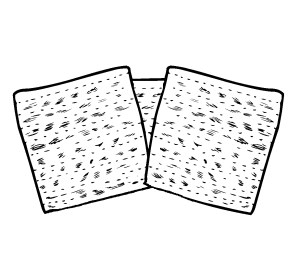
Three separate whole pieces of Matzah (Unleavened Bread) piled vertically and separated from each other either in separate compartments or by partitioning napkins, emblematic variously of the new grain harvest of the Spring, the ritually-required accompaniment of the Pesach (see below), the bread of affliction we ate as slaves in Egypt, and, paradoxically, the hastily-prepared victuals of freedom when God redeemed us from Egypt
Zeroa (Roasted Shankbone) to symbolize the Pesach, which was a yearling lamb or kid (of sheep or goat) originally sacrificed, roasted and eaten, by every household at the beginning of the Spring lambing, later associated with the protective function of its blood to immunize the Israelites in Egypt from the Plague of Death of the First Born of Egypt, eventually becoming a people‘s sacrifice carried out every Spring alongside the centralized institution of Temple and Priesthood in Israel
Chagigah (Roasted Egg) to symbolize the well-being offering brought by Israelites to the Temple on festivals for sacrifice and consumption in holiday feasts and which on Pesach served the vital function of providing the bulk of the meat consumed, as the supply of the narrower category of Pesach became limited due to seasonal demand
Karpas, preferably green, usually parsley, but permissibly any raw vegetable over which the blessing ending with the words Borey Pri Ha‘adamah, “Creator of the Fruit of the Earth,” can be recited, usually suggesting the recurrence of Spring and used for dipping in Salt Water possibly as a remembrance of the dipping of hyssop in the blood of the Pesach to apply some of it to the lintel and doorposts of Israelite homes on the night of the Plague of the Death of the First Born (see above under Zeroa)
Salt Water, in which the Karpas is dipped and likened to the tears we shed as Israelites oppressed by Egyptian taskmasters
Maror, a Bitter Herb, usually lettuce or horseradish (on some seder plates there is a separate place for each), emblematic of both the purgative accompaniment of the protective Pesach and the bitterness of oppression
Charoset, a mixture of chopped apples, cinnamon and wine or grape juice as the basis, to which some add dried fruits or nuts, in which Maror is dipped, and likened to the mortar of the bricks we were forced to manufacture for Pharaoh’s works and which alleviates with sweetness the bitterness of the Maror
The 14 Simanim
Chapters of the Seder
1. KADESH: Recite the Kiddush
The First Cup of Wine
The Kiddush is recited over Wine. This is usual for every Shabbat and Yom Tov. However for this night, drink this and all other cups of wine reclining to the left on a cushion as an indication of liberation. Some say reclining is in emulation of the Greco-Roman mode of privilege in the surrounding culture of post-Second Temple times.
2. URECHATZ: Leader washes hands without blessing
In some households everyone at table washes hands, but never with blessing.
Reflects the early Rabbinic practice of purifying hands before dipping food in liquid to avoid the transfer of ritual impurity from the hands to the liquid to other foods, apparently as an emulation of the sacred institution of the Kohanim (Priests), who needed to be ritually pure in order to handle the sacrifices of Israel in the Temple
At the beginning of Pesach, the head of the household brought his family’s Pesach lamb or kid to the Temple and slaughtered it himself in lieu of the Kohanim.
Remembrances of the Temple are found in the Seder because the Seder has had to replace the actual Pesach, an annual springtime sacrifice of a yearling goat or sheep, which was performed partly in the Temple (prior to its destruction by our adversaries).
This special feature of the Seder of Pesach precedes the dipping of Karpas and is not practiced on any other day.
3. KARPAS: Dip a vegetable in Salt Water and recite blessing before eating it
This practice may be an emulation of the dipping of hyssop in the blood of the Pesach to apply some of it to the lintel and doorposts of lsraelite homes on the night of the Plague of the Death of the First Born (see Exodus 12:22 and above under The Seder Plate).
The vegetable is usually green and is often parsley.
A connection may be made between the green vegetable and the Spring season of the year.
The Salt Water may be likened to the tears of oppression shed by the Israelites under Egyptian bondage.
This constitutes an appetizer within the Seder of Pesach. At this point some hosts and hostesses provide an additional supply of raw vegetables which come under the Borey Pri Ha ‘adamah (“Creator of the Fruit of the Earth”) blessing of Karpas.
4. YACHATZ: Break the middle matzah and hide the larger of the two pieces
At the usual festival meal there are two loaves of bread; during Pesach a full, unbroken piece of matzah replaces each loaf of bread; because of the special festive nature of the Seder there are three loaves, i. e., matzot.
The middle matzah is broken to recall the defect in our material welfare as slaves and to provide, in one of its pieces, a bit of matzah that will be eaten for “dessert,” called Afikoman, to allow a full-circle quality to the meal and, possibly also, to recall the Pesach which was originally eaten at the end.
Strictly speaking, the Afikoman need only be hidden enough so that it is not mistakenly eaten before the end of the meal; however, to entertain the children the game of full-scale hiding and seeking is carried out.
A non-monetary reward for finding the Afikoman is in the spirit of Yom Tov.
5. MAGGID: Tell the Story
This is the longest section and the bulk of the traditional Haggadah. It is founded upon Biblical passages which direct us to tell the Exodus story to our children, e.g., Exodus 13:8 (“And you shall tell your child on that day … “), and so “Haggadah” means “Telling.”
But the Rabbinic mode of telling is not straightforward; moreover, the ancient Rabbis assumed that their students already knew the written Torah (Five Books of Moses), in which the story is told at length, so they engaged in oral elaborations of the written Torah, called Midrash and Aggadah or Haggadah. Therefore, the “Telling” that results is rabbinic in nature: “oral” (now written down in the Haggadah) elaborations and hyperboles of the originally written (in the Torah) treasured story.
The Midrash and Aggadah or Haggadah is a specialized kind of literature, which can be understood optimally in its original language and which therefore is often inaccessible to one untrained in Hebrew and Midrash. Some translators have been able to communicate the meaning of the Midrash in English more successfully than others.
In this section are contained most of the unique ideas of the Haggadah of Pesach. It would be normal for them to engender extended discussion among the company.
Liberal and home-made Haggadahs usually adapt or replace some or all of this section with alternatives that provide a streamlined rehearing of the story of the Exodus.
Outline of Maggid
Ha Lachmah: “This is the bread of affliction … ” ~ Introduces the Unleavened Bread (Matzah), which was the agricultural mode of observing the beginning of Spring and the new series of harvest seasons, beginning with the barley harvest, in the Land of Israel; but here the Matzah is being likened to poor rations provided our ancestors as slaves in Egypt, an example of the Rabbis’ reinterpreting our primitive Spring nature observances with a narrative overlay.
Mah Nishtanah: “Why is this night different…?” (The Four Questions) ~ The children have seen enough of the unique practices of the Seder night–Matzah, Karpas, Reclining–to be stimulated to ask “Why?” in accordance with Exodus 13:14, “When in the future your child should ask you, ‘Why is this?'” These are not actually four questions but one, which can be expressed, “Why?”, “What is this all about?”, “What does all this mean?” for four reasons, because of four things the children observe. The second reason, Maror (Bitter Herb), seems out of place because there has, as yet, been no explicit reference to it. This is sometimes explained by the fact that the children might have noticed already the Maror on the Seder Plate which is on the table in front of them.
Avadim Hayinu: “We were slaves to Pharaoh in Egypt…” ~ This constitutes one way to begin to answer the child’s question–that we were slaves and God redeemed us–and it introduces the notion of Rabbinic elaboration of the story of the Exodus. For the alternative beginning of the answer, see below: Mitechilah: “From the beginning …. “
Ma‘aseh b’Rabbi: “It happened with Rabbi … ” ~ Five eminent Rabbis of the second century recount the Exodus all night among themselves.
Amar Rabbi Elazar: “Rabbi Eleazar ben Azariah said … ” ~ One of the Rabbis mentioned above uses the midrashic method to justify telling the Exodus story at night.
Baruch Hamakom: “Blessed be the Omnipresent..” ~ A doxology which provides transition between Rabbis’ learning Torah and the customized education of children
K’neged Arba‘ah Vanim: “With reference to four children” (The Four Children) ~ Midrash on how the Torah indicates that there are at least four ways to educate children about the holiday, depending upon the type of child.
Yachol meRosh Chodesh: “I might have thought from the New Moon (1 Nisan) … ” ~ Perhaps the formal Rabbinic teaching of the narrative interpretation of the Spring nature and sacrificial observances should begin two weeks in advance, at the New Moon, the beginning of the month, even though the observances themselves do not occur until the Full Moon (15 Nisan, middle of the month), but no, the midrash infers: let them begin when the instruments of the holiday actually lie before them at the Full Moon (tonight).
Mitechilah and Baruch Shomer: “From the beginning … ” and “Blessed be the Keeper … ” ~ This is the alternative way of beginning an answer to the child’s question: by going all the way back to Abraham, who was born into the idolatry of his father Terach—at least as degrading as enslavement—and to whom God revealed the destiny of his descendants to be oppressed for 400 years and then to be redeemed.
V‘hee She–amdah: “And that is what has stood by our fathers … ” ~ God’s faithfulness in Egypt has been constant for us ever since.
Tsey Ulmad: “Go out and learn…” ~ This is the core of the Haggadah (defined above as Oral elaborations of the Written Torah, also called Midrash after the method of interpretation it employs): Midrash on Deuteronomy 26:5-8, which itself is a succinct account of the Israelites’ history of oppression and liberation since patriarchal times through the liberation from Egypt that the Midrashic method hyperbolizes both for its degradation and its salvation.
Deuteronomy 26:5–9: My father was a wandering Aramean. He went down to Egypt few in number and sojourned there; and there he became a great and populous nation. But the Egyptians dealt harshly with us and oppressed us; they imposed heavy burdens upon us. We cried to the Eternal, the God of our Fathers, and the Eternal heard our plea and saw our affliction, our toil and our oppression. The Eternal freed us from Egypt by a mighty hand, by an outstretched arm and awesome power, and by signs and by wonders. He brought us to this place and gave us this land, a land flowing with milk and honey.
Eilu Eser Makkot: “These are the Ten Plagues … ” ~ Climax of the Haggadah (as defined above) demonstrating symbolically the power of the Plagues
Kamah Ma‘alot: “How many benefits … ” (“Dayenu”) ~ Turning from the awe-inspiring destruction to a hyperbolic summary of God’s positive record of abundant blessings, anyone of which would have been enough!
Rabban Gamaliel: “Rabban Gamaliel says … ” ~ The official Rabbinic interpretation of each of the three main objects of the Seder: Pesach, understood in accordance with Exodus 12 as meaning “Passing Over” or “Protecting”; Matzah, Unleavened Bread associated here with hasty baking as the Israelites rushed to prepare for their Exodus; and Maror, finally receiving deserved attention in the Haggadah as the symbol of lsrael’s bitterness and hard bondage.
B ‘chol Dor Vador: “In each and every generation … ” ~ Every Jew should regard himself as having been liberated from Egyptian bondage by God–thus begins the transition to Hallel (see below).
Lefichach Anachnu Chayavim: “Therefore we are obligated to give thanks … ” ~ The fact that we have been liberated obligates us to recite the following Hallel (Psalms 113-118) tonight, the anniversary of our liberation, in praise of God. Hallel is normally included in the morning service on every Torah-ordained joyous festival and also during Chanukah. Tonight, the first two psalms of Hallel are included before the meal, stressing the immediacy of our gratefulness and confidence in God’s miraculous salvation:
Hallelu Avdey Adonai: “Praise, 0 servants of the Eternal…” (Psalm 113) ~ God’s exaltedness, which does not prevent Him from reaching down and lifting up the needy, justifies our praise of Him.
Betzeit Yisrael: “When Israel went forth from Egypt. .. ” (Psalm 114) ~ The Exodus from Egypt, which bound Israel to God its Redeemer, convulsed all of God’s creation that witnessed it.
The remainder of Hallel (Psalms 115 ff.) follows the meal.
The Second Cup of Wine
Maggid concludes with an introductory blessing over the Wine, Asher G‘alanu, acknowledging God’s having redeemed us (in the spirit of Maggid) and having brought us to this night (in the spirit of the She-he-cheyanu blessing which followed the Candle Blessing and the Kiddush Blessings above). This reveals the special function of the Second Cup of Wine for the Seder, which is not the practice of Yom Tov usually, as a second Kiddush, over which Maggid was recited (as if we had been holding up the Second Cup of Wine throughout Maggid). (That is why the Second Cup was filled at the beginning of Maggid.) Over the First Cup the Yom Tov is sanctified. Over the Second Cup our Haggadah (“Telling” our children who we are) is sanctified.
Then follows the Blessing over Wine itself, Borey Pri Hagafen, and the drinking of the wine.
6. RACHTZAH: Washing of the Hands with a Blessing
This is the normal Netilat Yadayim, Washing of the Hands, by every participant followed by the blessing, in anticipation of the eating of bread. Like Urechatz (above), Washing of the Hands before the eating of bread was adopted by the Rabbis to reflect the purification practices of Kohanim (Priests) in the Temple.
7. MOTZI MATZAH: Blessing over Bread & Blessing over Eating Matzah
These blessings are recited over two pieces of matzah: one from the upper matzah on the Seder Plate and the other from the broken middle matzah that remained on the Seder Plate. The first blessing is the usual Blessing over Bread, Hamotzi Lechem Min Ha‘aretz, and the second blessing, Al Achilat Matzah, is recited only at the Seder before performing the mitzvah (commandment) of eating Matzah as one of the two ritual foods (Matzah and Maror) that used to accompany the Pesach (when it was eaten in Biblical and in Temple times, cf. Exodus 12:8: “They shall eat the meat [Pesach]…with unleavened bread [Matzot] and with bitter herbs [Merorim]”) and then remained in the Seder without the Pesach. The two blessings for Motzi and Matzah are said consecutively followed by the consecutive eating of the two pieces of matzah.
8. MAROR: Bitter Herb
The vegetable used as Bitter Herb is determined by custom. Lettuce seems to have been the practice of the Rabbis who developed the Seder at the time of the Destruction of the Temple, while horseradish was used centuries later by Ashkenazic Jews who lived in lands where horseradish was available and lettuce was not. This practice also constitutes the second dipping mentioned in the Mah Nishtana (“The Four Questions”). The Maror itself accompanied the protective Pesach sacrifice perhaps as a purgative ingredient. The acts of dipping might have been emulations of the Greco-Roman banquet, an acculturated symbol of freedom for Jews living in the Hellenistic world. In any case, the dipping condiment is Charoset, the uniquely Jewish mixture that suggests the mortar of bricks we were forced to manufacture for Pharaoh yet also the sweetness of hope that mitigates the bitterness of despair. The blessing, Al Achilat Maror, is said only for the Maror as the symbolic food we are commanded to eat along with the Pesach (cf. Exodus 12:8) and, after the destruction of the Temple, without the Pesach, on the night of the Seder.
9. KORECH: Hillel Sandwich
In order to underline the ancient fulfillment of the Biblical command in Exodus 12:8, to eat the Pesach with Matzah and Maror, and in order to utilitize the third (lower) matzah on the Seder Plate, each participant takes two pieces of the remaining lower matzah and eats therewith a sandwich of Matzah and Maror in remembrance of the way that the sage Hillel (first century B.C.E.) modeled the mitzvah of Pesach while the Second Temple still stood. However, since in our times the Temple is not standing and the Pesach sacrifice is therefore not actually observed, the sandwich consists only of Matzah and Maror.
10. SHULCHAN ORECH: The Meal
The Meal begins with whole hard-boiled eggs in salt water. The use of eggs, both here and in the Roasted egg Chagigah on the Seder Plate, is not explicitly central to the Haggadah but finds its way into these core Seder observances because of its established role in Judaism as symbol of rebirth and eternal life.
11. TSAFUN: The Hidden Afikoman
The Afikoman, which had been hidden for safe-keeping, is broken into pieces and distributed as the last food to be eaten during the Seder (after the dessert or final course of Shulchan Orech). There is no blessing or special reading because it is simply the last part of the meal. See above, Siman No. 4 Yachatz, for a fuller explanation of the significance of the Afikoman and a notice on the custom of searching for it. Although there is nothing to recite, there is no prohibition against discussing it freely and rigorously with company!
12. BARECH: Blessing After the Meal
Birkat Hamazon, the Blessing Over the Meal, which is actually a string of several blessings, is commanded in the Torah (Deuteronomy 8:10) to be recited after every full meal. For Sabbaths and Holidays there are inserted additions, and for Pesach in particular these blessings must be recited over a cup of wine (optional on other holidays). This, then, is the Third Cup of Wine, which is filled upon commencement of this siman.
Outline of Barech
Shir Hama‘alot: “Song of Ascents … ” (Psalm 126) ~ Celebrates the future return of Israel to Zion after Exile and precedes Birkat Hamazon proper on a Sabbath or Holiday; the celebratory spirit of this psalm is deemed appropriate for these occasions, and on Pesach especially it connects our reclaiming of the Land with the natural role of a people’s land as the source of its sustenance.
Rabotai Nevarech: “My teachers, let us bless … ” (Zimmun or Mezuman) ~ Public invitation to company by leader to fulfill the commandment of Birkat Hamazon as a group
Hazan: “Who sustains all…” ~ First of string of three blessings derived from the Torah, this on the theme of God as Sustainer of all
Nodeh Lecha: “We give thanks. to you … ” ~ Second of string of three blessings derived from the Torah, this on the theme of God as our Redeemer from Egyptian oppression and Grantor to us of the Land from which we receive our sustenance
Rachem: “Be merciful, Eternal One… ” ~ Opening of third of string of three blessings derived from the Torah, this on our appeal to God to compassionately restore Jerusalem, the Throne of David and the Temple, including insertions for Shabbat and for Yom Tov:
R’tsey Vehachaleetsaynu: “May it please You, Eternal our God, to give us rest…” ~ Petition for rest on the Sabbath (when the Seder night falls on the Sabbath) without distress and for consolation in the rebuilding of Jerusalem
Eloheinu Veylohey Avoteinu: “Our God and the God of our fathers…” ~ Remember us for deliverance on this day of the Festival of Unleavened Bread.
Uv‘ney Yerushalayim: “And build Jerusalem … ” ~ Conclusion of the third blessing, identifying God as the merciful Rebuilder of Jerusalem
Baruch Atta: “Blessed are You … ” ~ A fourth blessing, ordained by the Rabbis, confirming God’s goodness
Harachaman: “0 Merciful One … ” ~ Thus begins each in a series of ten appeals to the above-established benevolent God for divine sovereignty, sustenance, liberation, domestic blessing, reappearance of Elijah the Prophet, and worthiness to merit the time of the Messiah, interrupted only by an extended reference to our model recipients of blessing, the patriarchs Abraham, Isaac and Jacob, for their pleading merit Bamarom: “On high (in Heaven)… ” on our behalf as their descendants on earth, and by an extended reference to the Messiah’s forerunner David, who described God as his and his offspring’s Migdol Yeshuot: “Tower of salvation … ” (II Samuel 22:51). This section ends with familiar Rabbinic words:
Oseh Shalom: “May the Maker of peace … ” ~ Concluding formula requesting the transcendent God’s blessing of peace
Yir ‘u Et Adonai: “Revere the Eternal…” ~ Verses selected from Psalms declaring that God will not fail to provide for the faithful, the righteous, and for His people Israel
The Third Cup of Wine
Borey Pri Hagafen: “Creator of the fruit of the vine.” ~ Blessing over the Third Cup of Wine and conclusion of Birkat Hamazon
Kos Eliahu: The Cup Of Elijah
With the filling of The Fourth Cup of Wine, there is an interlude (not one of the Simanim) during which the door is opened to welcome Elijah the Prophet, circa 9th century B.C.E., who will return to Earth from Heaven and identify the descendant of King David who will be the Messiah (Hebrew: Mashiach, meaning King of Israel “Annointed” with Olive Oil) to lead the Jewish people back to the Land of Israel and establish for that purpose a world of peace. Elijah and the Messiah were mentioned in the Harachaman section near the conclusion of Birkat Hamazon. A separate cup may be filled for Elijah at this time. No one (other than Elijah the Prophet) drinks from it.
Shefoch Chamatcha EI Hagoyim: “Pour out Your wrath upon the nations who do not know You … ” (Psalm 79:6) and two other comparable verses ~ A late addition to the Seder, first attested among Ashkenzic scholars in the 12th-13th centuries, it might have been inserted as a response to the contemporaneous Christian Crusaders, who murdered thousands of Jews in Europe on their way to the Land of Israel, placed here because of the theme of the next psalm of Hallel (Psalm 115 in Siman 13 below) to be recited.
Eliahu Hanavi: “Elijah the Prophet…” ~ Song of expectation in the reappearance of Elijah the Prophet, usually sung as part of Havdalah on Saturday night at the conclusion of the Sabbath, offered in some liberal Haggadahs as a replacement for Shefoch Chamatcha EI Hagoyim.
13. HALLEL: Continuation of Hallel
All of the remaining psalms of Hallel (except for 116) contain explicitly universal assertions:
Lo Lanu Adonai: “Not for us, Eternal One … ” (Psalm 115) – The victory and truth are not ours but God’s: the nations need only reject their idols whereupon God will be their help.
Ahavti Kee Yishma: “I love that the Eternal listens to my voice … ” (Psalm 116) – The psalmist has found God to be faithful and responsive in the time of greatest need and catastrophe.
Hallelu Et Adonai Kol Goyim: “Praise the Eternal, all nations … ” (Psalm 117) – God is mighty, loving and eternal, deserving the praise of all nations.
Hodu Ladonai Kee Tov: “Give thanks to the Eternal, for He is good … ” (Psalm 118) – All classes of Israel and all humankind who fear the Eternal should acknowledge His boundless lovingkindness, and thereby they have nothing to fear of man. Our hopes for salvation and prosperity should be directed to the Eternal.
Yehalelucha Adonai: “Let all of Your works praise You, Eternal One … ” – This is the customary closing benediction for the recitation of Hallel in the morning service except that the ending blessing signature (Baruch atta Adonai: “Blessed are You, Eternal One … “) is omitted, probably to distinguish this less formal recitation from the synagogue setting. For the same reason, apparently, there is no opening blessing at the beginning of Hallel in the Seder (before the meal) as there is in the morning service.
Hodu Ladonai Kee Tov: “Give thanks to the Eternal, for He is good … ” (Psalm 136) – Known as Hallel Hagadol, “The Great Hallel,” it is found in the introductory section (Pesukey d’Zimra: “Verses of Song”) of the morning service for Sabbaths and Holidays.
Nishmat Kol Chai: “Let the breath of every living being bless Your Name … ” – Known as Birkat Shir, “Blessing of Song,” it also is found in the introductory section (Pesukey d ‘Zimra: “Verses of Song”) of the morning service for Sabbaths and Holidays. As there in the Siddur (Jewish prayer book), it is a climactic sealing of the psalmody that marks the Festival. Here it is distinguished by its proximity to the blessing for The Fourth Cup of Wine, over which Continuation of Hallel implicitly has been recited.
The Fourth Cup of Wine
Borey Pri Hagafen: “Creator of the fruit of the vine.” ~ Blessing over the Fourth Cup of Wine and conclusion of Hallel
Al Hagefen V‘al Pri Hagefen: “For the vine and for the fruit of the vine … ” – This is the blessing after occasional drinking of wine, which needs to be recited since the Third and Fourth Cups of Wine were not, strictly speaking, part of the meal over which Birkat Hamazon was already recited.
14. NIRTZAH: The Seder is Concluded
Chasal Siddur Pesach: “Concluded is the Seder of Pesach … ” – A piyyut (“liturgical poem”) from the 11th century by Rabbi Joseph Tov-Elem of Provence, it draws a distinction between the Seder of Pesach, which accompanies the Pesach and which we have accomplished, and Asoto, the “doing of it” (sacrificing and eating the Pesach), which awaits God’s leading His congregation to Zion.
Lashanah Haba‘ah Birushalayim. “Next Year in Jerusalem!” ~ This follows directly upon the distinction drawn in the previous poem. Of course it also appeals to a broader spectrum of Jewish expectation.
Zemirot: Table Songs
At the table on any Shabbat or Yom Tov it is customary for the company to engage in singing songs composed for the occasion. Songs that are found in the back of the Haggadah are Zemirot peculiar to the Seder. Many families have their favorites, frequently determined by the melodies they have learned and passed on.
Synopsis
The purpose of the following synopsis is to review the parts and themes of the Haggadah in order to reveal the reason for their order.
PROLOGUE
Our Israelite ancestors practiced the annual sacrifice every Spring of a yearling sheep or goat which was probably intended as a petition for God’s protection of the pastoral enterprise for the year ahead, the months then being counted from the Spring, the season of nature’s rebirth. It was called the Pesach, which probably meant “Protection” in some sense and was prepared most expressly for human consumption by quick roasting. At the same time, the agricultural year began with the early Spring harvests and was sanctified by the baking and eating of the new grain most expressly in the form of unleavened cakes called Matzah. The common theme of rapidity in preparing and consuming underlined the vital source of the ingredients as apart from the artifice of their products.
The Torah, in the Book of Exodus, associates both of these categories of observance, Pesach and Matzah, pastoral and agricultural, with the narrative of liberation from degradation in the history of Israel, the Exodus from Egypt, as historical rebirth, occurring also, fittingly, at the beginning of Spring. Both observances, Pesach and Matzah, emanating from their respective primitive natural connections, were redefined as elements in the events of the Exodus. Now the people, which had been faithful to its pre-Biblical heritage, understood these practices as national experiences which defined their political independence and religious philosophy. When Israel came into its Land and established its Temple, it integrated the Pesach within its sacrificial practices but retained the people’s nature of the Pesach, wherein each head of household, in lieu of the Kohanim (Priests) but within the Temple precincts, on the anniversary of liberation, would slaughter his sacrifice. (All other sacrifices were slaughtered by the Kohanim, who eventually also took over the Pesach.) At the same time Israel retained the other practices within this springtime complex but most especially the close association of the protective Pesach with Maror, the purgative Bitter Herbs, and the agricultural facet of Matzah.
When the Temple was destroyed and the priestly class of Kohanim was effectively decommissioned, the successor leaders, the Rabbis, continued the Pesach, as it were, without the Pesach. This is what we call the Seder. While the word Seder literally means “Order,” its contemporary contextual meaning is: what we do in place of actually performing the Pesach.
ACT ONE
We begin by sanctifying the appointed day over wine (Kadesh) as we do for any Yom Tov. This is the First Cup of Wine. To recollect that the head of the household slaughtered the Pesach as if he were a Kohen, the Leader engages in an act of ritual purity (Urechatz) before his household and, in order to justify that purifying act in its place, we (now protected against the transmission of impurity) immediately dip an appetizer (Karpas) in a liquid, thereby also adding the festive touch of hors d’oeuvres with dips to our celebration. However, this banquet, though joyous, is not a typical party, for it serves as remembrance of our oppressed origins (Salt Water).
Our Torah-based motivation for the preceding acts of purification, appetizing and dipping, none of them typical of a festival meal, was to stimulate the children to ask, “What is this all about?” so that we can tell them (cf. Exodus 13:14) the events that we remember or were told and are thus memorializing. In the same vein we call attention to the Matzah by breaking it well before eating it (Yachatz), something that we would never do with a loaf of bread for Shabbat or any other Yom Tov, and then we assign a disturbing epithet to it, “the bread of affliction,” (Ha Lachmah Anya) both as further stimulation of their curiosity and in anticipation of the answer we are prepared to give them (Maggid). The children then ask their inevitable question (Mah Nishtanah).
We commence our direct response to their question by addressing the simplest understanding of the question: We were slaves to Pharaoh in Egypt, but God freed us (Avadim Hayinu). And if God had not freed us, then you and I would still be slaves today. So this is something we really need to talk about and understand. Even the great Rabbis, who know more than children, need to discuss it and learn about it (Ma‘aseh b‘Rabbi) and especially tonight (Amar Rabbi Elazar). But God gave His Torah not only to Rabbis but also to children (Baruch Hamakom). So as to you, children, we will answer your question according to your individual ability to understand and even whether you have been good or bad (K‘neged Arba‘ah Vanim). Maybe we should have begun to have this discussion in advance, when the month of Pesach and the Biblical year actually began two weeks ago, on the established new-moon holiday of Rosh Chodesh, but there is an advantage to deferring it until now with the symbols of Pesach, Matzah and Maror before us (Yachol meRosh Chodesh).
No one wants to be a slave. But some of you can understand that, worse than being a slave to another human being is to worship an idol. Our Patriarchs came from people who did just that, but God freed them from the bondage of idolatry, which, as we said, is even worse than enslavement (Mitechilah). And God explained to Abraham what would happen to his descendants, how they would be enslaved to a foreign king, but also when our bondage would come to an end (Baruch Shomer). And tonight we remember not only those events but also the fact that whenever an enemy tries to destroy us, God will come to our rescue (V’hee She‘amdah).
So now let us learn, as our Rabbis learn, every word and implication in the Haggadah of the Torah’s account of our idolatrous origins, our degradation in Egypt, and our liberation by God with all sorts of wondrous miracles (Tsey Ul‘mad), especially the Plagues against the Egyptians (Eilu Eser Makkot), but also the many positive Benefits that God has provided us along the way (Kama Ma‘alot)!
The great Rabban Gamaliel (Rabban Gamaliel) wanted to make sure that each of us understands the connection between the ancient practices of the holiday–Pesach, Matzah and Maror–and the events of the narrative we have just reviewed, especially because our Haggadah sometimes goes into such detail that we can forget the forest for the trees! And this also will prepare us for enjoying or remembering, as appropriate, the ceremonial foods that are displayed on the Seder Plate. Most importantly, we need to take away from the Haggadah the attitude that each and every one of us (B’chol Dor Vador), as we said at the beginning on Avadim Hayinu, was given his and her own personal freedom by God when He liberated our fathers and mothers from Egyptian slavery.
Therefore, each and every one of us should praise God with the Hallel for Yom Tov, even tonight redundantly before the Yom Tov service of tomorrow morning: God is exalted, yet He reached down and lifted us up when we needed it (Hallelu Avdey Adonai), and His liberation of us was so powerful that all of creation reacted to it (Betzeit Yisrael)!
All that we have reviewed leading up to our redemption from Egypt justifies an extraordinary second Kiddush for the Redemption of Pesach night (Asher G’alanu) to celebrate over a Second Cup of Wine (Borey Pri Hagafen). So, after this Kiddush, let us all wash our hands (Rachtzah), as we now usually do with the Rabbis in emulation of the Kohanim during the time of the Temple, and immediately recite the blessing for bread (Motzi) followed by the special blessing for the mitzvah of eating Unleavened Bread (Matzah) which accompanied the Pesach. We recite these over the top two matzot, the first one we come to (from the top) as usual and the second, broken one, which we come to next, to emphasize that our history of bondage and the destruction of the Temple and consequent suspension of the real Pesach temper our joy over being able to do everything else on the anniversary of our freedom.
Next, let us take the ceremonial food of Maror as the Bitter Herb that accompanied the Pesach that we once sacrificed and ate. We will keep the mood festive by attenuating the Bitter Herb with Charoset, thus observing the form of yet another appetizer and dip and sweetening the bitterness.
Finally, before we continue with The Meal, let us remember almost exactly how it was when the Temple stood at the time of Hillel and make a sandwich with two pieces of the remaining third, lower matzah as he did, except without the Pesach. So we will have a Hillel sandwich of Matzah and Maror only, as a remembrance of the Temple.
INTERMISSION
We begin The Meal (Shulchan Orech) on a note of hope by eating a whole hard-boiled egg in salt water. At the same time we emulate the Chagigah on the Seder Plate symbolized by the Roasted Egg. The Chagigah was the festival well-being offering, brought by individuals and families, that provided the bulk of the meat eaten at the Pesach meal during Temple times. It was consumed directly before the eating of the Pesach. The egg itself is symbolic in Jewish practice of rebirth and eternal life. At the beginning of our Meal, that hope symbolically grows out of the tears of suffering symbolized by the Salt Water. It is the joy of one who has been chastened and, familiar with life, loves His Creator and Redeemer.
ACT TWO
As we came full circle in our answers to the children’s question, so at the end of The Meal do we come full circle from Matzah to Matzah. We conclude with the Afikoman (Tzafun), which the children have helped us to protect and are themselves holding onto for safekeeping (and any ancillary benefits that may accrue therefrom): it is the last item we eat, even after a sweet dessert, to get us back into the Seder mood. As the broken piece of middle matzah was subtracted from the Seder Plate, our restoring and eating it is an act of wholeness out of fragmentation. And also, we might imagine, as we eat the Afikoman, we are eating the Pesach, as it would have been the last item we ate in the original Pesach Meal.
As always, we conclude our festive meal with the Torah-ordained blessings after the meal (Barech), acknowledging God as the Sustainer of all, as the Grantor of our Land from which sustenance stems, and as Restorer of Jerusalem, scene of the real Pesach during Temple times. With the Rabbis we confirm God’s goodness, thereby justifying our ensuing messianic appeals to Him as the Merciful One, whose faithful patriarchs plead our merit, and whom His beloved David champions as a Tower of Salvation. At the same time, God transcends the world He has created: may He imbue it with the peace of His own being. Indeed, God will not fail to provide all who are in need with sustenance to support them. We drink the Third Cup of Wine (Borey Pri Hagafen) over which we have recited this highest festive Birkat Hamazon of the year.
ENTR‘ACTE
On the anniversary night of redemption, expectations are high, so we open the door and fill a cup of wine (Kos Eliahu) to demonstrate our readiness to welcome the precursor of redemption Eliahu Hanavi (“Elijah the Prophet”). He will identify Mashiach ben David (“Messiah son of David”), whose ancestor King David never shrank from facing his enemies, nor do we (Shefoch Chamatcha El Hagoyim: “Pour out Your wrath upon the nations who do not know You…”), and so we sing his song of welcome.
ACT THREE
With the warmth and hope radiated around the Cup of Elijah, we turn to the continuation of Hallel (Hallel), which we began before the meal. While we are inspired by our own redemption from Egypt, it is truly God’s victory and one that can be shared by any nation that renounces idolatry (Lo Lanu Adonai). Indeed all can depend upon God in the time of greatest need (Ahavti Kee Yishmah). God’s perpetual reliability deserves the praise of all nations (Hallelu Et Adonai Kol Goyim). All classes of Israel and all peoples should join in this acknowledgement and direct their hopes for salvation and prosperity to the Eternal (Hodu Ladonai Kee Tov). We close Hallel much as we do on Festival mornings (Yeha!elucha Adonai), although not with the formal blessing signature which we defer to the morning, and pick up some other of the Festival morning favorites (Hallel Hagadol and Nishmat Kol Chai), which advance us, expectantly, to the position in tomorrow morning’s congregation anticipating the formal Call to Worship (Nishmat Kol Chai is the last substantive prayer before “Barechu…”). But for now, still gathered around the Seder table, let us take advantage of our unique position by concluding this extended Hallel of praise over a Fourth and Final Cup of Wine (Borey Pri Hagafen).
For the Third and Fourth Cups of Wine, which were consumed after Birkat Hamazon, we recite the blessing for occasional drink (Al Hagefen V’al Pri Hagefen).
The Seder is concluded (Nirtzah) with a piyyut (poem) (Chasal Siddur Pesach) which expresses our hope that just as we have been able to complete the Seder without the actual Pesach, so may we merit the performance of the actual Pesach next year in Jerusalem (Lashanah Haba‘ah Birushalayim).
CURTAIN
∞
FROM THE TORAH
FIRST YOM TOV DAY OF PESACH
Exodus 12:21-51
The Night of the Pesach
SACRIFICE OF PESACH
12:21-28
Moses announces to all the Elders of Israel to proceed with the taking of lambs for their families and to slaughter the Pesach. He also instructs them to dip a bunch of hyssop in the blood that is collected in the basin and apply it to the lintel and the two doorposts, “and none of you shall go outside of the door of his house until the morning” (Exodus 12:22)! For when the Eternal goes through to attack the Egyptians and He sees the blood on the lintel and on the two doorposts, He will protect the entrance of that house by not allowing the destroyer to enter your houses to strike down.
Observe this as a statute for yourself and for your children forever. Preserve this service when you come to the Land that the Eternal has promised to give you. When your children ask you to explain it, tell them that it is the Sacrifice of Pesach to the Eternal for His having protected the houses of the Children of Israel in Egypt when He attacked the Egyptians and spared our houses.
The people bow in homage. The Children of Israel do what the Eternal commanded Moses and Aaron.
THE ETERNAL STRIKES
12:29-36
“Now it comes to pass, at midnight, that the Eternal strikes down every firstborn in the land of Egypt: from the firstborn of Pharaoh who sits on his throne to the firstborn of the captive who is in the dungeon and every firstborn of cattle” (Exodus 12:29). Pharaoh arises that night, and all of his servants and all of Egypt: there is a great cry throughout Egypt! For there is not a house without someone dead. Pharaoh summons Moses and Aaron in the night and says to them, “Get up, get out from the midst of my people, you and the Children of Israel: Go, worship the Eternal as you have demanded” (Exodus 12:31)! Take your flocks and your herds and begone! And may you bless me also.
The Egyptians are desperate to get the Israelite people to leave the land before “all of us are dead” (Exodus 12:33)! Accordingly, the Israelites pack up their dough before it has leavened, their kneading bowls wrapped in their garments on their shoulder. As Moses had encouraged them to do, the Children of Israel borrow from the Egyptians gold and silver implements (cf. Exodus 11:2) and clothing (cf. Exodus 3:22), which the Egyptians are willing to lend them and which amount to their plundering Egypt.
EXODUS OF THE CHILDREN OF ISRAEL
12:37-42
The Children of Israel travel from Raamses to Sukkot, approximately 600,000 men on foot, besides children, along with a large diverse group of others [eyrev rav], and flocks and herds, very much livestock. They bake the dough which they have brought out of Egypt into cakes of unleavened bread, as they were cast out and therefore had no time to wait for the dough to be leavened. They also did not prepare other food for themselves.
The Children of Israel dwelled in Egypt for 430 years. At the end of that time, to the very day, all of the hosts of the Eternal came out from the land of Egypt. That night of the Eternal’s vigilance to bring them out of the land of Egypt, is a night of vigilance [leyl shimureem] for the Eternal by all the Children of Israel throughout their generations.
RULES OF THE PESACH
12:43-51
The Eternal explains to Moses and Aaron the legal requirements for eating the Pesach. It is restricted to a native Israelite, or to a non-native all of whose males are circumcised. In the case of a purchased slave, if you circumcise him then he may eat of it. Other non-natives, including those who are merely sojourners or hired laborers, may not eat of it.
All of the Pesach that you eat must be consumed in a single house; do not take any of it outside of that house; and you may not break a bone of it.
The entire Congregation of Israel must participate in it. If a non-native who sojourns with you wishes to participate in the Pesach, then circumcise all of his males and he will be allowed to offer it. He shall be considered as a native of the Land. The same rules shall apply to both the native and to him.
Thus all of the Children of Israel comply with what the Eternal commanded Moses and Aaron. For on that very day the Eternal brought the Children of Israel out of the land of Egypt by their hosts.
Maftir for the First and Second Yom Tov Days of Pesach
Numbers 28:16-25
Pesach and Matzot for Seven Days
On the fourteenth day of the first month is Pesach for the Eternal, and beginning on the fifteenth day there is a festival for seven days on which Matzot (Unleavened Bread) is eaten. The first of the seven days is a holy convocation; do not perform work of service. Bring a fire offering, a burnt offering, for the Eternal: two bulls of the herd, one ram, and seven year-old lambs without blemish, and their meal offering of fine flour mixed with oil, three-tenths of a measure for the bull and two-tenths of a measure for the ram and one-tenth of a measure for each of the seven lambs. Bring also one goat as a sin offering to seek atonement for you. Bring these on each of the seven days: food, a fire offering of pleasant aroma for the Eternal in addition to the regular burnt offering which is brought every morning and its libation. The seventh day shall be a holy convocation for you: do not perform work of service.
SECOND YOM TOV DAY OF PESACH
Leviticus 22:26-23:44
The Pattern of Sacred Times
PATTERN OF SANCTIFICATION
22:26-33
The Eternal explains to Moses that a newborn ox or sheep or goat remains with its mother for the first seven days of its life. From the eighth day onward it is acceptable as a fire offering to the Eternal. However, you may not slaughter an ox or a sheep with its offspring on the same day.
When you make a sacrifice of thanksgiving to the Eternal, you sacrifice it for your acceptance. It must be eaten on the same day; nothing of it may remain until the morning. I am the Eternal.
Preserve and fulfill My commandments. Do not profane My holy Name, but let Me be sanctified in the midst of the Children of Israel. I am the Eternal, who sanctifies you, who is bringing you out of the land of Egypt to be your God—I, the Eternal.
THE SABBATH
23:1-3
The Eternal tells Moses to advise the Children of Israel regarding His appointed times:
For six days you shall do your work, but the seventh day is a complete Sabbath (Shabbat Shabbaton), a holy convocation. Do no work. It is a Sabbath to the Eternal in all of your settlements.
PESACH AND MATZOT
23:4-8
The following also are appointed times of the Eternal, holy convocations which you shall declare at their appointed time:
On the fourteenth day of the first month, at twilight, there is Pesach for the Eternal, and on the fifteenth day there is the festival of Matzot (Unleavened Bread) for the Eternal: you shall eat unleavened bread for seven days. The first of the seven days shall be a holy convocation for you: you shall do no work of service. Throughout the seven days you shall bring fire offerings to the Eternal. The seventh day shall be a holy convocation: you shall do no work of service.
GRAIN HARVEST
23:9-22
The Eternal tells Moses to advise the Children of Israel regarding the grain harvest:
When you come to the Land which I am giving to you and you reap its harvest, you shall bring to the Kohen the first Sheaf (Omer) of your harvest. Eat no bread or parched ear or fresh grain until the very day that you bring this offering to your God. The Kohen shall wave the Sheaf before the Eternal for your acceptance on the morrow of the day of rest. On that day you shall provide a year-old lamb without blemish for a burnt offering to the Eternal. Its meal offering shall be two-tenths of a measure of fine flour mixed with oil, a fire offering to the Eternal of pleasant aroma, and its libation shall be a quarter of a hin of wine. This is an everlasting statute throughout your generations in all of your settlements.
You count from the morrow of the day of rest, from the day when you bring the Sheaf of waving, seven complete weeks. Then, on the morrow of the seventh week, count a fiftieth day and bring thereon a new meal offering to the Eternal. You shall declare on that very day a holy convocation for you. You shall do no work of service. It is an everlasting statute in all of your settlements throughout your generations.
On that day, from your settlements bring two loaves of bread as a wave offering: two-tenths of a measure of fine flour shall they be and baked leavened, first fruits for the Eternal. Bring with the bread seven year-old lambs without blemish, one bull of the herd, and two rams, as burnt offerings to the Eternal, and their meal offering and their libations, a fire offering of pleasant aroma for the Eternal. You shall provide one male goat for a sin offering and two year-old lambs for a sacrifice of well-being offerings. The Kohen shall wave them as a wave offering before the Eternal along with the bread of first fruits, which shall be holy to the Eternal for the Kohen along with the two lambs.
When you reap the harvest of your land, do not wholly reap the corner of your field, and do not gather the leftovers of your harvest; leave them for the poor and for the stranger—I, the Eternal your God.
THE SEVENTH MONTH
23:23-36,39-43
The Eternal tells Moses to advise the Children of Israel regarding other holy convocations:
On the first day of the seventh month, you shall have a day of rest, announced by Teruah (Blast of a Horn), a holy convocation. You shall do no work of service. You shall bring a fire offering to the Eternal.
But, says the Eternal to Moses, the tenth day of this seventh month shall be Yom Hakippurim (The Day of Atonement), a holy convocation for you, on which “you shall afflict your selves” (Leviticus 23:27) and bring a fire offering to the Eternal. As it is a day of atonement before the Eternal your God, you shall not do any work on it, it is a complete Sabbath (Shabbat Shabbaton) for you. Indeed any soul that is not afflicted on this same day shall be cut off from its people; I shall cause anyone who does work on this day to be lost from among his people. You shall not do any work, as an everlasting statute, throughout your generations in all of your settlements, beginning on the ninth day of the month in the evening, from evening to evening shall you observe your day of rest.
The Eternal advises Moses to speak further to the Children of Israel:
Beginning on the fifteenth day of this seventh month, when you gather in the produce of the Land, you shall observe the festival of Sukkot (Booths) to the Eternal for seven days. The first day is a holy convocation; you shall do no work of service. You shall take for yourselves the fruit of a splendid tree, branches of palm trees, a bough of a leafy tree, and willows of the brook, to rejoice before the Eternal your God for these seven days. It is an annual observance, an everlasting statute throughout your generations. In addition, you shall dwell in booths throughout the seven days, every native in Israel, so that future generations will know that I caused the Children of Israel to dwell in booths when I brought them out from the land of Egypt—I, the Eternal your God. Throughout the seven days you shall present a fire offering to the Eternal.
Then, on the eighth day you shall have a holy convocation of Atzeret (Conclusion); on it you shall do no work of service, and you shall bring a fire offering to the Eternal.
SUMMARY OF APPOINTED TIMES
23:37-38,44
These, then, are the appointed times of the Eternal, which you shall declare, holy convocations, to bring a fire offering to the Eternal: burnt offering and meal offering, sacrifice and libations, each on its day, besides the Sabbath offerings to the Eternal and besides your gifts and vows and besides all of your voluntary offerings which you bring to the Eternal. Thus Moses explains the appointed times of the Eternal to the Children of Israel.
Maftir for the First and Second Yom Tov Days of Pesach
Numbers 28:16-25
[See First Day of Yom Tov.]
∞
FROM THE PROPHETS
Haftarah for the First Yom Tov Day of Pesach
Joshua 3:5-7; 5:2-6:1,27
Transition Under Joshua
Joshua bids the people be sanctified in anticipation of wonders that the Eternal will perform in their midst on the morrow. In accordance with Joshua’s command, the Kohanim lift the Ark of the Covenant and position themselves at the head of the people. The Eternal assures Joshua that He will magnify him so that the people will regard him as they had regarded Moses before him.
The Eternal then commands Joshua to prepare knives of flint and circumcise the Children of Israel in anticipation of Pesach. The generation that left Egypt had to be circumcised at the time of their departure, but they had died during the forty years in the wilderness because of their failure to follow the word of the Eternal. Now their descendants, who were born in the wilderness, were left uncircumcised, so it was time to circumcise all of them as had been done to their fathers in Egypt. This is done at Giv’at Ha-Aralot (“The Hill of Foreskins”), and the men remain in their places in the camp until they are healed. The Eternal says to Joshua, “‘This day I have rolled away (galoti) the reproach of Egypt from upon you,’ and the place is named Gilgal to this day” (Joshua 5:9).
While they are in Gilgal, the Children of Israel observe the Pesach on the fourteenth day of the month in the evening in the Plains of Jericho. They begin to eat of the produce of the Land on the day after the Pesach: unleavened bread (matzot) and parched ears. The manna ceases on the day that they eat of the Land’s produce; it does not return, and the people eat of the produce of the Land of Canaan that year.
In the vicinity of Jericho, Joshua sees a man standing before him with his sword drawn in his hand. When Joshua asks the man whether he is friend or foe, the man identifies himself as Captain of the Army of the Eternal: “Now I have arrived” (Joshua 5:14)! he says. Joshua bows down with his face to the ground and asks the visitor to speak to him. The Captain of the Army of the Eternal says to Joshua, “Take off your sandal from upon your foot, for the place upon which you stand is holy” (Joshua 5:15; cf. Exodus 3:5). So did Joshua comply.
Jericho is besieged by the Children of Israel. The Eternal is with Joshua, who is known throughout the Land.
Haftarah for the Second Yom Tov Day of Pesach
II Kings 23:1-9,21-25
Josiah Removes Idolatry
King Josiah orders all of the Elders of Judah and Jerusalem to be assembled before him. He ascends to the House of the Eternal and reads in the hearing of all of the people, including the Kohanim and the Prophets, all the words of the Scroll of the Covenant which was found in the House of the Eternal. Standing upon the platform (amud), the King executes the Covenant before the Eternal to follow His commandments with a full heart and a full soul in accordance with the words that are written in this book, and the people affirm the Covenant.
Then the King orders Hilkiah the Kohen Gadol (High Priest), the Associate Kohanim, and the Guards of the Entrance, to remove from the Temple of the Eternal all of the objects that had been made for Baal and for the Asherah, and for all of the host of heaven, and he burns them outside of Jerusalem in the fields of Kidron and takes their ashes to Beth El. He invalidates the idolatrous priests whom Kings of Judah had ordained to offer to the sun, moon and stars, and all the host of heaven, in places of worship throughout the cities of Judah and around Jerusalem.
He removes the Asherah from the House of the Eternal and burns it outside of Jerusalem at the Brook of Kidron, then grinds it into dust, which he spreads over common graves. He demolishes the stations of sacred prostitutes that were in the House of the Eternal at the place where the women decorated stations for the Asherah.
He recalls all of the Kohanim who had officiated at the places of worship throughout the cities of Judah and at the entrance of the gate of Joshua, governor of the city, which is on the left hand as one enters the gate of the city. He invalidates those places of worship, and he does not allow their Kohanim to officiate at the Altar of the Eternal in Jerusalem. However, they are allowed to eat the unleavened bread together with their brethren.
Then the King charges all of the people: “Observe Pesach to the Eternal your God as is written in this Scroll of the Covenant” (II Kings 23:21)! Such a Pesach had not been observed, since the days of the Judges who ruled Israel and all of the days of the Kings of Israel and the Kings of Judah, as was observed in the eighteenth year of King Josiah in Jerusalem. Moreover Josiah did away with ghosts and idols, teraphim and other detestable things that had been seen in the Land of Judah and in Jerusalem, in order to support the words of the Torah that are written in the Scroll which Hilkiah the Priest found in the House of the Eternal. Never before was there a King like Josiah, who returned to the Eternal “with all of his heart, with all of his soul and with all of his might” (II Kings 23:25; cf. Deuteronomy 6:5), in accordance with all of the Torah of Moses, nor has any like him arisen after him (cf. Deuteronomy 34:10 ff.).
∞
Shabbat Chol Hamoed Pesach
∞
THE MEGILLAH OF SONG OF SONGS
INTRODUCTION
1:1
The greatest of songs,
the Song of Songs,
belonging to Solomon:
BELOVED MOST ADMIRED AND DESIRED
1:2-8
Let him give me of his kisses—
for your love is better than wine;
your scent makes maidens love you!
Draw me after you, let us run—
were the king to bring me into his chambers,
our joy and happiness would still be in you,
we would remember your love above wine—
rightly do they love you!
I have been darkened by the sun,
O daughters of Jerusalem,
compelled by my brothers
to guard their vineyards,
thereby neglecting my own.
So tell me, love of my life,
where you shepherd,
where you lie down at noon,
for why should I be hidden from you
among the flocks of others?
If it is not known to you,
most beautiful of women,
venture out in the footsteps of the flock,
and pasture your kids
where the shepherds encamp.
MUTUAL IMAGININGS
1:9-17
I imagine you, my beloved,
as my very own mare
among the chariots of Pharaoh,
adorned with gold and silver,
your scent extending
as far as the king commands.
My beloved is my very own bundle of myrrh,
lodging between my breasts,
a cluster of henna
in the vineyards of Ein Gedi.
Most beautiful are you, my beloved;
your eyes are doves.
Handsome are you, my beloved,
and my pleasure.
Our couch is luxuriant;
the beams of our house are cedars,
cypresses our roof.
INTIMATE PLEASURE
2:1-7
I am a rose of Sharon,
a lily of the valleys.
As a lily among thorns,
thus is my beloved among women.
As an apple among trees of the wood,
thus is my beloved among men.
Under him is my pleasure,
his fruit sweet to my taste,
his left hand under my head,
his right hand embracing me:
I am lovesick.
I adjure you,
O daughters of Jerusalem,
not to frustrate love,
but to allow it its pleasure.
COME DOWN TO BE WITH ME
2:8-17
The voice of my beloved approaches,
leaping over hills like a gazelle.
Now he stands outside our house,
looking for me through the windows:
Arise, my beloved, and join me,
for the rains of winter are past,
given way to the blossoming of trees,
the songs of birds, the ripening of figs,
and the sweet scent of vines.
Come down from your crags of concealment;
show me your face, let me hear your voice,
for your voice is pleasing,
and your face is beautiful.
Catch those foxes that invade our vineyards
when they are in blossom—
but my beloved is mine,
and I am his,
who shepherds among the lilies—
before the day is done
and the shadows are gone,
be you like the gazelle, my beloved,
upon the steep hills!
I FIND MY BELOVED AND BRING HIM HOME
3:1-5
At night, from my bed,
I seek my beloved,
but I find him not.
I arise to search for him
through the markets and plazas of the city,
but I find him not.
I am found by the guards
who patrol the city:
Have you seen my beloved?
No, they continue their watch,
and then I find him!
I grasp him,
not letting him go,
until I bring him home,
to the room
where I was conceived.
I adjure you,
O daughters of Jerusalem,
not to frustrate love,
but to allow it its pleasure.
WED AS ROYALTY
3:6-11
Who is she,
emerging from the desert
in a column of dust,
in a bouquet of perfume,
secure in Solomon’s palanquin,
surrounded by sixty of Israel’s protectors?
King Solomon made it himself
from the wood of Lebanon,
with columns of silver,
coverings of gold,
and a seat of purple,
lined with love
by the daughters of Jerusalem.
Now go out and behold,
O daughters of Zion,
Solomon wearing the crown
which his mother made for him,
for the happy day of his wedding!
HE DESCRIBES HER BEAUTY
4:1-7
Most beautiful are you, my beloved:
your eyes are doves
peering modestly over your veil,
your hair streaming brightly
like the wool of sheep descending Mount Gilead,
your teeth like the flock sheared and bathed,
each one perfectly matching.
Your lips are like a scarlet thread,
your mouth a comfort,
your pink cheeks like a pomegranate
hidden within your veil,
your neck alert
like the Tower of David.
Your breasts are like twin gazelles
that pasture among the lilies.
But before the day’s shadows have fled,
I shall retreat to the fragrant hill.
You are beautiful, my beloved,
with no blemish at all.
FRAGRANT GARDEN
4:8-5:1
Come with me from Lebanon, my bride;
look out from the heights
of Amana, Senir and Hermon,
from the dens of lions and leopards.
Your love has conquered me,
my sister, my bride,
even only one of your eyes,
only one of your charms.
Your loving is sweeter than wine,
your scent more fragrant than any perfume.
Your lips drip with honey, O bride,
milk and honey are under your tongue;
the scent of your robe
is like the scent of Lebanon.
My sister, my bride,
is a locked garden, a hidden spring,
with sprouts of a multitude
of fragrant plants,
a fountain of fresh water
trickling from Lebanon.
Be roused, O winds,
from north and from south,
blow upon my garden,
spread its perfumes,
to bring my beloved to his garden
for him to enjoy
its excellent fruits!
I am coming to my garden,
my sister, my bride,
to pluck my fragrant flowers,
to eat my honeycomb and my date,
to drink my wine with my milk.
Eat, O lovers, and drink:
be drunk with love!
MY BELOVED IN MY DREAM
5:2-8
I am asleep, but my heart is awake.
My beloved’s voice is at the door:
Open for me, my sister, my bride,
my perfect dove,
for my head is full of dew,
my locks with the drops of night.
I have already undressed,
how shall I cover myself?
I have washed my feet,
how shall I soil them?
My beloved reaches through the window,
my stomach quavers,
I rise to let him in,
my hands, my fingers,
drop myrrh upon the bolt.
I open the door,
but my beloved has disappeared,
I myself away
with the sound of his speech;
I seek him out, calling to him,
but he does not reply.
The watchmen who patrol the city find me:
they beat me and lift my veil from upon me,
those guardians of the walls!
I adjure you,
O daughters of Jerusalem,
if you find my beloved,
tell him
that I am lovesick!
SHE EXTOLS HER BELOVED AND DELIGHTS IN HIM
5:9-6:3
How is yours more beloved than another,
most beautiful among women?
How is yours more beloved than another,
that you thus adjure us?
My beloved is glowingly ruddy,
he stands out among the many,
with the brightness of gold
under his raven’s dark locks.
His eyes sparkle like doves
watered and bathed in milk,
set perfectly in their place,
his cheeks like a fragrant garden,
his lips flowers dripping myrrh,
his arms cylinders of gold,
his chest a plate of ivory,
his legs pillars of marble;
altogether his impression
is imposing as the cedars of Lebanon.
His mouth is sweetness
and altogether a delight.
This is my dear beloved,
O daughters of Jerusalem!
Where has your beloved gone,
O most beautiful of women?
Let us look for him with you!
My beloved has gone down to his garden,
to enjoy its fragrant beds
and graze among its lilies.
SHE IS CHERISHED BY HER BELOVED
6:4-12
Your beauty, my beloved,
is as imposing as Tirzah or Jerusalem,
it overtakes me!
Turn your eyes away from me,
I cannot bear your beauty,
your hair like a flock of goats
winding down from Gilead,
your perfect teeth
like a flock of bathed ewes,
your pink cheeks like a pomegranate
hidden within your veil.
Many are the queens and concubines,
but one is my perfect dove,
unique to her mother:
all of the other maidens
can but admire her!
Who is this
who appears as the dawn,
as lovely as the moon,
as intense as the sun,
as imposing as the stars?
To the garden of nuts
I went down,
to see if the vine blossomed,
if the pomegranates were in bloom,
and before I knew it
my spirit lifted me
upon a noble charioteer!
HER PASSIONATE DANCE
7:1-11
Turn, turn, O Shulammite,
that we may see you!
What shall you see
in this Shulammite
as she dances
about the camp?
How beautiful are your
sandaled feet,
noble daughter;
the turning of your thighs
with their hoops
is a work of artists,
your navel a perfect bowl for wine,
your belly a heap of wheat
surrounded by lilies,
your breasts like twin gazelles,
your neck like a tower of ivory,
your eyes as pools in Cheshbon,
your nose like a tower of Lebanon
looking towards Damascus,
the head upon you like Mount Carmel,
a king would be captured in your tresses!
How beautiful you are,
how fit for the pleasures of love:
you stand like a palm tree,
your breasts are its fruits;
I would climb up
and grab hold of them
and enjoy the apple scent
of the breath of your mouth!
Yes, it flows directly to my beloved
through my sleeping lips.
I am my beloved’s,
whose passion
is upon me.
SHE INVITES HIM FOR A NIGHT OF LOVE
7:12-14
Come outside with me,
my beloved,
to spend a fragrant night,
to see if the vine has blossomed,
if the blossom has opened,
if the pomegranates have flowered.
There I shall give you my love,
where all the fragrances about us
I have reserved for you.
MY LOVER, MY BROTHER
8:1-4
Were you my brother,
having shared with me
my mother’s breasts,
I could kiss you in public
without disgrace,
I could bring you home
and learn to make you
spiced wine
from the juice
of my pomegranate—
his left hand under my head
and his right hand embracing me!
I adjure you,
O daughters of Jerusalem:
hinder not the pleasure of love!
LOVE IS ABSOLUTE
8:5-7
Who is this,
coming up from the desert,
leaning upon her beloved?
It is I,
who stirred your love
under the apple tree,
where your mother
labored and delivered you.
Place me as a seal upon your heart,
as a seal upon your arm,
for love and jealousy its companion
are absolute,
like death,
the very fire of the Eternal,
unquenchable,
and without price!
AS A YOUNG WOMAN MATURES
8:8-14
We have a young sister,
not yet mature,
but how can we protect her
when men begin to speak to her?
If she were a wall or a door,
we could build a barrier for protection.
But she says:
I am a wall
and can take care of myself.
I will bring you
peace of mind.
Solomon’s vineyard is large,
watched over by many,
each of whom brings in
a thousand pieces of silver.
While my vineyard
can be watched
entirely by me.
You can have your vineyard, Solomon,
with its thousands to you
and its hundreds to your watchers.
Now, my sister,
the men are beginning to notice you.
Notice me!
Quickly, my beloved,
like a gazelle,
or a hart,
over the fragrant hills!
∞
FROM THE TORAH
Shabbat Chol Hamoed Pesach
Exodus 33:12-34:26
MOSES IS REASSURED
33:12-16
As the Eternal had told Moses (after the incident of the golden calf, cf. 32:1ff.), “I shall not go up in your midst” (Exodus 33:3), “but now My angel shall go before you” (Exodus 32:34), Moses asks (cf. Exodus 33:7-11), in effect: Then whom will You send with me to bring up this people (Exodus 33:12a; cf. Exodus 33:2)? Moses acknowledges that the Eternal has confirmed revelation of His Name to him (Exodus 33:12b; cf. Exodus 6:2ff.) and that he has found favor in His sight (Exodus 33:12c), but he implores the Eternal: “Make known to me Your plan so that I may continue to know you and thereby continue to find favor in Your sight” (Exodus 33:13a)!
Then Moses adds a rejoinder to earlier words of the Eternal. When the Eternal disclosed to Moses the sin of the golden calf, He said to him, “Go, descend, for your people, whom you brought up from the land of Egypt, has corrupted” (Exodus 32:7). Now Moses concludes his request for divine clarification by insisting, notwithstanding, “And see that this nation is Your people” (Exodus 33:13b)!
Thereupon the Eternal reassures Moses on both points: (1) “My Face shall go, and (2) I grant it to you” (Exodus 33:14). Moses responds that (1) only if Your Face shall go, should He bring them up from their current place (Exodus 33:15). Moreover, it would be known thereby that both “I and (2) Your people” have found favor in Your sight, for (1) “when You go with us,” we—”I and (2) Your people”—are thereby distinguished “from every other people that is upon the face of the earth” (Exodus 33:16)!
DIVINE FAVOR
33:17-34:26
Continued Colloquy
The Eternal again assures Moses that He will grant him his wish and that he retains divine favor and acquaintance (Exodus 33:17). Moses responds, “Show me Your Grave Presence (Kavod)” (Exodus 33:18). “I can show you My Goodness, I can declare to you My Name (referred to herein as ‘the Eternal’), and I can demonstrate My Favor by compassion, but no living person can see ‘My Face’” (Exodus 33:19-20). The Eternal explains: “You can take your place ‘with Me’ in the cleft of a rock, and as ‘My Grave Presence passes by…I shall put My hand over you…then, when I remove My hand, you shall see My Back, but My Face shall not be seen’” (Exodus 33:21-23).
Moses Ascends
The Eternal tells Moses to “carve two tablets of stone like the first ones, and I shall write upon the tablets the words which were on the first tablets that you shattered” (Exodus 34:1). (God Himself had carved the first tablets and had written upon them, cf. Exodus 32:16.) “Then, in the morning, you shall go up to Mount Sinai and be present to Me there upon the top of the Mountain. Let no one else come up with you, not even be seen in all the Mountain, and let no flock or herd be pastured at the foot of the Mountain.” So does Moses, taking up with him the two tablets of stone in his hand.
The Eternal Descends
The Eternal descends in the cloud and stands with him there, proclaiming the Name of the Eternal. The Eternal passes over his face and declares, “The Eternal, the Eternal, God compassionate and gracious, slow to anger and abundant in lovingkindness and truth, preserving lovingkindness for the thousandth, forgiving iniquity, transgression and sin, but without acquitting, visiting the iniquity of fathers upon children and upon children’s children to the third generation and to the fourth generation” (Exodus 34:6-7; cf. Exodus 33:18-23).
Moses Requests Divine Presence
Moses quickly bows down to the ground and prays, “If indeed I have found favor in Your sight, O Lord, let the Lord go in our midst,” then offering the very reason of the Eternal’s previous demurral (cf. Exodus 33:3) as cause to grant his request for reconsideration: “For it is a stiff-necked people,” and therefore he asks directly, “Forgive our iniquity and our sin, and accept us as an inheritance” (Exodus 34:9)!
The Eternal Outlines His Covenant
He says: “I hereby establish a Covenant. I shall perform before the people, in whose midst you are, awesome wonders that have not been created before. Observe well what I command you this day!” (Exodus 34:10-11a) —
- Do not make a molten god. I am expelling from before you the Amorites, the Canaanites, the Hittites, the Perizzites, the Hivites, and the Jebusites. Do not worship another, for the Eternal is a jealous God. Take care not to make a covenant with the Land’s inhabitants that you may encounter, but break down their altars, shatter their pillars, and cut down their idols, lest they become a snare in your midst and you make a covenant with them and sacrifice to their gods and accept their invitation to eat of their sacrifices, or you marry your sons to their daughters and your sons are drawn to their wives’ gods. (Exodus 34:11b-17)
- Observe the Festival of Pesach. For seven days you shall eat unleavened bread, as I commanded you, for the Festival of the Month of Aviv, as in that month you went out from Egypt. (Exodus 34:18)
- All that opens the womb is Mine. Sanctify the firstborn males of ox and sheep. Redeem with a lamb the firstborn of an ass, otherwise break its neck. Redeem every firstborn of your sons. Let them not appear before Me empty-handed. (Exodus 34:19-20)
- Six days shall you work. On the seventh day shall you rest. You shall rest in ploughing and in harvest. (Exodus 34:21)
- Observe for yourself the Festival of Weeks, first fruit of the wheat harvest. (Exodus 34:22a)
- Observe the Festival of Ingathering, at the completion of the year. (Exodus 34:22b)
- Three times in the year shall all of your males appear before the Lord, the Eternal, the God of Israel. For I will drive out nations from before you and expand your territory, so that no one will covet your property when you go up to appear before the Eternal your God. (Exodus 34:23-24)
- You shall not offer the blood of My sacrifice when leavened bread is there, and the sacrifice of the Festival of Pesach shall not remain overnight until morning. (Exodus 34:25)
- The prime quality of the first fruits of your Land shall you bring to the House of the Eternal your God. (Exodus 34:26a)
- Do not boil a kid in the milk of its mother. (Exodus 34:26b)
Maftir for Shabbat Chol Hamoed Pesach
Numbers 28:19-25
Bring a fire offering, a burnt offering, for the Eternal: two bulls of the herd, one ram, and seven year-old lambs without blemish, and their meal offering of fine flour mixed with oil, three-tenths of a measure for the bull and two-tenths of a measure for the ram and one-tenth of a measure for each of the seven lambs. Bring also one goat as a sin offering to seek atonement for you. Bring these on each of the seven days: food, a fire offering of pleasant aroma for the Eternal in addition to the regular burnt offering which is brought every morning and its libation. The Seventh Day shall be a holy convocation for you: do not perform work of service.
∞
FROM THE PROPHETS
Haftarah for Shabbat Chol Hamoed Pesach
Ezekiel 37:1-14
Life to Dry Bones
The hand of the Eternal was upon me, whereupon He took me out with the breath of the Eternal and put me down in the midst of a valley that was full of bones. As He took me over and around them, I could see that there were very many over the valley and that they were very dry. “Son of man,” He says to me, “Shall these bones live?” I reply, “O Lord God, You know!” He then called me to prophesy over them and say to them, “O dry bones, hear the word of the Eternal!”
“Thus says the Lord God to these dry bones: I shall put breath into you and you shall live! Sinews and flesh shall I place upon you, with skin shall I cover you, I shall put breath into you, you shall live and know that I am the Eternal.” When I thus prophesied as I was commanded, there was the sound of bones joining together. I saw sinews and flesh be upon them, skin laid over them, but no breath was in them. Then He bid me, “Prophesy, O son of man, prophesy to the wind: ‘Thus says the Lord God: Come, O breath, from the four winds, and breathe life into these slain!’”
When I thus prophesied as He commanded me, breath came into them and they came to life. They stood upon their feet as a very great army, and He said to me: “Son of man, these bones are the entirety of the House of Israel, who say, ‘Our bones are dried up, our hope is lost, we are destroyed!’ Therefore prophesy and say to them, ‘Thus says the Lord God: Behold, I shall open your graves and raise you up from them, O My people, bring you to the Land of Israel, and you shall know thereby that I am the Eternal! I shall put My spirit into you, and you shall live. I shall place you upon your Land, and you shall know that I, the Eternal, have spoken and acted, as the Eternal attests.’”
∞
Chol Hamoed Days of Pesach
FROM THE TORAH
FIRST DAY OF CHOL HAMOED PESACH
Exodus 13:1-16
SEASONAL LESSONS
13:1-16
The Eternal instructs Moses: Consecrate to Me every firstborn among the Children of Israel; the first issue of any womb, of man or beast, is Mine (Exodus 13:2). Here is how Moses teaches the people:
Remember this day, when you went out from Egypt, the house of bondage, guided by the Eternal’s strong hand: no leavened bread shall be eaten. Today you are going out in the month of Aviv. When the Eternal brings you to the land of the Canaanites, the Hittites, the Amorites, the Hivites, and the Jebusites, which He promised to give to your fathers, a land flowing with milk and honey, you shall observe the following service in this month. For seven days you shall eat unleavened bread—no leavened bread, no leaven shall be found with you in any of your territory—and on the seventh day there shall be a Festival to the Eternal. Explain to your child on that day that this service is “because of what the Eternal did for me when I went forth from Egypt” (Exodus 13:8). Moreover, you shall have it for a sign upon your hand and for a reminder between your eyes in order that the Eternal’s teaching shall be in your mouth, and keep the statute itself at its set time from year to year.
When the Eternal brings you to the land of the Canaanites, as He promised you and your fathers, and gives it to you, transfer to the Eternal every one of your male first issue of the womb and of your male first issue of the young of beasts. The first issue of an ass you shall redeem with a sheep; otherwise break its neck. Every firstborn of man, among your children, you must redeem. When, in the future, your child asks what this is about, say that with His hand’s great strength the Eternal brought us out of Egypt, from the house of bondage: when Pharaoh was obstinate in refusing to let us go, the Eternal killed every firstborn in the land of Egypt, from the firstborn of man to the firstborn of beast. Therefore I sacrifice to the Eternal every male first issue of the womb, and every firstborn of my children I redeem. It shall be for a sign upon your hand and for a symbol between your eyes, for with His hand’s great strength the Eternal brought us out from Egypt.
Numbers 28:19-25
Bring a fire offering, a burnt offering, for the Eternal: two bulls of the herd, one ram, and seven year-old lambs without blemish, and their meal offering of fine flour mixed with oil, three-tenths of a measure for the bull and two-tenths of a measure for the ram and one-tenth of a measure for each of the seven lambs. Bring also one goat as a sin offering to seek atonement for you. Bring these on each of the seven days: food, a fire offering of pleasant aroma for the Eternal in addition to the regular burnt offering which is brought every morning and its libation. The seventh day shall be a holy convocation for you: do not perform work of service.
SECOND DAY OF CHOL HAMOED PESACH
Exodus 22:24-23:19
HOLINESS
22:24-23:13
Do not treat “My people, the poor with you” (Exodus 22:24), as a creditor would normally treat a debtor. Charge no interest when you lend him money. If he gives you his garment in pledge, return it to him before the sun sets because it is the only covering for his skin. If he cries out to me, I will listen because I am compassionate.
Do not curse God.
Do not curse a leader among your people.
Do not be late in offering of the fullness of your fields or of your wine or oil.
Give to Me the firstborn of your sons. This also applies to your cattle and to your flock: for seven days it shall be with its mother, on the eighth day you shall give it to Me.
Do not eat torn flesh of an animal in the field; throw it to the dogs. You shall be holy people to Me.
Do not utter an unfounded report.
Do not join with the guilty to be a malicious witness.
Do not follow a multitude to do evil.
Do not pervert your testimony in a dispute to favor a party because he is mighty or because he is weak.
If you encounter the ox or ass of your enemy wandering, you must return it to him.
If you see the ass of your enemy lying under its burden, you must aid him in freeing it regardless of how you feel towards one who hates you.
Do not pervert laws which are meant to protect the powerless in their disputes. Keep far from a falsehood, which might lead to the death of the innocent and the righteous, for I will not justify the wicked. Do not accept a bribe, which blinds the clear-sighted and suppresses the candor of the honest. Do not oppress a stranger, for you know the plight of the stranger, having yourselves been strangers in the land of Egypt.
Farm your land for six years, then let it rest in the seventh. The needy of your people may eat from its produce during the seventh year; whatever they leave may be eaten by the beast of the field. The same applies to your vineyard and to your olive grove.
Do your work for six days, then observe a Sabbath on the seventh day, in order that your ox and your ass may rest, in order that your worker and the stranger may be refreshed.
Be careful to observe all that I say to you. Do not mention the name of other gods, let it not be heard upon your lips!
FESTIVAL OFFERINGS OF THE YEAR
23:14-19
Three times in the year shall you observe a Festival for Me. Keep the Festival of Matzot (“Unleavened Bread”) for seven days by eating unleavened bread as I commanded you (cf. Exodus 12:15), for the month of Aviv, when you went forth from Egypt, when no one should appear in My presence empty-handed; the festival of Katzir (“Reaping”), the first fruits’ harvest of what you have labored to sow in the field; and the festival of Asif (“Ingathering”), the last gathering of your labors from the field at the end of the year. All of your males shall appear before Me, the Lord, the Eternal, three times in the year.
Do not offer My blood sacrifice (cf. Deuteronomy 12:24 ff.) while there is unleavened bread present, and do not leave the fat of My festival sacrifice overnight until morning (cf. Exodus 12:10).
Bring the choicest of your first fruits to the House of the Eternal, your God.
Do not boil a kid in the milk of its mother.
Numbers 28:19-25
[See First Day of Chol Hamoed.]
THIRD DAY OF CHOL HAMOED PESACH
Numbers 9:1-14
PESACH AS PRESCRIBED AND DEFERRED
9:1-14
In the Wilderness of Sinai, in the first month of the second year of their Exodus from the land of Egypt, the Eternal advises Moses that the Children of Israel should perform the Pesach at its appointed time: on the fourteenth day of the month at twilight. Moses duly advises them, and the Children of Israel observe it in accordance with all that the Eternal had commanded Moses.
But there are people who, because of their impurity from contact with a human corpse, cannot perform the Pesach on that day. They ask Moses and Aaron why, because of their impurity, they should be prevented from bringing the offering of the Eternal along with their fellow Israelites at its appointed time. Moses asks them to wait until he learns what the Eternal may command them.
The Eternal charges Moses to communicate to the Children of Israel His answer. Anyone who is impure from contact with a human corpse or who is far away when the time comes to perform the Pesach, both now and in the future, should do it on the fourteenth day at twilight of the second month. Eat it with matzot (unleavened bread) and merorim (bitter herbs), do not let any of it remain until morning, and let no bone of it be broken, in complete accordance with the law of the Pesach.
The soul of anyone ritually pure and not on a journey who fails to perform the Pesach shall be cut off from his people for neglecting to perform the offering of the Eternal at its appointed time. Such a person shall bear his sin.
A sojourner among you who would offer the Pesach to the Eternal must offer it in accordance with every rule of the Pesach (cf. Exodus 12:48). The law is the same for you, whether non-native or native of the country.
Numbers 28:19-25
[See First Day of Chol Hamoed.]
∞
FROM TALMUD AND MIDRASH
First Yom Tov Days and Chol Hamoed of Pesach
Talmud Pesachim 116a
Two Kinds of Degradation
The Mishnah (Pesachim 10:4) requires that children be taught in response to the Four Questions “beginning with degradation (genut) and ending with the praiseworthy achievement of redemption (shevach).” That is clearly the order of our Haggadah of Pesach, beginning with Avadim Hayinu…, “We were slaves to Pharaoh in Egypt…,” as enslavement is generally regarded as a degraded condition.
The Gemara then provides us with an apparent disagreement between the 3rd-century sages Rav and Samuel: While Samuel identified Avadim Hayinu as the beginning degradation, Rav said that the beginning of degradation was Mitechilah Ovdey Avodat Gilulim Hayu Avoteinu…, “From the beginning our ancestors were idolators…,” that our degradation began even earlier than our enslavement in Egypt, as our father Abraham’s roots were in the degrading idolatry of his father Terach and the society around him! That position is recognized later in our Haggadah, beyond the Four Children and immediately following Yachol meRosh Chodesh (see “From the Haggadah of Pesach” above at: Mitechilah and Baruch Shomer).
Children, to whom these discussions are ostensibly directed, might be expected to recognize the physical enslavement of Egypt as degradation more readily than the spiritual idolatry of Aram (Abraham’s first homeland). But the words used for both conditions share the same Hebrew root, ayin-vet-dalet, which means “to serve.” The Hebrew word for “slave,” eved, also is used elsewhere in the Bible to mean “servant.” Rav uses the related word oved to mean “one who serves idols.” From the placement of his formula after the physical degradation of the eved, that is, the oved after the eved, we can recognize the linguistic nexus between them. Both are servants, both are slaves: one is in thrall of a person, the other in thrall of an idea.
The Haggadah then proceeds to present at the end of Maggid the antidote to both slavery and idolatry for Israel, at the very beginning of Hallel: Hallelu Avdey Adonai…, “Offer praise, O you servants of [avdey] the Eternal…,” using a form of the root ayin-vet-dalet which could, out of context, be construed as either “slave” or “servant,” but here means “one who serves the Ultimate,” not a person, not an idol—the prescribed vocation of Israel, to be neither slaves nor even servants of any thing, person, value, idea, or deity, that is less than the Creator and Moral Guarantor of all.
Pesikta d’Rav Kahana 7:3-4
The Creation of Midnight
“Now it comes to pass, at midnight,
that the Eternal strikes down
every firstborn in the land of Egypt…”
(Exodus 12:29)
The Holy One, blessed be He, said to Moses: “I shall pass through the land of Egypt on that night, and I shall strike down every firstborn in the land of Egypt…” (Exodus 12:12). But Moses went and said to Israel: “Thus says the Eternal: ‘At midnight I shall go forth in the midst of Egypt, and every firstborn in the land of Egypt shall die…’” (Exodus 11:4-5). The Holy One, blessed be He, thought: I have already declared My trust in Moses, in that I said about him that he is unlike any other Prophet, “My servant Moses is trusted throughout My household” (Numbers 12:7)! So should I make him appear as a liar? No: Just as Moses said “at midnight” (Exodus 11:4), so shall I, “at midnight” (Exodus 12:29)!
The question is asked: Who divided the night in half? Our Rabbis taught: Its Creator divided it. Not only do you have the night divided into half here (at the Exodus), but also, “It was divided concerning them, night, he (Abraham) and his servants defeated them (the invading kings)…” (Genesis 14:15), which the Rabbis interpreted to mean, “The night was divided because of them…!” Rabbi Tanchuma explained: “Abraham your Father went out with Me at midnight, so I am going out with his children at midnight!” The Rabbis analyzed the verse further more precisely. “The night was divided because of them…“ (Genesis 14:15): Said the Holy One blessed be He, “Your Father Abraham went out with Me from last night until midnight, so subsequently I am going out with his children from midnight until the morning!”
Pesikta d’Rav Kahana 7:7
The Role of the Egyptian Firstborn
“Give thanks to the Eternal…
Give thanks to the One who struck down Egypt
in their firstborn…”
(Psalms 136:1-3,10)
“Now it comes to pass, at midnight,
that the Eternal strikes down
every firstborn in the land of Egypt,
from the firstborn of Pharaoh,
who sits on his throne…”
(Exodus 12:29)
Since it is obvious that Pharaoh “sits on his throne,”
what are these apparently superfluous words meant to teach us?
They clarify that the “firstborn” referred to here
is not the firstborn child of Pharaoh
but “the firstborn, Pharaoh, who sits on his throne,” himself!
All of the firstborn of Egypt pleaded with their fathers to expel the Hebrews because of the threat of the tenth plague: After all, whatever Moses has predicted to occur against the Egyptians has come true. So if you do not let them go, all of our people will die! Their fathers, who each typically had ten children, responded that the loss of one firstborn child out of ten children would not necessitate their letting the Hebrews go.
So the firstborn concluded that their only hope would be Pharaoh, himself a firstborn. Perhaps he would have compassion for himself and thus expel the Hebrews. When confronted with their argument, Pharaoh became angry and declared, “I have said, ‘My life or the life of the Hebrews!’ and you would dare demand my compassion?”
Whereupon all of the firstborn went out and killed their fathers, which is written, “Give thanks to the One who struck Egypt through their firstborn…” (Psalms 136:10). He struck Egypt through the firstborns’ killing their fathers!
Exodus Rabbah 18:2
Righteous Advocacy
“Now it comes to pass, at midnight,
that the Eternal strikes down every firstborn
in the land of Egypt…”
(Exodus 12:29),
so:
“At midnight I will rise to give thanks to You
because of Your judgments of righteousness [mishpetey tzidkecha]!”
(Psalms 119:62)
At midnight You did indeed perform “judgments” against Egypt
by striking down their firstborn,
but alongside Your judgments
You delivered “righteousness”
in the sense of championing us!
How?
When Moses said, in the Eternal’s Name,
“I will strike down every firstborn” (Exodus 12:12),
some of the Egyptians became afraid enough
to bring their firstborn child to an Israelite
and ask him to shelter the child overnight.
When midnight arrived,
although the Israelites provided shelter,
the Holy One, blessed be He,
killed all of the Egyptian firstborn.
In those Israelite houses He would stand between
the Israelite firstborn and the Egyptian firstborn.
He would take the soul of the Egyptian
and leave the soul of the Israelite.
In the morning,
the Israelite, upon waking up,
would find the Egyptian firstborn dead
alongside his living Israelite children,
in fulfillment of the divine promise,
“I shall pass over you to protect you
so that my plague of destruction
throughout the land of Egypt
will not affect you” (Exodus 12:13).
Then did Israel begin to sing:
“At midnight I will rise to give thanks to You
because of Your championing judgments [mishpetey tzadek’cha] for us!”
(Psalms 119:62)
Exodus Rabbah 20:1
Pharaoh Compared to a Stubborn Swineherd
“As snow in the summer
or rain at harvest,
so is honor not fitting
for a brute!”
(Proverbs 26:1)
This refers to Pharaoh, who may be compared to a herder of swine who stole one of his master’s ewes and concealed it among his own swine. When his master demanded the return of his ewe, the swineherd denied that it was in his possession. Thereupon the master discovered where the swineherd watered his animals, and he had the water source stopped up. Again the master demanded that the swineherd return his ewe, and again the swineherd denied that it was in his possession. Thereupon the master discovered where the swineherd sheltered his animals, and he had the swine pens destroyed. Yet again when the master demanded that the swineherd return the master’s ewe, the swineherd denied that it was in his possession. Thereupon the master discovered where he pastured his animals, and he had all vegetation burned away. Even still, when the master demanded return of his ewe, the swineherd denied that it was in his possession.
Then the master discovered where the swineherd’s son attended school, and he had the boy seized. This time, when the master demanded that the swineherd return the stolen ewe, the swineherd complied: “Here is your ewe!” When the ewe was handed over, the master then had the swineherd himself seized and held along with his son. The swineherd protested: “Now that you have your ewe back and there is nothing of yours any longer in my possession, why have you seized me? What can you claim from me any longer?”
The master replied, “I demand from you all that the ewe you seized produced while in your possession: the young she produced and the wool that you sheared from her.” The swineherd was indignant. “I should have kept the ewe,” he complained, “and stood my ground, thereby showing that the master was only out to destroy me!”
So Aaron struck the Nile, and it was turned into blood, and the Egyptians could find no water to drink. When God demanded, “Let My people go,” Pharaoh would not heed. Knowing where the animals were pastured, God brought down hail to destroy the trees and fire to burn it all up, as was said, “The Eternal sent thunder and hail, and fire went along to the ground.” (Exodus 9:23) He sent locusts to devour all vegetation and what remained of the trees. He brought all of those plagues upon Pharaoh, yet Pharaoh refused to let the people go!
Then He took Pharaoh’s son, as was said, “The Eternal struck down every firstborn in the land of Egypt, from the firstborn of Pharaoh, who was sitting upon his throne, to the firstborn of the captive, who was in the dungeon, and the firstborn of cattle.” (Exodus 12:29) Pharaoh said to Moses and Aaron, “Arise, get out from the midst of my people, you and the Children of Israel!” (Exodus 12:31)
“But so it was [Vayehi],
when Pharaoh let the people go…”
(Exodus 13:1ff.)
Then he regretted having released them and pursued after them (cf. Exodus 14:1-9). God seized him and imposed upon him the same fate that He imposed upon his son: “He overthrew Pharaoh and his army in the Red Sea!” (Psalms 136:15) So the story begins, “Vayehi,” implying Pharoah’s woeful regret, “Vaye! Vaye! Hoyi! beshalach Par’oh…much regret when Pharaoh let the people go!” (Exodus 13:17): “I should have kept the people,” he lamented, “and stood my ground, thereby implying that the One who sought to free them was only out to destroy me!”
Pesikta d’Rav Kahana 8:1,3
Waving the Omer in Six Directions
“When you come to the Land
which I am giving to you,
and you reap its harvest,
you shall bring to the Kohen
the first Sheaf (Omer) of your harvest.”
(Leviticus 23:10)
Rabbi Benaiah taught that the Holy One, blessed be He, said to Israel: My children, when I gave you the manna, I said, “Gather as much of it as everyone requires to eat, an omer per person…” (Exodus 16:16). Now, in commanding you to bring Me the Omer, I require nothing more than one Omer from all of you, and not wheat but barley!
Rabbi Yannai taught: In the way of the world a person purchases raw food from a market and then he has to work hard to prepare it for cooking, but the Holy One, blessed be He, causes winds to blow, raises the clouds, brings down the rains, brings out the dew, grows the plants, and fattens the fruit, while we sleep on our beds, and He does not ask of us individually even a single omer!
Said Rabbi Levi: It is true that you have labored—you have plowed, you have sown, you have weeded, you have pruned, you have hoed and you have reaped, bound and threshed, and you have stacked the sheaves. Yet, if He did not bring forth the wind to winnow, how could you survive? And you do not even pay him a fee for the wind!
“He shall wave the Omer
before the Eternal
for your acceptance
on the morrow of
the day of rest.”
(Leviticus 23:11)
How would the Kohen wave it? Rabbi Chama son of Rabbi Ukbah in the name of Rabbi Yosi bar Chaninah: He waved it to the four points of the compass in order to cancel harmful winds, and he waved it up and down in order to cancel harmful dews. Rabbi Simon in the name of Rabbi Joshua ben Levi: He waved it to the four points of the compass in recognition of the One whose world it is, and he waved it up and down in recognition of the One to whom both the upper regions and the lower regions belong. (According to Rabbi Abin, the difference of opinion is between Rabbi Yehudah and Rabbi Nechemiah.)
Exodus Rabbah 1:28
Four Reasons for Israel’s Redemption
Rav Huna taught in the name of Bar Kappara: There are four reasons why Israel was redeemed from Egypt.
First: Because they did not change their names. They went down to Egypt as Reuben and Shimon, and they came up as Reuben and Shimon. There is no indication that any of their names were changed, such as from Reuben to Rufus.
Second: Because they did not change their language. A fugitive brought the news of Lot’s capture to “Abram the Hebrew” (Genesis 14:13), and still Moses and Aaron in Egypt said to Pharaoh, “The God of the Hebrews has appeared to us” (Exodus 5:3)! Moreover, when Joseph sought to convince his brothers of his identity, he said, “It is my mouth that is speaking to you” (Genesis 45:12), meaning that I am speaking our ancestral language even though I have risen to power over Egypt!
Third: Because they did not engage in gossip. The Eternal commanded Moses: “Tell the people that they should borrow from their (Egyptian) neighbors objects of silver and gold” (Exodus 11:2). Even though not every Israelite had an Egyptian neighbor with silver and gold objects to lend, and even though the Israelites knew that those borrowed objects would not be returned but would be permanent loans, no one let it be known even out of envy!
Fourth: Because (virtually) no one engaged in illicit relations. The one exception is named: “There went out the son of an Israelite woman, and he was the son of an Egyptian man…the name of his mother was Shelomit daughter of Divri of the tribe of Dan” (Leviticus 24:10-11). By naming her and her father and her tribe exclusively, all other Israelite women are assumed to be pure.
Exodus Rabbah 15:4
Talmud Rosh Hashanah 11a
Genesis Rabbah 68:2
Merit of the Fathers and Mothers
When Moses told Israel,
“The Holy One, blessed be He, has said to me:
‘Today you are going out in the month of Aviv’” (Exodus 13:4),
they asked,
“Where is He?”
and Moses answered:
“Behold the voice of my Beloved as He comes,
skipping over the mountains [al heh-harim],
jumping over the hills [al ha-gevaot]!”
(Song of Songs 2:8)
Rabbi Judah explained “skipping over the mountains, jumping over the hills”: Said the Holy One, blessed be He, “When I consider the behavior of Israel, they would never be redeemed, so whom then should I consider? Their holy fathers, as the Prophet addressed them, “Hear, O mountains [harim]…O strong ones, foundations of the earth” (Micah 6:2): “Hear, O parents [horim], who are the strong ones, the foundations of the earth!” Hence, when the Holy One, blessed be He, comes to redeem Israel, He “skips” their unworthy behavior because of [al] the merit of the fathers [heh-harim, “the mountains,” masculine], He “jumps” their unworthy behavior because of [al] the merit of the mothers [ha-gevaot, “the hills,” feminine synonym for harim].
Exodus Rabbah 31:12
Why loan interest is prohibited
“If you lend money to My people, the poor with you,
do not act towards him as a creditor;
do not impose upon him interest.”
(Exodus 22:24)
1
This is what is written:
“One who shows compassion to the poor
makes a loan to the Eternal,
and He will repay him
what is due him.”
(Proverbs 19:17)
To what extent?
“The borrower
is a slave
to the lender.”
(Proverbs 22:7)
2
What shall we say about
“the poor with you?”
No affliction in the world is more feared or more known than poverty!
When Job was allowed to choose between all other afflictions and poverty, Job said to the Holy One, blessed be He: Master of the Universe, I would accept upon myself all of the afflictions of the world instead of poverty. If I go out to the marketplace and lack even a perutah, what shall I eat? But then when he suffered other afflictions—which he chose over poverty!—he cried out in shock and disbelief: “My complaint is bitter…would that I knew how to reach Him…let me argue my case before Him and fill my mouth with evidence” (Job 23:3)!
Poverty is different from all of the afflictions chosen by Job because, unlike them, poverty is in the mind of everyone, including the would-be creditor. Hence, the Eternal says to him, “the poor with you,” as if the Holy One, blessed be He, is reminding the would-be creditor, “The suffering of the poor is already with you, in your awareness. His poverty is not enough? And you would also exact from him interest?”
Exodus Rabbah 31:13
God bonds with the poor
“Do not treat My people, the poor with you,
as a creditor would normally treat a debtor.
Charge no interest when you lend him money.
If he gives you his garment in pledge,
return it to him before the sun sets
because it is the only covering for his skin.
If he cries out to me, I will listen because I am compassionate.”
(Exodus 22:24-26)
“The poor with you?” says God in disbelief! They are not with you; they are with Me; they are “My people!” and thus says David: “For You shall deliver a poor people” (Psalms 18:28)!
In this regard the nature of the Holy One, blessed be He, is different from the nature of flesh and blood. A wealthy man of flesh and blood who has a poor relative will not acknowledge him. If he sees his poor relative, he hides from him, for he is ashamed to carry on a conversation with him because he is poor. Thus says Solomon, “All brothers of the poor hate him” (Proverbs 19:7), and “The poor is hated even by his own close one, while many are the friends of the wealthy” (Proverbs 14:20), and Job complained, “My relatives are gone, and my friends have forgotten me” (Job 19:14)!
But who are with the Holy One, blessed be He? The poor. When He sees a poor person, He bonds with him. “Thus says the Eternal: The heaven is My throne, the earth is My footstool” (Isaiah 66:1), “yet to this one do I look: to the poor and broken of spirit” (Isaiah 66:2)! As Moses says to Israel, “It is not because you are the most numerous of all peoples that the Eternal has desired you and chosen you, for you are the smallest of all peoples” (Deuteronomy 7:7)! And when He expresses His love for Zion, on whom does He have compassion first? On the poor, as was said, “The Eternal shall establish Zion, and He shall shelter therein the poor of His people” (Isaiah 14:32), and “The Eternal shall comfort His people, showing mercy to its poor” (Isaiah 49:13)!
Leviticus Rabbah 27:10
Sabbath Precedes an Offering
“When an ox or a sheep or a goat is born,
it shall stay with its mother for seven days;
then, from the eighth day onward,
it is acceptable as a fire offering to the Eternal.”
(Leviticus 22:27)
Rabbi Joshua of Sichnin in the name of Rabbi Levi taught: This may be compared to the conquering king who decrees that none of the population shall see him before they have seen his queen. Thus said the Holy One, blessed be He: You shall not bring Me an offering before the Sabbath has passed over it, as there are no seven days without a Sabbath!
Similarly there is no circumcision without a Sabbath. That is what is meant by: “From the eighth day onward it is acceptable!”
Leviticus Rabbah 27:8
Israel did not make the Golden Calf
“When an ox or a sheep or a goat is born…”
(Leviticus 22:27)
What did He see
to mention the ox
before all of the other
sacrificial animals?
Said Rabbi Levi: It may be compared to the case of a lady whose reputation was besmirched in connection with one of the nobles of the kingdom. The king looked into the facts and found no basis for the rumor. So he put on a banquet and placed at the head of the table the noble whose misbehavior had been alleged. What did all of the king’s efforts accomplish? They let it be known that he had looked into the facts and found no basis for the rumor! So the nations of the world harass Israel: You made the golden calf! But the Holy One, blessed be He, looked into the facts and found no basis for the accusation. For that reason, the ox was made chief of all the offerings, as is written: “An ox (calf) or a sheep or a goat…!”
Rabbi Huna and Rabbi Ayvu in the name of Rabbi Samuel bar Nachman argued in support that if Israel had made the golden calf, then they would have produced the rallying cry, “This is our God, O Israel!” Instead, it must have been the non-Israelites who came up with them from Egypt who made the golden calf and then egged them on by saying, “This is your God, O Israel” (Exodus 32:4)!
Exodus Rabbah 15:4
Talmud Rosh Hashanah 11a
Genesis Rabbah 68:2
Merit of the Fathers and Mothers
When Moses told Israel,
“The Holy One, blessed be He, has said to me:
‘Today you are going out in the month of Aviv’” (Exodus 13:4),
they asked,
“Where is He?”
and Moses answered:
“Behold the voice of my Beloved as He comes,
skipping over the mountains [al heh-harim],
jumping over the hills [al ha-gevaot]!”
(Song of Songs 2:8)
Rabbi Judah explained “skipping over the mountains, jumping over the hills”: Said the Holy One, blessed be He, “When I consider the behavior of Israel, they would never be redeemed, so whom then should I consider? Their holy fathers, as the Prophet addressed them, “Hear, O mountains [harim]…O strong ones, foundations of the earth” (Micah 6:2): “Hear, O parents [horim], who are the strong ones, the foundations of the earth!” Hence, when the Holy One, blessed be He, comes to redeem Israel, He “skips” their unworthy behavior because of [al] the merit of the fathers [heh-harim, “the mountains,” masculine], He “jumps” their unworthy behavior because of [al] the merit of the mothers [ha-gevaot, “the hills,” feminine synonym for harim].
Yalkut Shimoni Joshua 5
Evil Blood Averted by Circumcision
“The Eternal says to Joshua:
This day I have rolled away
the reproach of Egypt
from upon you…”
(Joshua 5:9)
What was “the reproach of Egypt,”
and how did the Eternal “roll it away?”
During the encounters between Moses and Pharaoh, Pharaoh refused to let Israel go, and in response to one of Moses’s demands he said, “Evil is before you” (Exodus 10:10)! Pharaoh was basing his comment upon astrology: I have learned, he said, that a certain star is rising before you; its name is “Evil,” and it is a harbinger of blood and death! So when Israel sinned, later in the wilderness, with the golden calf, and the Holy One, blessed be He, wanted to kill them, and Moses entreated God in his prayer, “Why should the Egyptians say, ‘He brought them out with evil intent to kill them…?’” (Exodus 32:12), he was actually saying: Why should Pharaoh be confirmed in his claim that You brought them out under the star of “Evil” to kill them…!
Then we are told, “The Eternal repented concerning the evil which He had spoken (intended) to do to His people” (Exodus 32:14). It was actually saying: The Eternal repented concerning the star “Evil” about which Pharaoh had spoken to act upon His people; He turned the blood of violence that Pharaoh promised against Israel into the blood of circumcision under the aegis of Joshua! Pharaoh’s astrological prediction of blood was the “reproach of Egypt,” which the Eternal rolled away with the blood of circumcision in the time of Joshua.
Talmud Sanhedrin 64a
Talmud Shabbat 56b
Repentance or Righteousness?
“So shall you love the Eternal your God
with all of your heart,
with all of your soul,
and with all of your might.”
(Deuternomy 6:5)
Why mention both “your soul” and “your might?” For one whose life is more precious to him than his money, love the Eternal “with all of your soul!” For one whose money is more precious to him than his life, love the Eternal “with all of your might (understood as wealth)!”
“Before him (Josiah)
there was no king like him,
who turned to the Eternal
with all of his heart,
with all of his soul,
and with all of his might,
in accordance with all of the Torah of Moses.”
(II Kings 23:25)
Rabbi Samuel bar Nachmani said that Rabbi Yonatan taught: Whoever says that Josiah was sinful is making a mistake, as was said, “He did that which was right in the sight of the Eternal, and he followed all of the path of David his father, not departing from it in any way” (II Kings 22:2)! What do I learn from “…who turned to the Eternal” (II Kings 23:25), which implies that he repented from some behavior? (“Turning to the Eternal” means repentance!) I learn that he reviewed for correction every case that he had judged between the ages of eight and eighteen. (Rashi: He ascended the throne at the age of eight (cf. II Kings 22:1), and Hilkiah the Kohen Gadol found the Torah scroll in the Temple when Josiah was eighteen years of age (cf. ibid. 3ff.). Thereupon Josiah immersed himself in the laws of both the Written Torah and the Oral Torah, becoming aware of which cases he had decided incorrectly before he had the Torah to guide him.)
Shall I assume that he transferred erroneous awards from an undeserving litigant to the other who deserved it, in order to correct the outcomes in accordance with the Torah? No, we actually learn an Oral Torah from, “…who turned to the Eternal…with all of his soul and with all of his might” (II Kings 23:25): His turning to the Eternal was accompanied by his “might” understood (in contradistinction to “soul”) as wealth, so that he used his own wealth to reimburse the litigants who had been deprived through him of a correct judgment!
This explanation is in disagreement with Rav, who taught: There was no greater penitent in his generation than Josiah!
CHAG SAMEACH!
SHABBAT SHALOM!
MO’ADIM LESIMCHA!

Last Yom Tov Days of Pesach
FROM THE TORAH
SEVENTH YOM TOV DAY OF PESACH
Exodus 13:17-15:26
THE INITIAL EXODUS
By way of the wilderness at the Red Sea to Etham
13:17-22
When Pharaoh lets the people go, God does not lead them by the more direct route through the land of the Philistines, lest they retreat to Egypt in the face of war. Instead, He leads the people around by way of the wilderness at the Red Sea. Nonetheless the Children of Israel go up from Egypt organized for battle. Moses takes the bones of Joseph with him to fulfill the promise that Joseph had obtained from the Children of Israel before his death (cf. Genesis 50:25). They set out from Sukkot and encamp at Etham at the edge of the Wilderness. Constantly the Eternal shows them the way during the day with a pillar of cloud and lights the way for them at night with a pillar of fire, allowing them to travel both day and night without interruption.
PHARAOH PURSUES ISRAEL
To encampment near the Red Sea
14:1-14
But the Eternal tells Moses to instruct the Children of Israel to turn back and encamp facing Pi-hachirot and Baal-tsephon between Migdol and the Sea, so that Pharaoh imagines the Children of Israel to have lost their way in the wilderness. Then the Eternal would empower Pharaoh’s will to pursue them: “Thus will I gain glory through Pharaoh and through all of his army so that Egypt will know that I am the Eternal” (Exodus 14:4)! The Children of Israel act accordingly.
But when the king of Egypt is told that the people has fled, Pharaoh and his servants already regret having released Israel from serving them. Pharaoh harnesses his chariot and takes all the chariots of Egypt, all commanded by officers, and among them 600 elite chariots. His will empowered by the Eternal, Pharaoh, king of Egypt, and the Egyptians pursue the Children of Israel even as they depart determinedly. They are overtaken at their encampment near the Sea, near Pi-hachirot facing Baal-tsephon, by all of Pharaoh’s chariot horses, horsemen and army.
Frightened at Pharaoh’s approach, “the Children of Israel cry out to the Eternal” (Exodus 14:10). They blame Moses for risking their lives in the wilderness: “Were there no graves in Egypt so that you had to take us out to die in the wilderness” (Exodus 14:11-12)?! Did we not tell you at the time that we preferred Egyptian bondage to death in the wilderness! Moses entreats the people not to fear but to remain confident and witness “salvation by the Eternal which He will perform for you on this day” (Exodus 14:13)! Today will be the last day that you will see the Egyptians forever: the Eternal will fight on your behalf, and you, be quietly confident!
MOSES DIVIDES THE SEA
Crossing through the Red Sea
14:15-29
The Eternal says to Moses: “Why do you cry out to Me? Tell the Children of Israel to proceed with their journey, and you, lift your staff and extend your hand over the Sea, and divide it, so that the Children of Israel can march into the Sea on dry ground” (Exodus 14:15-16)! I, for My part, will embolden the Egyptians to go after them. Thereby shall I gain glory through Pharaoh, his army, his chariots, and his horsemen, and Egypt will know that I am the Eternal!
God’s angel who was going before the Israelite camp now moves behind them, as does the pillar of cloud, coming between the camp of Egypt and the camp of Israel. The cloud together with the darkness casts a spell upon the night, so that one camp does not approach the other camp all that night. Moses extends his hand over the Sea, and the Eternal drives back the Sea with a strong east wind all that night, He turns the Sea into dry ground, and the waters are divided.
“The Children of Israel march into the Sea on dry ground with the waters as a wall for them on their right and on their left” (Exodus 14:22). The Egyptians follow them into the Sea with all of Pharaoh’s horses, his chariots and his horsemen. By the morning, looking down from a pillar of fire and cloud, the Eternal wreaks havoc upon the Egyptian camp. He starts by locking the chariots’ wheels. As the Egyptians find it difficult to drive their chariots, they realize that the Eternal is fighting against them on Israel’s behalf. Now the Egyptians attempt to flee from Israel!
Then the Eternal directs Moses once again to extend his hand over the Sea, the result being that the waters return upon Egypt and upon its chariots and horsemen. By morning the Sea returns to its full strength. Although the Egyptians seek to escape it, the Eternal hurls them into the midst of the Sea. The returning waters cover all of them, all of Pharaoh’s army that marched after them into the Sea. Not one of them remains, while the Children of Israel have walked through the Sea on dry ground between the walls of water on their right and on their left.
SONG OF THE SEA
On the other side of the Red Sea
14:30-15:21
As the Eternal on that day saves Israel from the hand of Egypt and Israel sees the Egyptians lying dead upon the shore of the Sea, Israel perceives the great power which the Eternal has wielded against Egypt. They fear the Eternal, and they believe in the Eternal and in Moses His servant.
Moses and Israel sing this song to the Eternal:
Let me sing to the Eternal, exceedingly triumphant;
horse and rider has He cast into the Sea!
The Eternal, my Strength and my Song, has become my Salvation;
this is my God, whom I enshrine, the God of my father, whom I exalt.
The Eternal is a Man of War:
Pharaoh’s chariots and army has He thrown into the Red Sea.
Your right hand, O Eternal, majestic in power;
Your right hand, O Eternal, shatters the enemy.
With Your nostrils’ blast waters are piled up, rivers stand still like a heap;
The enemy thinks: I shall pursue and overtake, I shall distribute the spoil!
But You blow with Your breath, the Sea covers them;
they sink like lead in the mighty waters.
Who is like You among the mighty, O Eternal!
Who is like You, majestic in holiness,
praiseworthily awesome, working wonders!
You stretch out Your right hand, earth swallows them;
You lead Your redeemed people
in lovingkindness and strength
to Your holy abode.
Peoples have heard, they tremble;
terror grips the inhabitants of Philistia.
Then the chiefs of Edom are dismayed,
trembling seizes the heads of Moab;
all the inhabitants of Canaan melt away.
Terror and dread fall upon them;
before Your immense power they become dumb as stone,
until the people You have redeemed crosses over.
You will bring them and establish them
in Your own mountain;
You have created a foundation for Your dwelling, O Eternal,
the Sanctuary which Your hands have established, O Lord.
The Eternal will reign for ever and ever!
Then Miriam the prophetess, sister of Aaron, takes the timbrel,
and all of the women go out after her, themselves dancing with timbrels.
Miriam sings for them:
Let me sing to the Eternal, exceedingly triumphant;
horse and rider has He cast into the sea…
SEARCH FOR SWEET WATER
Through the wilderness of Shur to Marah, then encamping at Elim
15:22-27
Moses directs Israel’s march away from the Red Sea to the wilderness of Shur. They go for three days in the wilderness without finding water. When they arrive at Marah, which means “bitter,” they are unable to drink its water because of its bitterness. The people complain against Moses: “What shall we drink” (Exodus 15:24)? Moses cries out to the Eternal, who teaches him about a certain kind of wood, which he throws into the water. The water becomes sweet.
This is a place of statute and ordinance.
This is a place of trial.
(Exodus 15:25b)
The teaching continues:
If you obey the Eternal your God and do what is right by Him, heeding His commandments and His statutes, then I will not impose upon you any of the malady that I have imposed upon Egypt, I, the Eternal, your Healer.
Maftir for the Seventh and Eighth Yom Tov Days of Pesach
Numbers 28:19-25
Bring a fire offering, a burnt offering, for the Eternal: two bulls of the herd, one ram, and seven year-old lambs without blemish, and their meal offering of fine flour mixed with oil, three-tenths of a measure for the bull and two-tenths of a measure for the ram and one-tenth of a measure for each of the seven lambs. Bring also one goat as a sin offering to seek atonement for you. Bring these on each of the seven days: food, a fire offering of pleasant aroma for the Eternal in addition to the regular burnt offering which is brought every morning and its libation. The Seventh Day shall be a holy convocation for you: do not perform work of service.
EIGHTH YOM TOV DAY OF PESACH
Deuteronomy 15:19-16:17
FIRSTBORN MALE
15:19-23
Sanctify to the Eternal your God every firstborn male of your herd and of your flock. Eat it each year, you and your household, in the place that the Eternal shall choose. Do not work your firstborn ox, and do not shear your firstborn sheep. However, if the firstborn animal has a serious defect, if it is lame or blind, do not sacrifice it to the Eternal your God. Instead, you, whether impure or pure, shall eat it within your gates, as is the case with the gazelle and with the deer. But you may not eat its blood: pour it upon the ground like water.
PESACH AND MATZOT
16:1-8
Observe the month of Aviv and perform the Pesach to the Eternal your God in the evening at the setting of the sun, because the Eternal your God brought you out from Egypt at night at that time in the month of Aviv. You shall sacrifice the Pesach to the Eternal your God from the flock or from the herd (cf. Exodus 12:5), not in any of your settlements but in the place where the Eternal shall choose to establish His Name. There you shall cook it and eat it. Do not eat with it anything leavened. Let none of the meat of your sacrifice remain overnight until the morning of the First Day. In the morning you shall head back to your tents.
From then for seven days you shall eat Matzot (“Unleavened Bread”), bread of affliction, as you left the land of Egypt in anxious haste—in order that you may remember the day of your leaving the land of Egypt all the days of your life. Let no leaven be seen in all of your territory for seven days. After eating Matzot for six days, on the Seventh Day there shall be an observance of Conclusion for the Eternal your God: do no work.
SHAVUOT
16:9-12
From when the sickle is applied to the standing grain, count seven weeks and hold a Festival of Shavuot (“Weeks”) to the Eternal your God of the fullest generosity that you can afford of the blessing provided you by the Eternal your God. Rejoice before the Eternal your God—you and your son and your daughter, your male and female slave, the Levite within your gates, and the stranger, the orphan and the widow who are among you—at the place where the Eternal your God shall choose to establish His Name. Remember that you were a slave in Egypt, so shall you preserve and observe these statutes.
SUKKOT
16:13-15
Observe for yourself the Festival of Sukkot (“Booths”), for seven days, when you gather in the produce of your threshing floor and your wine vat. Rejoice in your Festival—you and your son and your daughter, your male and female slave, the Levite, the stranger, the orphan and the widow, who are within your gates. Celebrate a Festival to the Eternal your God for seven days at the place that the Eternal shall choose, for the Eternal your God shall bless you in the fullness of your harvest and in all the work of your hands; you shall only enjoy!
SUMMARY OF FESTIVALS
16:16-17
Three times in the year shall each of your males appear before the Eternal your God in the place which He shall choose: on the Festival of Matzot (“Unleavened Bread”), on the Festival of Shavuot (“Weeks”), and on the Festival of Sukkot (“Booths”). He shall not appear empty-handed but each with his own gift according to the blessing that the Eternal your God has given you.
Maftir for the Seventh and Eighth Yom Tov Days of Pesach
Numbers 28:19-25
[See Maftir for Seventh Yom Tov Day of Pesach.]
∞
FROM THE PROPHETS
Haftarah for the Seventh Yom Tov Day of Pesach
II Samuel 22:1-51
David Poeticizes His Salvation
David offered the words of this song to the Eternal
in the day that He rescued him
from the hand of all of his enemies
and from the hand of Saul:
The Eternal is my Rock and my Fortress:
I take refuge in Him,
He saves me from violence.
Praised is the Eternal,
who has saved me from my enemies!
The breakers of death
have surrounded me;
in my distress I call to my God, the Eternal;
my cry reaches Him in His Temple.
His fiery response
shakes the earth
and causes the foundations of heaven
to tremble!
Consuming flames shooting forth from Him,
He emerges from heaven,
thick cloud under His feet,
He rides upon a cherub,
He flies upon the wings of the wind,
He makes darkness into booths around Him,
waters gathering,
clouds fill the sky,
brilliance before Him.
The Eternal thunders from heaven,
sends forth and scatters
His arrows of lightning!
The foundations of the world are revealed
by the breath, the wind, of His nostrils.
From on high He sends for me
and rescues me
from my strong enemy.
The Eternal rewards me
in accordance with my righteousness,
for I have kept His ways
and not wickedly
abandoned my God.
Kind are You to the pious,
and true to the upright hero.
You are a Savior to an afflicted people
and a Humbler of the arrogant.
You are my Lamp, O Eternal,
lightening my darkness.
Upon You do I depend
for the battle,
by my God do I scale the wall.
He is a Shield to all
who seek refuge in Him.
The God who is my strong Fortress
quickens my feet like the deers’
and trains my hands for battle.
I pursue my enemies,
they fall under my feet,
and You save me from
my people’s own disputes,
preserving me as chief of nations,
served by a people
whom I did not even know.
You bring me out from my enemies,
lifting me above
those who rise against me.
Therefore I give thanks to You,
O Eternal One,
among the nations.
A Tower of Salvations for His king,
showing lovingkindness
to His anointed one,
to David and to his offspring
for ever.
Haftarah for the Eighth Yom Tov Day of Pesach
Isaiah 10:32-12:6
The Marvelous Stock of Jesse
The Lord, the Eternal of Hosts,
shall cause the Assyrian to halt at Nob,
shaking his hand at the mount
of the daughter of Zion,
at the hill of Jerusalem.
The high ones shall be cut down,
and Lebanon shall fall by the Mighty One.
But a shoot shall grow out
of the stock of Jesse,
and the spirit of the Eternal
shall rest upon him:
a spirit of wisdom and understanding,
a spirit of counsel and courage,
a spirit of knowledge
and fear of the Eternal.
He shall not judge
by the seeing of his eyes
or the hearing of his ears,
but he shall judge the poor
by righteousness
and shall strike the wicked
with the rod of his mouth.
The wolf shall dwell with the lamb,
and the leopard shall lie down with the kid,
and a little child shall lead them.
They shall not hurt nor destroy
in all My holy mountain,
for the earth shall be full
of the knowledge of the Eternal
as the waters cover the sea.
Nations shall seek the descendant of Jesse,
standing as a banner of peoples.
Again the Lord will apply His hand
to acquire the remnant of His people,
those who remain from
Assyria and Egypt,
from Pathros, Cush and Elam,
from Shinar, Hamath, and the islands of the sea.
He will assemble the dispersed of Israel
and gather the scattered of Judah
from the four corners of the earth!
Ephraim will not be jealous of Judah,
and Judah will not harass Ephraim.
But they shall fly down
upon the Philistines to the west
and together despoil the children of the east;
Edom and Moab shall feel the power of their hand,
and Ammon shall receive their direction.
The Eternal shall destroy the Sea of Egypt
and turn the River into seven streams,
which can be walked across
on dry ground.
There shall be a highway
for the remnant of His people
from Assyria,
as there was for Israel
on the day that it came up
out of the land of Egypt.
On that day:
I thank You, O Eternal One,
for though You were angry with me,
Your wrath is turned away
and You bring me comfort.
Behold God is my Salvation,
I trust and fear not;
He is my Strength and Song—
as He has saved me—
and you may joyfully draw water
from the wells of that salvation!
On that day:
Give thanks to the Eternal,
proclaim His Name;
make known His deeds
among the peoples!
Sing of the Eternal,
that He has performed greatly,
as is known in all the earth!
Cry out and shout,
O resident of Zion,
for great in the midst of you
is the Holy One of Israel.
∞
FROM TALMUD AND MIDRASH
Last Yom Tov Days of Pesach
Pesikta d’Rav Kahana 11:7
Israel at the Red Sea in Egypt’s Eyes
“So it was (Vayehi)
when Pharaoh let the people go…”
(Exodus 13:17)
When Pharaoh let the Children of Israel go out from Egypt, the Egyptians cried, “Vay” (cf. Exodus 13:17; 14:5)! This means: “Woe! Alas!” (comparable to “Oy!”). Said Rabbi Yosi: It may be likened to one who inherits an uncultivated but fertile field. The lazy heir sells it for a price much lower than what it is worth. The buyer digs and finds in it a spring, from which he develops gardens and orchards. When the lazy seller sees this, he feels like choking and says, “Vay! What have I lost!” Thus, when the Children of Israel were encamped on the shores of the Sea, they seemed like the array of a royal army. This made the Egyptians feel like choking, and they bemoaned their loss: “Vay! Whom did we let go from our land!”
Haggadah of Pesach: Rabban Gamaliel
From Captivity to Redemption
“The Egyptian army overtakes them
with Pharaoh’s horses and chariots,
and they are trapped at the Sea…
In fear, the Children of Israel cry out to the Eternal…”
(Exodus 14:9-10)
“The Eternal says to Moses:
‘Why do you cry out to Me?
Tell the Children of Israel to proceed with their journey!’”
(Ibid. 15)
“The Children of Israel walk through the Sea on Dry Land
between the walls of water on their right and on their left!”
(Ibid. 29)
Rabban Gamaliel taught: In every generation one should think of oneself as having been redeemed from Egypt, by applying to ourselves the divine command that was originally for our ancestors, “You shall tell your child on that day: I observe Pesach, Matzah and Maror, because of that which the Eternal did for me (personally) when I came forth out of Egypt,” so that it is now incumbent upon us to thank and praise the One who caused all of these miracles both for our ancestors and for us. Thus do we say He brought us out of bondage to freedom, from sadness to joy, from mourning to festivity, from darkness to great light, and from captivity to redemption!
(Mishnah Pesachim 10:5; cf. Haggadah of Pesach)
Acheynu Kol Beit Yisrael
Prayer for the Release of Captives
in the Weekday Siddur Torah Service
“Our brothers and sisters, all of the House of Israel,
who have been cast into the suffering of captivity,
wherever in the world they are held
(literally: whether on the Sea or on the Land) —
May God have mercy upon them
and bring them out from suffering to relief,
from darkness to light,
from captivity to redemption,
now, without delay, speedily, before it is too late.”
This traditional prayer has been sung widely in Israel and around the world, both in the synagogue and outside, and set to many different melodies and arrangements, since Shabbat Simchat Torah 5784 in Israel.
Exodus Rabbah 21:4
The Eternal Hears the Prayer of the Lowly
When the king of Egypt is told that the people has fled, Pharaoh and his forces pursue Israel as far as the Red Sea. Frightened at Pharaoh’s approach, “The Children of Israel cry out to the Eternal” (Exodus 14:10). Soon thereafter, the Eternal asks Moses, “Why do you (singular) cry out to Me? Tell the Children of Israel to proceed with their journey…” (Exodus 14:15-16). The Children of Israel are the ones who cried out, not just Moses, yet the Eternal asks Moses alone why he cried out!
Here is how Rabbi Judah bar Shalom explains the apparent contradiction, in the name of Rabbi Elazar: When a poor man brings his petition to a human master, the human master pays him no heed, whereas if a rich man brings a petition, the human master accepts it immediately. Not so the Holy One, blessed be He: All are equal before Him—women, slaves, the lowly, the wealthy.
This is reflected in Scripture’s treatment of Moses and the lowly one, respectively. With respect to Moses, the Psalmist subtitles Psalm 90, “A prayer of Moses, the man of God,” and with respect to the lowly, Psalm 102, “A prayer of the lowly, when he is faint and pours forth his plea before the Eternal.” The one is prayer, and the other is prayer, in order to teach you that all are equal in prayer before the Omnipresent.
So here is what happened: When Israel went forth from Egypt, Pharaoh pursued them, “and the Children of Israel cried out to the Eternal” (Exodus 14:10). Then Moses also begins to pray, and the Holy One, blessed be He, says to him: “Why do you (Moses) cry out to Me?” (Exodus 14:15)—My children have already prayed to Me, and I have heeded their prayer—”Tell the Children of Israel to proceed with their journey…” (Exodus 14:15-16)!
Exodus Rabbah 21:10
The Children of Israel Lacked Nothing
“The Children of Israel march into the Sea on dry ground
with the waters as a wall for them on their right and on their left.”
(Exodus 14:22)
If “into the Sea,” then why “on dry ground?” If “on dry ground, then why “into the Sea?” From this paradox we learn that the Sea was not divided for them until they came into it up to their noses. After that it became dry ground for them!
Rabbi Nehorai taught: An Israelite woman was crossing into the Sea, holding her crying child. She reaches out and secures a piece of fruit for him from the midst of the Sea and gives it to him, as was said, “He led them through the deeps as through the wilderness” (Psalms 106:9). Just as in the wilderness they lacked nothing, so also in the deeps they lacked nothing.
This is what Moses said to them:
“The Eternal, your God, has been with you
through the wilderness for these past forty years:
you have not lacked a thing” (Deuteronomy 2:7).
If they lacked anything,
they had only to mention the thing and it was created before them.
Another interpretation of “You have not lacked a thing [davar]” (Deuteronomy 2:7): You have lacked nothing of the material world, not things [devarim], nor words [devarim] to request them, nor thoughts to hold the words [davarim], but one thing that you did lack is a word [davar] of repentance. Hence “through the wilderness for these past forty years” (Psalms 106:9)! In the meantime, “Take words [devarim] with you, and return to the Eternal” (Hosea 14:3)!
“They tried God in their heart [bilevavam]
when they demanded [lish’ol] food for themselves.”
(Psalms 78:18)
Rabbi Shimon interpreted: They did not even need to mention the thing, but if they just had a thought of the thing, it was made for them: “They tested God in their mind [bilevavam] when they requested [lish’ol] food for themselves!”
Midrash Psalms 114:9
The Power of God’s Name
“When Israel went forth from Egypt…
the sea saw and fled…”
(Psalms 114:1,3)
What did the sea see?
It saw the Name of God engraved upon the staff,
and so it fled,
as was said by the Eternal to Moses,
“Raise up your staff and extend your hand over the sea,
and divide it!”
(Exodus 14:16)
Talmud Sotah 36b-37a
Pirkey d’Rabbi Eliezer 42
First Among Tribes
“Judah is intimate with Tamar,
and she conceives by him…
“At the time of her delivery, there are twins in her womb.
One puts forth his hand, and the midwife ties a crimson thread upon it
to say that he came out first.
But then he withdraws his hand, as it were,
and his brother comes out first.
To him she says, ‘What a “breakthrough” you have made for yourself!’
and so he is named Peretz (‘breakthrough’).”
(Genesis 38:18b; 27-29)
“This is the genealogy of Peretz:
Peretz begat Chetzron, Chetzron begat Ram,
Ram begat Amminadav, Amminadav begat Nachshon,
Nachshon begat Salmah, Salmah begat Boaz,
Boaz begat Oved, Oved begat Jesse, and Jesse begat David.”
(Ruth 4:18-22)
“Aaron married Elisheva.
She was the daughter of Amminadav.
Her brother was Nachshon.”
(Exodus 6:23)
“The first one to bring an offering for the dedication of the Altar,
on the first day, on behalf of the Tribe of Judah,
was Nachshon son of Amminadav.”
(Numbers 7:12)
“The Camp of Judah was the first to march from the Wilderness of Sinai,
and it was under the command of Nachshon son of Amminadav.”
(Numbers 10:14)
Rabbi Shimon the Pious explained how the Tribe of Judah [Yehudah] merited the inclusion in its name of all four letters of the Name of the Holy One, blessed be He: It sanctified openly the Name of Heaven. Here is how it happened, as told in a baraitha:
According to Rabbi Meir, when Israel was standing at the Sea, the tribes competed with each other for the honor of going down to the Sea first.
“There is Benjamin, the youngest, ruling them [rodem],
while the princes of Judah are their council [rigmatam],
along with the princes of Zebulun and the princes of Naphtali
(cf. Judges 5:18 of the Haftarah and Underlying Merit below).”
(Psalms 68:28)
Suddenly the Tribe of Benjamin (from whom would come the first king, Saul; cf. I Samuel 9:15ff.) jumped down into the Sea first, as was implied, “There is Benjamin, the youngest, going down to the Sea [rad Yam] while the frustrated princes of Judah stone them [rog’mim otam]!”
“Regarding Benjamin, Moses says:
Beloved of the Eternal,
may he dwell securely beside Him [alav].
He embraces him [chofeyf alav] all the day [kol-hayom]
and he rests [shacheyn] between His shoulders.”
(Deuteronomy 33:12)
Therefore righteous Benjamin merits the honor of hosting the Eternal, becoming the site of the Temple, as was implied, “May He dwell securely upon him [alav], hovering over him [chofeyf alav] permanently [kol-hayom] and residing [shacheyn] between his shoulders!”
But Rabbi Judah said to Rabbi Meir: No, that is not how it happened. Rather, their competition was negative. Each one said, “I shall not be the first to go down into the sea!”
“Ephraim have surrounded me [sevavunee] with lying [v’chachash],
and the House of Israel with deceit,
and Judah remains restless [rad] with God…”
(Hosea 12:1)
Whereupon Nachshon son of Amminadav jumped up and was the first to go down into the Sea, as was implied, “Ephraim have spoken around me [sevavunee] in refusal [v’chachash]…but the Tribe of Judah went down [yarad] into the Sea with God!” Its plight is explained elsewhere in Scripture with no need for interpretation:
“Save me, O God,
as the waters impend on my life!
Lest I sink in the mire of the deep,
where my feet will not hold;
lest I submerge in the watery depths,
and the current carries me under.”
(Psalms 69:2-3)
“Let not the water’s current overwhelm me,
let not the deep swallow me,
and let not a hole close its mouth over me!”
(Psalms 69:16)
At that moment Moses prays urgently. “The Eternal says to Moses, ‘Why do you cry out to Me?’” (Exodus 14:15a). The Holy One, blessed be He, says to him: My beloved are drowning in the Sea, and you just present Me with more prayer?! Moses responds to Him: Master of the Universe, what else can I do? He says to him: “Tell the Children of Israel to proceed with their journey, and you, lift your staff and extend your hand over the Sea, and divide it, so that the Children of Israel can march into the Sea on dry ground (Exodus 14:15b-16)!”
“Judah became His sanctuary [hayetah lekodsho],
Israel His dominion [Yisrael mamshelotav].
The Sea saw and fled…”
(Psalms 114:2-3a)
Thus did the Tribe of Judah merit dominion over Israel,
as may be intepreted ̶ ̶
Judah became sanctified [hayetah lekodsho]
for Israel to be its domain [Yisrael mamshelotav] ̶ ̶
and how did the Tribe of Judah survive and achieve dominion?
The Sea saw and fled:
What did the waters see?
At first Moses extended his hand over the Sea, but the Sea refused to be divided, nor would it be divided even when Moses lifted the staff with the Name of God engraved upon it. He turned to the Holy One, blessed be He, and said, “Master of the Universe, the Sea does not heed me!” Whereupon the Holy One, blessed be He, revealed His Divine Presence over the Sea, and immediately it fled. It was as if He had lifted His own hand over the Sea:
“You redeemed Your people with Your strong arm…
the waters saw You, O God,
the waters saw You, and writhed;
the deeps also trembled!”
(Psalms 77:16-17)
Talmud Sanhedrin 39b
The Wicked are the Work of God’s Hands
“Give thanks to the Eternal for He is good [kee tov],
for His mercy is without limit!”
(Psalm 118:1)
“King Jehoshaphat installed singers to the Eternal…
as they went out to battle,
with the words:
‘Give thanks to the Eternal
for His mercy is without limit!’”
(II Chronicles 20:21)
Rabbi Yonatan asked: Why did the singers of King Jehoshaphat omit the words, “for He is good [kee tov]” (as we find them in Psalms 118:1)?” Because they interpreted those words of the psalm to mean, “Give thanks to the Eternal as it is good [kee tov]” in His eyes to give thanks and to rejoice (Rashi), but the Holy One, blessed be He, does not rejoice in the fall of the wicked (to Him, it, the fall even of the wicked is not good), “for His mercy is without limit!”
Thus, according to Rabbi Samuel bar Nachman, Rabbi Yonatan interpreted the words describing the camp of Egypt and the camp of Israel at the Red Sea, “One approached [karav] not to the other” (Exodus 14:20), in reference to the Prophet’s description of the seraphim, “One called [karah] to the other, ‘Holy, holy, holy…’” (Isaiah 6:3): The ministering angels at the Red Sea wanted to sing, one to the other, a song of praise to the Holy One, blessed be He (like the seraphim observed by Isaiah), but He disabused them: The work of my hands are drowning in the Sea, and you would sing a song of praise?!
Said Rabbi Yonatan: When Judah defeated the children of Amon, Moab and Mount Seir, they sang only the words, “Give thanks to the Eternal, for His mercy is without limit” (II Chronicles 20:21)! Why did they not sing, “Give thanks to the Eternal as it is good?” They omitted the words, “as it is good,” because the Holy One does not rejoice in the downfall of the wicked; to Him it is not good, “for His mercy is without limit!”
But:
“As the Eternal rejoices over you to do you good,
so will the Eternal rejoice [yasees] over you to destroy you…”
(Deuteronomy 28:63)
Said Rabbi Yosi bar Chanina: He does not rejoice over the fall of the wicked, but He lets others rejoice, as can be learned from the blessings and the curses that would come upon Israel: “As the Eternal rejoices over you to do you good, so will the Eternal cause rejoicing [yasees] over you in the event of your destruction…” (Deuteronomy 28:63).
Midrash Psalms 106:1
God’s Constant and Unnoticed Protection
“Give thanks to the Maker of wondrous deeds, He alone…
Give thanks to the Divider of the Red Sea…!”
(Psalms 136:4,13)
God’s daily wonders for us are compared to the splitting of the Red Sea!
Said Rabbi Elazar ben Pedat: Many times a day our bodies may be in danger of mortal attack, perhaps by a snake or some other predator of nature, whereupon another force of nature, another of God’s wonders, defends us against them. We do not sense the danger, we do not sense the defense. Who does? “Maker of wondrous deeds, He alone” (Psalms 136:4)!
Pesikta d’Rav Kahana 11:13
The Ark of Joseph and the Ark of the Eternal God
“Joseph made the Children of Israel promise:
‘When God shall take notice of you,
then you must bring up my bones from this place!’
When Joseph died, he was placed in an ark in Egypt.”
(Genesis 50:25-26)
“When Pharaoh let the people go…
Moses took the bones of Joseph with him
to fulfill the promise that Joseph had obtained
from the Children of Israel before his death…”
(Exodus 13:17,19)
This is to the special credit of Moses, for while the rest of Israel were busy plundering Egypt (cf. Exodus 12:35-36), Moses was engaged in searching for the bones of Joseph.
Who told Moses where Joseph was buried? Some say it was Serach daughter of Asher (cf. Genesis 46:17; Genesis Rabbah 94:9 et al), still alive at that time, who told Moses that Joseph was buried in the Nile. Moses went and stood by the Nile, crying: “O Joseph, O Joseph, the time has come when the Holy One, blessed be He, is redeeming His children. The Shechinah is waiting for you, Israel are waiting for you, the Divine Clouds are waiting for you. So now it is time for you to announce yourself! And if not, then we are released from the promise that you received from our fathers!” Thereupon the ark of Joseph floated up to the surface!
Others relate that Moses took a shard, etched the Divine Name upon it, and threw it into the water, whereupon the ark of Joseph floated up to the surface!
In any case there were two “dogs” nearby. But in actuality these “dogs” were produced by sorcerers. They started to bark at Moses. Moses took the opportunity to cry out: “O people, come and see! These cannot be real dogs, for real dogs would not be barking.” Rabbi Yudan explained: Because these “dogs” were, in effect, whetting their tongues, whereas Moses had warned Pharaoh that the Eternal would strike the first-born sons of Egypt at midnight, “but against the Children of Israel not even a dog will whet its tongue” (Exodus 11:7)!
So now two arks would accompany Israel in the wilderness. When the nations of the world asked, “What is the purpose of these two arks?” the Israelites said to them: One of the arks contains the body of Joseph, and the other is the Ark of the Eternal God! The nations of the world then taunt Israel: What is the Ark of the Eternal God doing alongside the ark of a corpse?! Israel’s answer: The body that is lying in this ark fulfilled all that is written in that Ark!
Talmud Berachot 12b-13a
Remembering the Exodus in the Days of the Messiah
“Do not eat with it (the Pesach)
anything that is leavened;
for seven days you shall eat with it Matzot,
Unleavened Bread, bread of affliction,
as in haste you went out from the land of Egypt,
in order that you may remember
the day of your departure from Egypt,
all the days of your life.”
(Deuteronomy 16:3)
MISHNAH
We mention the Exodus from Egypt at night (as part of the Shema, Numbers 15:37-41, containing the commandment to wear tzitzit; Rashi: Even though night is not the time of wearing tzitzit…, still we recite it at night because it includes the Exodus from Egypt). Said Rabbi Elazar ben Azariah: Even though I appeared to be as old (and wise) as seventy years, I was not able to derive midrashically why the Exodus from Egypt should be recited at night, until Ben Zoma derived it from, “In order that you may remember the day of your departure from Egypt, all the days of your life.” Just “the days of your life” would mean just the days, but “all the days of your life” is meant to include the nights! But the Sages interpret the verse differently: “Just “the days of your life” would mean just this world, but “all the days of your life” is meant to include the days of the Messiah!
GEMARA
It is taught in a baraitha—Ben Zoma challenged the Sages: Should we actually mention the Exodus from Egypt in the days of the Messiah? For has it not already been said, “Behold the days are coming, says the Eternal, when they will no longer say, ‘As lives the Eternal, who brought up the Children of Israel from the land of Egypt,’ but ‘As lives the Eternal, who raised and brought the offspring of the House of Israel from the north land and from all of the lands to which I scattered them…’” (Jeremiah 23:7-8). They answered him: It does not mean that the Exodus from Egypt shall be removed from its place, but that the oppression by foreign powers shall be the general remembrance, while the Exodus from Egypt shall be a part of it! Similarly, when He says, “Your name shall no longer be Jacob, but Israel shall be your name” (Genesis 35:10), it does not mean that the name Jacob shall be removed from its place, but that Israel shall be the overarching name, while the name Jacob shall be a part of it.
Yalkut Shimoni 164
“Tower of Salvations” and “Increaser of Salvations”
“Tower of salvations (Migdol yeshuot) for His king,
showing lovingkindness
to His anointed one,
to David and to his offspring
for ever.”
(II Samuel 22:51)
Rabbi Yudan explained:
“Tower of salvations…” for when the nation has its anointed king as a great protective tower, as was said, “A Tower of strength is the Name of the Eternal, to which the righteous runs and is safe” (Proverbs 18:10).
But another verse says:
“Increaser of salvations (Magdil yeshuot) for His king…”
(Psalms 18:51)
“Increaser of salvations…” because the salvation of a nation does not come all at once; it grows and increases over time.
Talmud Niddah 31a
Miracles Not Recognized
“I thank You, O Eternal One:
for though You were angry with me,
Your wrath is turned away
and You comfort me.”
(Isaiah 12:1)
Rav Yosef taught: This verse alludes to competing traders, each of whom began on a venture which required ocean travel. One was injured on his way to the ship so that he could not reach the port in time, while the other successfully boarded. The injured trader cursed and reviled God for his ill fortune. A while later he learned that the same ship was subsequently wrecked and that his competitor lost his life. The injured survivor then uttered thanks and praises to God for the injury that saved his life.
But what should we think?
“Give thanks to the One
who performs great miracles Himself…”
(Psalms 136:4)
Said Rabbi Eliezer: We should think of it in accordance with the reading of the verse as, “Give thanks to the One who performs great miracles to Himself…” (Psalms 136:4), so that one who ultimately benefits may not recognize it as a miracle or understand it (cf. Midrash Psalms 106:1 supra).
Targum Yonatan: I give thanks to You, O Eternal One, for since I sinned against You, Your anger was upon me, and were it not for Your mercy, I would not enjoy Your forbearance.
CHAG SAMEACH!
∞
 Sedra Summary