
[Please scroll down for PURIM]
FROM THE TORAH
Exodus 27:20-30:10
On Mount Sinai, in last week’s Sedra Terumah, Moses received divine guidance regarding the materials and components of the Mikdash (Sanctuary), which would be a place of the Eternal’s Presence and the repository of His Testimony. This week in Sedra Tetzaveh, attention is expanded to the Priestly presence in this unique edifice.
The Tent of Meeting and Its Priests
NER TAMID
27:20-21
Command (Tetzaveh) the Children of Israel to provide you with pure beaten olive oil for lighting, to kindle a Lamp Continually (Ner Tamid). Aaron and his sons shall set it up in the Tent of Meeting (Ohel Moed) outside of the Dividing Curtain (Parochet) which is over the Testimony (Edut) (cf. Exodus 26:31-35). It shall serve from evening until morning before the Eternal from the Children of Israel, an everlasting statute throughout their generations.
PRIESTLY GARMENTS
28:1-5
Bring near to you, from the Children of Israel, Aaron your brother—and his sons Nadav, Avihu, Elazar and Ithamar—to make him My priest. Provide for Aaron sacred garments for dignity and for beauty made by those whom I have endowed with inspired skill in order to sanctify Aaron for this service. They shall receive the gold, the yarns of blue, purple and crimson, and the fine linen (cf. Exodus 25:3-4). The garments shall be a Breastplate (Choshen), a Mantle (Ephod), a Robe (Me’il), a Plaited Tunic (Ketonet Tashbetz), a Headdress (Mitznefet), and a Sash (Avnet).
EPHOD
28:6-12
They shall use the materials to make the Mantle (Ephod). The fine linen shall be twisted. It shall be the work of a designer. Two shoulder pieces shall be attached to the body of the Ephod at its two ends, and the shoulder pieces themselves shall be attached. The designed band upon it shall be as one with the rest of the Ephod. Upon two shoham stones engrave the names of the sons of Israel in the order of their birth, six on each of the two stones, resting in settings of plaited gold. Attach them to the two shoulder pieces so that Aaron will wear them on his shoulders for a remembrance of the sons of Israel before the Eternal.
CHOSHEN
28:13-30
You shall make the Breastplate (Choshen) of Judgment, the work of a designer, like the work of the Ephod, made from the same materials. It shall be a handbreadth square and folded. Set in it four rows of different specified stones, three stones in each row. The stones shall be mounted in gold. Engrave the names of the sons of Israel, each one upon one of the stones, for the twelve tribes.
Make two rings of gold and put them upon the two ends of the Choshen. Make for the Choshen two braided, interwoven chains of pure gold and attach them to the rings. Make two frames of gold and attach the other ends of the two braided, interwoven chains of pure gold to the gold frames. Attach the gold frames to the front of the shoulder pieces of the Ephod.
Make another two rings of gold and attach them to the edges of the inner side of the two respective ends of the Choshen, facing the Ephod. Make another two rings of gold and fasten them to the lower part of the two shoulder pieces of the Ephod yet above the design work upon it. Through these two sets of rings, the Choshen shall be attached to the Ephod by blue thread so that the Choshen rests upon the design work of the Ephod and is not displaced.
Aaron will thereby carry the names of the sons of Israel upon the Choshen of Judgment over his heart regularly, for a remembrance before the Eternal when he enters the Sanctuary. You shall also place, as part of the Choshen of Judgment, the Urim and the Tummim, so that they may be upon Aaron’s heart when he enters before the Eternal, thereby bearing the Judgment of the Children of Israel upon his heart whenever he comes before the Eternal.
ME’IL
28:31-35
You shall make the Robe (Me’il) of the Ephod entirely of blue. In the middle there shall be an opening for the head with the work of a weaver around it so that it does not tear. Around its hem you shall make ornamentation resembling pomegranates of blue, purple and crimson, alternating with actual bells of gold. Aaron shall wear the Me’il when he officiates, so that the sound may be heard when he enters the Sanctuary before the Eternal and when he leaves it. Then he shall not die.
“HOLY TO THE ETERNAL”
28:36-38
You shall make a plate (tzeetz) of pure gold and engrave upon it, in the manner of seal engravings, “Holy to the Eternal.” Suspend it on a blue thread (peteel techeylet) and let it be on the front of the Headdress (Mitznefet). It shall be on Aaron’s forehead continually, so as he carries away the sin of the holy things that the Children of Israel consecrate with all of their various sacred donations, it may continually gain favor for them before the Eternal.
GARMENTS FOR AARON AND HIS SONS
28:39-43
You shall make the Plaited Tunic (Ketonet Tashbetz) of fine linen, a Headdress (Mitznefet) of fine linen, and a Sash (Avnet) of a weaver’s work. You shall make garments for Aaron’s sons: Tunics, Sashes, and Turbans (Migbaot), for dignity and for beauty. Thus shall you clothe Aaron and his sons and anoint them and consecrate them and sanctify them to be My priests. Make for them linen underpants to cover their nakedness, so that when they enter the Tent of Meeting or approach the Altar to serve in the Sanctuary, they do not sin and die—this an everlasting statute for Aaron and his offspring after him.
SANCTIFICATION OF AARON AND HIS SONS
29:1-36
This is the thing that you shall do for them to sanctify them to serve as My priests: Bring for an offering unleavened bread, unleavened loaves mingled with oil, and unleavened wafers covered with oil—all of fine wheat flour—in a single basket, along with one young bull and two unblemished rams. Bring as an offering Aaron and his sons to the entrance of the Tent of Meeting, and wash them with water.
Clothe Aaron with the Tunic (Ketonet), the Me’il of the Ephod, the Ephod, the Choshen, and gird him with the Designed Band (Cheshev) of the Ephod. Put the Mitznefet on his head and the Holy Crown (Nezer Hakodesh) upon the Mitznefet, and anoint him by pouring the Anointing Oil (Shemen Hamishchah) over his head.
Clothe Aaron’s sons with Tunics, gird them with the Sash of Aaron and his sons, and place Turbans upon their heads. Thus shall the Priesthood (Kehunah) be theirs, for an everlasting statute.
You shall consecrate Aaron and his sons.
Bull
Offer the bull before the Tent of Meeting, and let Aaron and his sons place their hands upon the head of the bull. Slaughter the bull there before the Eternal. With your finger put some of the blood of the bull upon the Horns of the Altar, and pour the rest of the blood upon the Base of the Altar. Make the Altar smoke with the fat covering the entrails, the lobe over the liver, the two kidneys, and the fat (chelev) over them. Burn its flesh, its skin, and its fecal matter, in fire outside of the camp—it is a sin offering.
First Ram
On the head of one of the rams shall Aaron and his sons place their hands. Slaughter the ram and dash its blood around the Altar. Cut the ram into pieces, wash its entrails and its legs, and put them on the ram’s pieces and on its head, and make all of the ram smoke on the Altar—it is a burnt offering for the Eternal, a sweet savor, a fire offering to the Eternal.
Second Ram
On the head of the other ram shall Aaron and his sons place their hands. Slaughter the ram and place some of its blood upon the tip of the right ear of Aaron and upon the tip of the right ear of his sons, upon the thumb of their right hand, and upon the great toe of their right foot, and dash the rest of the blood around the Altar. Sprinkle some of the blood which is upon the Altar and some of the Anointing Oil upon Aaron and his garments and upon his sons and their garments. Thereby shall Aaron and his sons and their garments become sanctified.
As this is the ram of consecration, place its fat, fat tail, the fat that covers its entrails, the lobe of its liver, its two kidneys and the fat which is upon them, and its right thigh, together with a single loaf of bread, a single loaf of oiled bread, and a single wafer, from the basket of unleavened bread, which are before the Eternal, upon the hands of Aaron and upon the hands of his sons, and you shall wave them as a wave offering before the Eternal. Then take the items from their hands and make them smoke upon the Altar on top of the burnt offering, for a sweet savor before the Eternal, a fire offering to the Eternal.
Wave the breast of the ram of consecration, which is Aaron’s, as a wave offering before the Eternal, and it shall become your portion. You shall sanctify the breast of the wave offering and the thigh gift which was waved and which was dedicated, from the ram of consecration, from that which belongs to Aaron and his sons. It shall be Aaron’s and his sons’ from the Children of Israel to the Eternal for an everlasting statute: terumah (a dedicated gift) from their offerings of well-being (cf. Leviticus 7:31-34).
Succession
Aaron’s sacred garments shall become his sons’ after him to be anointed in them and to be consecrated in them. The priestly son who succeeds him, who would enter the Tent of Meeting to serve in the Sanctuary, shall wear them for seven days.
Sacred Foods
You shall cook the meat of the ram of consecration in a holy place. At the entrance of the Tent of Meeting, Aaron and his sons shall eat it together with the bread that is in the basket, that through which atonement was made and they were consecrated to become sanctified. No outsider may eat them, for they are holy. If any of the meat of consecration or the bread should be left over by the morning, burn what is left over, for it is holy. You shall do all that I have commanded you for their consecration for seven days as well as for the bull of sin offering for each day.
Two Altars and Their Offerings
THE ALTAR
29:37-46
For seven days you shall make atonement for the Altar (Mizbeach) and sanctify it. The Altar shall become Most Holy (Kodesh Kodashim), so that whatever touches the Altar becomes holy.
And this is what you shall do upon the Altar: Each day you shall offer two year-old lambs, one in the morning and one at dusk, regularly (tamid). The offerings shall be accompanied by a tenth of an ephah of fine flour, mixed with a quarter of a hin of beaten oil, and a drink offering of a quarter of a hin of wine, for a sweet savor, a fire offering (isheh) to the Eternal. The burnt offering (olah) shall be for your generations at the entrance of the Tent of Meeting, before the Eternal, “where I will meet with you, to speak with you there” (Exodus 29:42). My Profound Presence (Kavod) shall sanctify that place. I shall sanctify the Tent of Meeting and the Altar, and I shall sanctify Aaron and his sons to serve as My priests. I shall be present in the midst of the Children of Israel to be their God, for it is I, the Eternal, who brought them out from the land of Egypt in order to establish My Presence in their midst.
THE INCENSE ALTAR
30:1-10
You shall make an Altar for the burning of Incense (Ketoret) out of acacia wood. It shall be one cubit square and two cubits in height. Its horns shall be of one piece with it. Overlay all of it with pure gold, and make around it a border of gold. Make for it two rings of gold under the border on two of its sides to house the poles by which it is carried. The poles shall be of acacia wood overlaid with gold. Put the Altar in front of the Dividing Curtain which is over the Ark of the Testimony, before the Propitiatory covering the Testimony where I shall meet with you. Aaron shall burn the incense of spices upon it every morning when he trims the lamps and every day at dusk when he kindles the lamps, before the Eternal, throughout your generations. Do not offer upon it unauthorized incense or a burnt offering (olah) or a meal offering (mincha), and do not pour a drink offering (nesech) upon it. Once in the year, throughout your generations, Aaron shall make atonement upon its horns from the blood of the sin offering (chatat) of atonement (kippurim). It is Most Holy (Kodesh Kodashim) to the Eternal.
Maftir for Shabbat Zachor
Second of the Four Special Parashiyot
Deuteronomy 25:17-19
Amalek
Remember what Amalek did to you on the way as you went out of Egypt (cf. Exodus 17:8), how he came upon you on the way and struck all of your weak ones at the rear of your march while you were weary, and did not fear God. When the Eternal your God has relieved you of all of your enemies who will surround you in the Land that the Eternal your God is giving you as a possession to inherit, you should blot out any remembrance of Amalek from under heaven (cf. Exodus 17:14-16). Do not forget!
ꟷ
FROM THE PROPHETS
Haftarah for Shabbat Zachor
I Samuel 15:2-34
Saul had been anointed the first King of Israel
by Samuel the Prophet at the behest of the Eternal.
Now Samuel delivers to Saul
the Eternal’s stern message.
The Remembrance of Amalek
Thus says the Eternal of Hosts: I have taken note of what Amalek did to Israel during its journey out of Egypt (cf. Exodus 17:8-13). Now you must strike Amalek and utterly destroy all of its people of all ages, and its animals must you destroy as well (cf. Exodus 17:14-16).
So Saul summons his people and takes a census of them at Telaim: 200,000 footmen and 10,000 men of Judah. Before striking Amalek, Saul removes the Kenites from among them “because you showed kindness to the Children of Israel when they came up from Egypt” (I Samuel 15:6). Then Saul strikes Amalek from Havilah as you enter Shur, which is before Egypt. He destroys by the sword all of the people of Amalek except for Agag, the king of Amalek. Saul and his people spare Agag and also the best of the flocks and herds of Amalek. The lesser of the animals they destroy.
Then the word of the Eternal comes to Samuel: I regret that I have made Saul king, for he has turned away from Me and My words. Samuel is distraught, and he cries out to the Eternal all that night. But Samuel rises early the next morning to meet Saul at Carmel. He is told that Saul has set up a monument and moved on to Gilgal. When Samuel catches up with Saul, Saul declares, “Blessed are You of the Eternal: I have fulfilled the word of the Eternal” (I Samuel 15:13)! Samuel replies, “But what is this sound of the flock in my ears, and the sound of the herd that I hear” (I Samuel 15:14)! Saul responds that the people has spared the best of the flock and the herd “in order to sacrifice to the Eternal your God, but the rest we have executed” (I Samuel 15:15).
Says Samuel to Saul: Let me tell you what the Eternal said to me last night. With Saul’s permission, he continues: Though you may see yourself as small in your own eyes, the Eternal anointed you to be chief and king over the Tribes of Israel. Moreover, He gave you the mission of utterly destroying sinful Amalek. So why do you not heed Him and instead grab the animals as your spoil, doing evil thereby in the sight of the Eternal? Saul protests: The people took the best of the spoil to sacrifice to the Eternal your God in Gilgal! Samuel replies: “Do you think that the Eternal prefers burnt offerings and sacrifices over heeding Him? Obeying the Eternal is better than sacrifices; attending to His word, than the fat of rams! For rebellion is as bad as the sin of sorcery, and like idolatry and idols, is arrogance! Because you have spurned the word of the Eternal, He spurns you from being king” (I Samuel 15:22-23).
Saul then acknowledges that he did wrong by surrendering to the desire of the people. He begs Samuel to return with him, that he might worship the Eternal. But Samuel refuses for the finality of the Eternal’s word. As Samuel turns to leave, he tears off the corner of Saul’s robe and declares, “The Eternal has torn the kingship of Israel from you this day and has given it instead to another better than you, for the Glory of Israel does not act falsely and does not repent, as He is not a man to change His course” (I Samuel 15:29). However, Samuel does agree to return with Saul, in sight of the Elders and of Israel, to thus maintain Saul’s honor as he bows before the Eternal.
Samuel then has Agag brought before him in chains. Agag realizes that the bitterness of death is at hand. “Samuel says to him, ‘As your sword has made women childless, so shall your mother be childless among women,’ and Samuel hews Agag in pieces before the Eternal at Gilgal” (I Samuel 15:33).
Samuel goes to Ramah, and Saul goes up to his house at Givat Shaul. Samuel never again sees Saul to the day of his death, wherein he mourned for him, and the Eternal regretted that He had made Saul king over Israel.
ꟷ
FROM TALMUD AND MIDRASH
Exodus Rabbah 36:2
The Ner Tamid: Israel’s Response to Divine Light
“Command the Children of Israel
to provide you with pure beaten olive oil for lighting,
to kindle a lamp continually.”
(Exodus 27:20)
Not because I need the lights,
rather that you should cast light for Me
as I have cast light for you.
Why? In order to raise you before all of the nations, so that they should say: Israel casts light for the One who casts light for all!
To what may this be compared? To two who walk together: one can see and one cannot. The seeing one says to the non-seeing one: Come, let me guide you home, and so does the seeing one guide him. When they come to the non-seeing one’s unlit house, the seeing one says to him: Please light a candle for me to provide me light, so that you should not feel that I did you a favor to guide you home! (Let one favor annul the other!)
The seeing one is the Holy One, blessed be He, of whom it was said, “These seven, the eyes of the Eternal (cf. Zechariah 3:9), they go about over the whole earth” (Zechariah 4:10). The non-seeing one is Israel, as was said, “We grope for the wall like those with no vision…like those with no eyes, we stumble at noon as in the night…” (Isaiah 59:10). The Holy One, blessed be He, guided Israel on the way and gave them light, as was said, “The Eternal goes before them by day…to guide them…and by night…to give them light…” (Exodus 13:21).
Rabbi David Luria (19th cent. Russia): “Even when they made for themselves a molten calf and said, ‘This is your God who brought you up from Egypt,’ and committed great blasphemies, You in Your great mercy did not forsake them in the wilderness. The pillar of cloud did not depart from them by day to guide them on the way, nor the pillar of fire at night, to illumine the path for them to follow.” (Nehemiah 9:18-19)
Then, when they arrived “home” to build the Tabernacle, He called to Moses and said to him, “Let them provide you with pure beaten olive oil for lighting, to kindle a lamp….” Israel responded: “But You will light my candle!” (Psalms 18:29) yet You say that we should light for You?! Thus He explains to them: In order to set you up, so that you can cast light for Me as I cast light for you! (Let one favor annul the other!) Thus, one of the beautiful trees by which He named Israel: “Verdant olive tree, lovely, full of beautiful fruit” (Jeremiah 11:16)!
Exodus Rabbah 36:4
Tanchuma Pinchas 12
God’s Yearning for His Works
“Call, and I will answer You,
when You yearn for the work of Your hands!”
(Job 14:15)
Job spoke sarcastically to God there,
but here the Darshan (Author of the Midrash) interprets:
The Holy One, blessed be He,
in commanding the Ner Tamid,
has shown His intense desire for His creatures, “the work of His hands,”
to do for Him
what He can surely do for Himself:
“Call us, we will obey You,
as You yearn for the work of Your hands!”
There were actually four instances of such a yearning by the Holy One, blessed be He, for the work of His hands, that He asked His creatures to do for Him what He could do for Himself:
1
“I shall carry you;
as I have made you, I shall bear you;
I shall carry you and deliver you.”
(Isaiah 46:4)
Yet He commanded the sons of Kehath to carry Him:
“But He provided no wagons to the sons of Kehath,
because they were charged to carry the service of the Sanctuary
upon their shoulders!”
(Numbers 7:9)
Then: “When they came to the Jordan,
the feet of the Kohanim who bore the Ark
sank in the overflowing water” (Joshua 3:15),
and the Holy One, blessed be He,
“separated the waters of the Jordan” (ibid. 13)
“long enough for the Kohanim
to pass over to dry land” (ibid. 4:18).
Rabbi Berechia interpreted,
“The soles of the feet of the Kohanim were lifted up” (ibid.):
The Ark bore its bearers;
the Kohanim did not bear it,
but He bore it!
2
“He neither slumbers nor sleeps,
the Guardian of Israel;
the Eternal is your Guardian!”
(Psalms 121: 4-5)
Yet He commanded Moses and Aaron and his sons
“to encamp in front of the Tabernacle on the east,
before the Tent of Meeting eastward,
to guard the security of the Sanctuary,
for the sake of the Children of Israel!”
(Numbers 3:38)
3
“Every beast of the forest is Mine,
and the cattle upon a thousand mountains.
I could not tell you that I were hungry,
for all the world and its fullness is Mine!”
(Psalms 50: 10,12)
Yet there is nothing more beloved
than the sacrifices!
4
“The Presence of the God of Israel
comes from the east,
His voice is like the sound of many waters,
and the earth is illumined by His Glory!”
(Ezekiel 43:2)
Yet He bids Israel:
“Provide for Moses and Aaron
pure beaten olive oil for lighting,
to kindle a Ner Tamid!”
(Exodus 27:20)
All of this because:
“You yearn for the work of Your hands!”
(Job 14:15)
Tanchuma Tetzaveh 7
Our Merit is Our Light
“Aaron and his sons shall set up the Ner Tamid
in the Tent of Meeting (Ohel Moed)
outside of the Dividing Curtain (Parochet)
which is over the Testimony (Edut).”
(Exodus 27:21)
“Outside of the Parochet” so that you should not be misled into thinking that He needs the light of the Ner Tamid if the Menorah (cf. Exodus 25:31-40) itself were placed on the inner side of the Parochet near the Ark (Aron) (cf. Exodus 25:10-16). (In the Aron was the Edut, cf. Exodus 25:16, thus determining the divine orientation, as it were.) So it was placed outside of the Parochet in order to show you that He does not need the light of flesh and blood!
Moreover, it is common practice for a human king lying on his bed to have a table (shulchan) (cf. Exodus 25:23-30) at his right hand and a lamp (menorah) (cf. Exodus 25:31-40) at his left (presumably to allow him to comfortably extend his right hand to the table and possibly because most human kings are righthanded). But, as we read, in the Temple the Menorah was placed to the right of the Shulchan: “Locate both the Table and the Menorah outside of the Dividing Curtain, the Table on the north side (from the divine perspective inside the Parochet, on His left side, as it were) and the Menorah opposite the Table on the south side of the Tabernacle (on His right side, as it were)” (Exodus 26:35).
These placements teach you that He does not need your light. But what is needed is your merit: to cast light upon you for the world to come, when darkness comes to the nations of the world, as was said, “For darkness shall cover the earth and a heavy cloud, the nations, but let the Eternal shine upon you, and upon you let His glory appear” (Isaiah 60:2)!
Exodus Rabbah 37:1,4
Aaron, not Moses, shall be the High Priest
When the Holy One, blessed be He, sought to appoint a supervisor over the work of the Tabernacle, He had already made Moses the chief of the judges (cf. Exodus 18:13-26) and the rest of the operation. So when He was considering the appointment of a High Priest, Moses thought that he would be made High Priest, too. When the Holy One, blessed be He, told Moses to appoint a High Priest, Moses asked, “Master of the Universe, from which tribe should I appoint the High Priest?” “From the tribe of Levi,” He said. Moses was thrilled: “That is my tribe!”
But then the Holy One, blessed be He, said:
“Bring near to you, from the Children of Israel,
Aaron your brother…to make Aaron My Priest.”
(Exodus 28:1)
When the Holy One, blessed be He, said those words to Moses, Moses took them as a rejection. But God reassured him, “The Torah belonged to Me, and I gave it to you, for if it were not for the Torah, I would have destroyed My world!”
Compare this to a sage who was married to his wife for ten years without her bearing a child. It was his wish to find a second wife who would bear him a child. He did this by asking his current wife, whom he loved and respected, to bring in the second wife: “Although, under the circumstances of infertility, I am permitted to marry another without your permission, I would take an additional wife only if you would show her your own humility while, at the same time, it is your choice to make!”
Thus spoke the Holy One, blessed be He, to Moses: I could choose your brother as High Priest without your permission, but I want him to observe your humility even as you are superior to him!
Mirkin Commentary: How can God say to Moses, “If it were not for the Torah, I would have destroyed My world!?” This is an independent derash on Psalms 119:92, “If Your Torah had not been my delight, I would have perished in my exertion!” Instead of the psalmist, the speaker is God: If not for the Torah, which is My delight, I would have made perish that which I created in My exertion! See Genesis 31:42, where Jacob, in speaking to Laban, equates “my exertion” with “the labor of my hands.” See also Proverbs 8:30, where “wisdom” (Torah) is called God’s “delight.”
Tanchuma Tetzaveh 10
Aaron’s Fear
“This is what you shall do for them
to sanctify them to serve as My Priests…”
(Exodus 29:1a)
What did He see to advance Aaron and his sons
to be so sanctified?
When Moses ascended the Mountain of God to receive the stone Tablets with the Torah and the Mitzvot, he left Aaron and Hur in charge (cf. Exodus 24:12-14). Said Rabbi Mani of Sha’av and Rabbi Joshua of Sichnin in the name of Rabbi Levi: When Israel sought to commit idolatry, they demanded of Aaron, “Get up and make for us a god…!” (Exodus 32:1b). But it was Hur son of Caleb who got up and rebuked them, whereupon they immediately killed him. Evidence: When Moses returned, he made no mention of Hur, except to ask Aaron, “What did this people do to you to make you bring such transgression upon them!”
“Aaron saw [vayar] and built an altar…”
(Exodus 32:5a)
When he saw what the people did to Hur,
Aaron feared [vayeerah] for his own life!
So he built an altar, took their gold and threw it into the fire,
and the calf emerged (ibid. 24)!
Moreover Aaron was in fear of what the Holy One, blessed be He, might think of him. Therefore He instructed Moses, “This is what you shall do for them to sanctify them to serve as My Priests…” (Exodus 29:1a), in order to qualify Aaron and his sons for the High Priesthood, as it was clear to Him that Aaron had acted out of fear, “…take one bull…” (ibid. 1b) to atone for the golden calf, which was a bull, “…and two rams” (ibid. 1c) for the two sons of Aaron who would be killed (cf. Leviticus 10:1-2).
Later, when Moses reviewed these events, he said, “I was terrified of the wrath which the Eternal displayed over you…” (Deuteronomy 9:19a) and in particular that “the Eternal was very angry with Aaron and wanted to destroy him…” (Deuteronomy 9:20a). “Destroy” applies to both root and branch, father and children, as the Prophet made clear when he related God’s words against Israel’s adversaries: “I destroyed their fruit above as well as their roots beneath” (Amos 2:9b)! It follows, then, that all of Aaron’s sons deserved to be killed. But since, as Moses continued, “…I prayed for Aaron at that time” (Deuteronomy 9:20b), only two of his sons (Nadav and Avihu) were killed while the other two (Elazar and Ithamar) survived (cf. Leviticus 10:12a).
Exodus Rabbah 33:2; 37:2
Aaron’s Moment
“Bring near to you, from the Children of Israel,
Aaron your brother…to make Aaron My Priest.”
(Exodus 28:1)
“Aaron accepted the gold from them,
and he formed it with a graving tool,
making of it a molten calf…”
(Exodus 32:4a)
When Moses came down from Sinai and saw Israel worshipping the golden calf (cf. Exodus 32:19ff.), he glanced at Aaron, who appeared to be sculpting it with his hammer. But Aaron was going through the motions, only to hold the people back until Moses returned. Yet Moses believed, from what he observed, that Aaron was cooperating with the people and that he shared their motive in worshipping the calf!
“You have ascended on high [aleetah lamarom],
You have taken captives [shaveetah shehvee],
You have accepted the gifts of men,
even the idolatrous nations [v’af sorereem],
to settle in Your Temple [lishkon]!”
(Psalms 68:19)
So the Holy One, blessed be He, said, “Moses, I know that Aaron’s intention is for good.” Aaron was acting like the preceptor of a prince, teaching him and protecting him. One day the prince gets it into his head to invade his father’s exclusive domain and take it over for himself. But his preceptor stops him and says to him: Don’t wear yourself out, allow me to break in for you! The prince’s father, the king, observes the preceptor breaking in and says to him: I understand your intention, I know what you are doing, and you can be sure that I shall trust no one to oversee my palace from now on, but you!
So it was, at the moment when Israel said to Aaron, “Get up and make for us a god…!” (Exodus 32:1b) that he replied, “Alright, remove the gold rings that are in the ears of your wives, your sons and your daughters, and bring them to me” (ibid. 2): I am a priest, I shall make it and sacrifice before it! All of this Aaron did for the sole purpose of keeping the people at bay until Moses should return. Said the Holy One, blessed be He, to Aaron: I understand your intention, I know what you are doing, and you can be sure that I shall trust no one to oversee the offerings of My children, but you! Thus did God command Moses, “Bring near to you, from the Children of Israel, Aaron your brother…to make Aaron My Priest” (Exodus 28:1), and it was in the Tabernacle following the incident of the golden calf:
You who went up to the Heights [aleetah lamarom]
and returned to captivity [shaveetah shehvee],
taking the Gift for man—
it was specifically for your idolatrous [v’af sorereem]
that the Eternal God
would settle in the Tabernacle [lishkon]!
Said the Holy One, blessed be He, to Moses: When the other nations premonish you that I will not return with you because “your people have rebelled [saru]” (Exodus 32:7-8), I assure you that even when they are rebellious, I shall not abandon them, “but even with the rebellious [v’af sorereem] shall the Eternal God dwell [lishkon]!”
Leviticus Rabbah 10:1,3
Aaron’s Righteous Love
“The Eternal speaks to Moses, saying:
Take Aaron and his sons…”
(Leviticus 8:1-2)
Out of all the tribe of Levi,
why Aaron for the High Priesthood?
“Your throne, O God, is for ever and ever;
your royal sceptre is the emblem of truth.
You have loved righteousness,
and you have hated wickedness.
Therefore God, your God, has anointed you
with the oil of gladness above your fellows.”
(Psalms 45:7-8)
Rabbi Berechia in the name of Rabbi Abba bar Kahana interpreted the Davidic verses in reference to Aaron. When Moses ascended the Mountain of God to receive the stone Tablets with the Torah and the Mitzvot, he left Aaron and Hur in charge (cf. Exodus 24:12-14). Then, when Israel sought to build the golden calf, they went first to Hur (cf. Exodus 24:14) and demanded, “Get up, make for us a god” (Exodus 32:1)! When he refused, they killed him. Then they turned to Aaron with the same demand. When Aaron heard their demand of him, he was afraid:
“Aaron saw [vayar] and built [vayiven] an altar [mizbeach] before it [lefanav]…”
(Exodus 32:5a)
What did Aaron “see” that would cause him to build an altar “before it?”
He had already taken their gold and knowingly formed it into a molten calf (ibid. 4a)!
Rather, interpret the verse:
Aaron feared [vayeerah] from discerning [vayaven]
a slaughtered man [mizavuach] before him [lefanav]!
Now what shall I do? thought Aaron. They have already killed Hur, who was a Prophet; now, if they kill me, a Kohen, they would have committed the unthinkable, “Shall both Kohen and Prophet be slain in the Sanctuary of the Lord” (Lamentations 2:20)? If that were the case, they would be culpable for exile centuries before the verse originally applied!
Alternatively, what did Aaron “see?”
He “saw” alternative outcomes. He realized that if they built it, they would work together to complete it quickly. But if he built it, he could delay its completion until Moses came down from the mountain and rejected the work in progress as idolatry.
Also he thought: If I build the altar, I can build it in the Name of the Holy One, blessed be He, as was said: “…Aaron built the altar and announced, ‘Tomorrow is a Festival to the Eternal’” (Exodus 32:5b)!
He also realized that if they built it, then the offense would be attributed to them: Better that the offense be attributed to me, he thought, and not to Israel!
“I address my verses to the king…
You love righteousness and you hate wickedness;
rightly has God, your God, chosen to anoint you
with oil of gladness over all of your peers!”
(Psalms 45:2,8)
Rabbi Berechia in the name of Rabbi Abba bar Kahana
interpreted these verses as associated with Aaron:
“You love righteousness” in that you love to defend and justify My children, “and you hate wickedness” in that you hate to see them condemned. “Rightly has God, your God, chosen to anoint you with oil of gladness over all of your peers”: therefore has God chosen to anoint you as Kohen Gadol over all of Israel out of all of the tribe of Levi!
Exodus Rabbah 38:4
Atonement through Words
“You shall cook the meat of the ram…in a holy place…
Aaron and his sons shall eat it
together with the bread that is in the basket,
at the entrance of the Tent of Meeting,
that through which atonement was made
and they were consecrated to become sanctified,
and no outsider may eat them, for they are holy.”
(Exodus 29:31-33)
Israel asks: Master of the Universe, when the priests sin, they bring an offering, and atonement is granted them; when the anointed one sins, he brings an offering and atonement is granted him. But what of us?
“If all the congregation of Israel sins…
then the congregation shall offer
a young bull for the sin…
and a priest shall make atonement for them…”
(Leviticus 4:13-20)
But we are poor and therefore are unable to bring an offering!
“I wash my hands in innocence;
so will I go around Your Altar, O Eternal,
to sound the voice…”
(Psalms 26:6-7)
One might have expected,
“to offer bulls and rams,”
but instead it teaches us,
“to sound the voice!”
This is what the Prophet meant:
“Take with you words
and return to the Eternal;
say to Him:
forgive all iniquity
and take what is good;
so will we offer
the words of our lips
instead of bulls!”
(Hosea 14:3)
Words are what I seek,
says the Eternal,
and I will pardon all of your sins!
“Words” are words of Torah,
as was said:
“These are the words which Moses spoke…”
(Deuteronomy 1:1)
But we don’t know the words of Torah!
Then weep and pray before Me,
and I will accept it.
When your ancestors were enslaved in Egypt
and had not yet heard the words of Torah,
did I not redeem them through their prayer:
“The Children of Israel sighed from oppression,
and they cried out!”
(Exodus 2:23)
And such is the meaning of God’s instruction to Moses
concerning the sanctification of the priests:
“This is the thing [davar] that you shall do for them
to sanctify them to serve as My priests.”
(Exodus 29:1)
Literally:
“This is the word [davar] which you shall provide for them…!”
Exodus Rabbah 38:8
Leviticus Rabbah 21:4,6
Aaron’s Access
“This is the thing that you shall do for them
to sanctify them to serve as My priests…”
(Exodus 29:1)
What is “the thing” that sanctifies
Aaron and his sons to serve as priests?
By what merit would Aaron enter
the chamber of The Holy of Holies?
(On Yom Kippur, cf. Leviticus 16)
Y’feh Toar (Rabbi Samuel ben Isaac Yafeh Ashkenazi, Turkey 16th cent.): By what merit would Aaron be able to secure atonement for the sins of all of Israel? Especially considering that Israel would act corruptly, why should the priestly Service of the Day of Atonement and the Prayer of the High Priest make any difference?
Rabbi Isaac: The merit of the tribes would enter with him, as was said, “This [zeh] is what you shall do for them to sanctify them to serve as My priests…” (Exodus 39:1), the word “this” [zeh] having the value of the number twelve (12) [zayin=7 + hey=5], referring to the twelve stones that were arranged over the heart of Aaron with the names of the tribes inscribed upon them (cf. Exodus 28:15-21) in this order: Reuben, Simeon, Levi, Judah, Issaschar, Zebulun, Dan, Naphtali, Gad, Asher, Joseph, Benjamin. What was the reason? That the Holy One, blessed be He, should look upon them when he enters on Yom Kippur and be reminded of the merit of the tribes.
Y’feh Toar: Rabbi Isaac cites a merit for the effectiveness of Atonement beyond the Priesthood, viz. the effect upon the Eternal of the respective virtues of the tribes.
Rabbi Chaninah son of Rabbi Yishmael: The merit of circumcision would enter with him, as was said, “By this [zot] may Aaron enter the holy place…” (Leviticus 16:3), “this” [zot] being how God denoted the covenant of circumcision to Abraham: “This [zot] is My covenant which you shall observe, between Me and you and your offspring after you; circumcise of yours every male” (Genesis 17:10)—and the Prophet associated the commandment and its sanction with the priests: “And now, O priests, this [zot] commandment is for you; I have conveyed to you this [zot] commandment to be My covenant with Levi…My covenant with him for life and for peace…” (Malachi 2:1,4-5)!
Y’feh Toar: Rabbi Chaninah son of Rabbi Yishmael argues that because of the merit of circumcision, which is a covenant between the Eternal and His people collectively, the Service of the Day will benefit them and overcome the accusations of their respective sins that would be lodged against them by Satan (the supernal prosecutor).
Rabbi Joshua of Sichnin in the name of Rabbi Levi:
“Of David:
The Eternal is my light and my salvation…”
(Psalms 27:1)
The Rabbis interpreted the psalm as Aaron’s prayer upon entering the Holy of Holies: “The Eternal is my light on Rosh Hashanah and my salvation on Yom Kippur.” Then he would continue:
“When evildoers approached me
to consume my flesh,
my enemies and my adversaries,
they stumbled and fell.”
(Ibid. 2)
“When evildoers,” these the angels of other nations, also called ministering angels, “approach me,” it is “to consume my flesh” by accusing Israel before the Holy One, blessed be He: These “enemies” are idolators and those “adversaries” are idolators, these are adulterers and those are adulterers, these are murderers and those are murderers, so why do only these “stumble and fall” down in punishment to Gehinnom while those do not?
Aaron’s role may be compared to the mentor of a prince who wishes to approach the king in defense of the king’s son, but he hesitates to enter, fearing that certain courtiers surrounding the king are bent to do him harm. In order to provide fair access, the king provides his son’s mentor with a royal vestment to wear when he wishes to approach the king, thereby deterring his courtiers from antagonizing the prince’s defender. Thus would Aaron enter The Holy of Holies every year, with the purpose of defending Israel but faced with accusations by the angels of other nations. What does the Holy One, blessed be He, do? He provides Aaron with priestly garments (cf. Exodus 28:1-5) that are the image of His Own as described by the Prophet: “The Eternal wears righteousness as a breastplate and a helmet of salvation on His head; He puts on garments of vengeance for clothing and is clad in zeal like a mantle” (Isaiah 59:17)!
Rabbi Joshua of Sichnin in the name of Rabbi Levi has cited as merit for the effectiveness of Atonement the effect upon the Eternal of the priestly vestments as prescribed in the Torah
Alternatively:
“By this [b’zot] may Aaron enter the holy place…”
(Leviticus 16:3)
Rabbi Yudan interpreted the verse: Aaron entered by virtue of “this” [zot] in large quantities; he had a large quantity of “this” [zot] mitzvot in his hand:
By virtue of Torah:
“And this [zot] is the Torah that Moses placed before the Children of Israel.”
(Deuteronomy 4:44)
By virtue of Circumcision:
“This [zot] is My covenant which you shall observe,
between Me and you and your offspring after you;
circumcise of yours every male.”
(Genesis 17:10)
By virtue of Shabbat:
“Happy is the one who does this [zot],
and the son of man who takes hold of it,
keeping the Sabbath, not profaning it,
and keeping his hand from doing any wrong.”
(Isaiah 56:2)
By virtue of Jerusalem:
“Thus says the Lord God:
This [zot] is Jerusalem—
In the midst of the nations have I set it,
and of countries around it.”
(Ezekiel 5:5)
By virtue of Judah:
“And this [zot] is a blessing for Judah—
He said:
Hear, O Eternal, the voice of Judah,
and bring him to his people;
may his hands be sufficient for him,
and be you a help from his enemies.”
(Deuteronomy 33:7)
By virtue of Israel:
“This [zot] your stature is like a palm tree,
your breasts like clusters.”
(Song of Songs 7:8)
By virtue of Terumah:
“And this [zot] is the Terumah gift
which you shall take from them—
gold and silver and bronze.”
(Exodus 25:3)
By virtue of Tithes:
“Bring all of the Tithe to the storehouse,
that there may be food in My house,
and test Me now with this [zot]—
says the Eternal of Hosts—
if I shall not open for you the gates of heaven
and pour out for you blessing never ending.”
(Malachi 3:10)
By virtue of Offerings:
“By this [zot] may Aaron enter the holy place,
with a young bull for a sin offering
and a ram for a burnt offering.”
(Leviticus 16:3)
Were it not for these many virtues entering with him and thereby supporting him, he would not have been able to enter. It is not “by (a single) this [b’zot] (that) Aaron may enter the holy place…” but by many!
Tanchuma Tetzaveh 9
The Honor of “My priests”
“This is the thing [davar] that you shall do for them
to sanctify them to serve as My priests.”
(Exodus 29:1)
This is what was written elsewhere:
“The sages shall inherit honor…”
(Proverbs 3:35a)
What is “the thing [davar]” referred to here? He could just as well have said, “This is what you shall do…,” without reference to “the thing [davar],” as you find later in this section regarding the daily sacrifices (cf. Exodus 29:38). “The thing [davar]” referred to here is suggestive of “the word [davar],” upon which the Psalmist relies: “For ever, O Eternal, Your word [devahr’cha] stands firm in the heavens” (Psalms 119:89)! (Suggested in Etz Yosef commentary, by Chanoch Zundel ben Yosef, 19th cent. Poland) Then read our verse:
“This is the word [davar] (that is to say, Your word),
for which You (O Eternal) shall do for them (Aaron and his descendants)
to sanctify them for the honor to serve as priests of the Eternal.”
“Surely wisdom shall declare,
and understanding shall put forth its voice…
take my instruction, and not silver,
and knowledge rather than choice gold…
Riches and honor are with me,
enduring wealth and righteousness!”
(Proverbs 8:1-18)
Highly desired is the honor of sages who labor in the Torah, as it is the Torah (cf. Proverbs 8:1ff.) who says, “Riches and honor are with me, enduring wealth and righteousness” (Proverbs 8:18)! From Adam to Jabetz, thirty-six generations were mentioned (cf. I Chronicles 1:1-4:10), but honor was attributed to none but Jabetz, of whom was written, “Jabetz was more honorable than his brethren [mey-echav]” (I Chronicles 4:9a), which we interpret, “Jabetz was honorable in contradistinction from his brethren [mey-echav]!” What earned him that honor? He was a Torah scholar who convened public assemblies for the purpose of teaching the principles of Torah, as we infer from his association with the Soferim (scribes or scholars, predating the Sages, who disseminated Torah in public): “The families of Soferim dwelled with Jabetz…” (I Chronicles 2:55a).
Thus we learn from our verse that Aaron and his descendants shall be honored to serve as priests of the Eternal as long as they honor the word of the Eternal by teaching it in public (cf. Ezra 7:21).
Tanchuma Tetzaveh 14
Numbers Rabbah 21:19
True Purpose of the Fire Offerings
“And this is what you shall do upon the Altar:
Each day you shall offer two year-old lambs,
one in the morning and one at dusk, regularly (tamid)…
accompanied by fine flour, beaten oil, and wine,
for a sweet savor,
a fire offering (isheh) to the Eternal.”
(Exodus 29:38-41)
“The Eternal orders Moses
to command the Children of Israel:
Present to Me My offering of food,
fire offerings of a pleasing aroma…”
(Numbers 28:2)
Said the Holy One, blessed be He:
Not because I need to eat or drink
do I order My fire offerings of food,
but because of the aroma,
that you should feel
pleasant and comfortable before Me,
like a pleasant aroma.
“If I were hungry, I would not tell you,
for the world and all that fills it is Mine!
Do I eat [ha’ochal] the flesh of bulls
or do I drink [eshteh] the blood of goats?”
(Psalms 50:12-13)
But if you should think
that I am one who eats [ha-ocheyl] the flesh of bulls
and that I would drink [eshteh] the blood of goats,
even if I were hungry, I would not need to tell you,
because the world and all its fullness belongs to Me:
“Let Me take no bull out of your house
nor goats out of your folds—
for every beast of the forest is Mine
and cattle upon thousands of hills;
I know every bird of the mountains,
and every moving thing of the fields
is familiar to Me!”
(Psalms 50:9-11)
What then is My purpose for requiring their offerings?
From all of their offerings
I desire only their “sweet savor” (Exodus 29:41) —
as if I had eaten or drunk —
as we may infer:
“My offering of food of My fire offerings:
you shall fulfill the requirement [tishmeru]
of a pleasing aroma (Numbers 28:2)!
This lesson is confirmed by the fact
that of the Two Altars,
the Altar for the food offerings (cf. Exodus 29:37-46)
was placed outside (cf. ibid. 42),
while the Incense Altar (cf. Exodus 30:1-10),
which was for an aroma exclusively,
was placed inside (cf. ibid. 6),
and for that purpose explicitly was Moses told,
“You shall make an Altar for the Burning of Incense” (Exodus 30:1).
Pesikta Rabbati Zachor 12
Remember the Wicked for their Evil
“At Rephidim, Amalek attacks Israel…
The Eternal says to Moses:
‘Write this [zot] as a remembrance in the record…’”
(Exodus 17:8,14)
“Remember what Amalek did to you…
how he struck all of your weak ones
at the rear of your march while you were weary…
Blot out any remembrance of Amalek from under heaven…”
(Deuteronomy 25:17-19)
“Then the people remembered [vayizkor] the days of old,
how He drew His people out of the water [mosheh ammo] (cf. Exodus 2:10):
‘Where is He who brought them up from the Sea
with the shepherds [eyt ro’ey] of His flock?
Where is He who placed His Holy Spirit in its midst [b’kirbo]?’”
(Isaiah 63:11)
Here, as the Holy One, blessed be He, is cited by the Prophet, Moses is remembered:
“Then He recalled [vayizkor] the days of old,
of Moses and His people [Mosheh ammo]:
‘Where is He who brought them up out of the Sea
together with the shepherd [eyt ro’ey] of His flock?
Where is He who put His holy spirit in him [b’kirbo]?’”
Moses is remembered for good, but He also remembers the wicked, Amalek. For at the time when Amalek attacked Israel, what did the Holy One, blessed be He, say to Moses? “Write this one [zot] as a remembrance in the record…” (Exodus 17:14)! Indeed Moses protested: Master of the Universe, it should be the righteous, not the wicked, who are remembered! The Holy One, blessed be He, answered him: By your life both are to be remembered, remembrance of the righteous to provide their reward in the world to come, and remembrance of the wicked to blot out their name (in the world to come!), as is found in this portion, “Remember what Amalek did to you…,” and by so doing, “you should blot out any remembrance of Amalek from under heaven” (Deuteronomy 25:17-19)!
Pesikta Rabbati Zachor 12
Amalek as Encryption
“Remember what Amalek did to you…”
(Deuteronomy 25:17-19)
Said Rabbi Berechya of the School of Rabbi: To what may this be compared? To a king who owned an orchard and kept a dog who sat and guarded it. The son of one of the king’s friends tried to steal from the king’s orchard and was bitten by the dog. The king did not want to let it be known that his friend’s son had tried to steal from him, so he asked his own son not to mention it to the would-be thief. The king’s son came up with the following code to avoid mentioning the crime directly: “Remember what that dog did to you!”
Thus Israel sinned at Rephidim, in complaining about the lack of water, by saying, “Is the Eternal in our midst or not” (Exodus 17:7)? Immediately thereafter, the “dog” came and bit them. That was Amalek, as was said, “And Amalek came and fought with Israel at Rephidim” (ibid. 8). So when the Holy One, blessed be He, wished to remind Israel of the sin that they committed at Rephidim, He would say, “Remember what Amalek did to you…” (Deuteronomy 25:17-19).
Talmud Yoma 22b
Measure of Man and Thing
“Saul summons his people and takes a census of them at Telaim…”
(I Samuel 15:4)
“I shall make your offspring
as numerous and uncountable
as the sands of the sea.”
(Genesis 32:13)
“The number of the Children of Israel shall be as the sand of the sea,
which cannot be measured or counted…”
(Hosea 2:1)
According to Rabbi Samuel bar Nachmani, Rabbi Jonathan found the Prophetic verse to appear contradictory: If “the number of the Children of Israel shall be as the sand of the sea,” then they would still be numerable, as numerable as the grains of sand of the sea, however many they may be; therefore, it does not follow that “they cannot be measured or counted!” But there is no contradiction: As long as Israel does the will of God, they “cannot be measured or counted,” but “the number of the Children of Israel shall be as the sand of the sea,” that is, countable by a finite number, when they fail to do the will of God!
Rabbi taught in the name of Abba Yosi ben Dostai: The reason why there is no contradiction within the verse is that the first part, “The number of the Children of Israel shall be as the sand of the sea…,” that is, countable, applies to the unlimited capacity of divine counting, whereas the second part, “…which cannot be measured or counted,” that is, as it were, innumerable, refers to the limitation of human counting!
Rabbi Elazar inferred from the verse a commandment: Whoever counts Israel transgresses a negative commandment, as the Prophet said, “The number of the Children of Israel shall be as the sand of the sea, which should not be measured…” (Hosea 2:1). Rav Nachman bar Isaac said: He actually transgresses two negative commandments, as was said (more fully), “…which should not be measured and which should not be counted” (ibid.)!
Indeed:
“David commanded that a census be taken of the people…
The Eternal sent a pestilence upon Israel…”
(II Samuel 24:1ff.)
“The Eternal instructs Moses:
When you take the sum of the Children of Israel,
let each one tender a kofer (expiation) for himself to the Eternal for being counted,
so that no harm will result for counting them…”
(Exodus 30:11-12)
Thus did Saul to prepare for war against Nachash the Ammonite:
“He counted the Children of Israel at Bezek…”
(I Samuel 11:8)
And thus did Saul to prepare for war against Amalek:
“He counted the people at Telaim…”
(I Samuel 15:4)
Rav Nehilai bar Idi reported that Samuel explained: These countings by Saul reflect a progression, such that when one becomes leader over the congregation, he grows wealthy. Thus we learn first, before Saul became king, “he counted the Children of Israel with bezek” (I Samuel 11:8): Instead of the place-name “Bezek,” the common noun bezek denotes a common shard or pebble which Saul took from each man as his kofer, which he would count instead of counting the man. Then, when Saul had become king, we learn that “he counted the people with telaim” (I Samuel 15:4): Instead of the place-name “Telaim,” the common noun telaim denotes lambs which Saul provided to each man from his own royal flock for the same purpose, to count the lambs instead of counting the men directly. Thus the progression of verses reflects the enriching of Saul when he became leader over the congregation.
But how do I know that the lambs Saul used for kofer to count the men here were not the men’s own lambs, not provided by Saul, and therefore no indication of the leader’s wealth? Then why would Scripture make a point of disclosing the particular instruments of kofer and especially the contrast between common pebbles before he became king and precious lambs when he was king?
Talmud Bava Metziah 42a: When one is about to measure his store of grain, he should pray, “May it be Your will, O Eternal our God, to send blessing upon the work of our hands.” If he has already commenced the measuring of his grain, then in that case he should pray, “Praised be the One who sends blessing upon this much grain.” If he has already completed the measuring of his grain and then says the blessing, he has prayed a blessing in vain, because blessing is not found in something weighed, in something measured, or in something counted, but only in something that is hidden from the eye, as was said: “May the Eternal command blessing upon you in your storehouses…” (Deuteronomy 28:8). (Rashi: This is a midrash on the word “storehouses,” which can be construed as something which is hidden from your eyes.)
Esther Rabbah Proem 7
Prophecy of Samuel
Rabbi Levi began his discourse on the Megillah of Esther
by considering this verse:
“If you do not dispossess the current inhabitants
of the Land from before you,
then those whom you leave
will become barbs in your eyes
and thorns in your sides,
and they will vex you upon the Land
in which you dwell.”
(Numbers 33:55)
It applies to King Saul, after the Prophet Samuel had charged him, “Now go and attack Amalek, destroy completely all that they have, show no mercy, slay both man and woman, child and infant, ox and sheep, camel and ass” (I Samuel 15:3)! But upon his return: You went out innocent, but you brought back a sinner whom you treated with mercy—as was said, “Saul and the people spared Agag king of Amalek and the best of the animals, destroying only the least desirable” (ibid. 9). Now a growth will spring forth from him to “become barbs in your eyes and thorns in your sides” (Numbers 33:55a), and who is that? It is “Haman son of Hamdatha the Agagite,” who intended “to destroy, to kill and to annihilate all of the Jews, both young and old, both women and children” (Esther 3:13 et al.)!
With this realization in mind, the first word of Megillat Esther, Vahyehee, “Now it was…,” can be heard as Vahye-hee, “Woe that it was”: Woe that the Prophecy of Samuel came to pass in the days of Ahashuerus!
Talmud Yoma 22b
Midrash Shmuel 18:4
Talmud Megillah 12b-13a
The Predicament of Saul
“Samuel delivers to Saul the Eternal’s stern message…:
‘Now you must strike Amalek and utterly destroy
all of its people—men and women, children and infants—
and all of its animals—ox and sheep, camel and ass.’”
(I Samuel 15:1-3)
“Then Saul comes to the city of Amalek,
and he engages in battle [vayarev] at the wadi [banachal].”
(I Samuel 15:5)
Then Saul “engages in battle at the wadi?” These words seem out of place since in the very next verse he releases the Kenites from among the Amalekites “lest I destroy you with them” (ibid. 6)! Instead Rabbi Mani reads: “Then Saul…engages in disputation [vayarev] in the matter of the wadi [banachal], where expiation was commanded for the death of a single soul (cf. Deuteronomy 21:1-9). Thus, when the Holy One, blessed be He, told Saul to strike Amalek, Saul disputed: If for the death of one person expiation is required, then how much moreso for the deaths of all of these people! Moreover, while a human has sinned, how have these animals sinned? And while the adults have sinned, how have the children sinned? A Divine Voice was then heard by him, saying, “Be not overly righteous” (cf. Ecclesiastes 7:15-18)!
When Saul suspected Achimelech the Kohen
of conspiring with David against him,
he had Doeg the Edomite slay Achimelech
and the other Kohanim of the city of Nov,
“And he slew the rest of the city of Nov—
man and woman, child and infant—
ox and ass and sheep.”
(I Samuel 22:19)
So, when Saul commanded Doeg to slay all of the Kohanim of Nov, a Divine Voice was then heard by him, saying, “Be not overly wicked” (cf. Ecclesiastes 7:15-18)! Rabbi Shimon ben Levi reflected: Whoever is cruel to the innocent will in the end be lenient in his treatment of the cruel, and whoever is lenient in his treatment of the cruel will in the end fall by the sword (cf. I Samuel 31:4).
“Saul and his people spare Agag, king of Amalek…
Then the word of the Eternal comes to Samuel:
‘I regret that I have made Saul King,
for he has turned away from Me and My words.’”
(I Samuel 15:9-11)
“There was a Judean man in the fortress of Shushan,
and his name was Mordechai,
son of Yair, son of Shimei, son of Keesh,
a Benjaminite.”
(Esther 2:5)
Rabbah bar bar Chana said that Rabbi Joshua ben Levi said: His father was from the tribe of Benjamin, and his mother was from the tribe of Judah.
The Rabbis say that the families are competing with each other for credit: The family of Judah is saying that because our David refrained from killing Shimei (cf. II Samuel 19:24), Mordechai, Shimei’s descendant, could be born; and Benjamin is simply saying that Mordechai descends from me.
According to Rava, the Israelite community is explaining the names as a poor reflection upon both Judah and Benjamin: See what a Judean did to me, as David (a Judean, cf. II Samuel 2:4) failed to kill Shimei, thus allowing for his descendant Mordechai, by whom Haman was provoked to plot the destruction of the Jews; and see how a Benjaminite, viz. Saul (cf. I Samuel 9:1ff.), repaid me by refraining from killing Agag, from whom was descended Haman.
SHABBAT SHALOM!
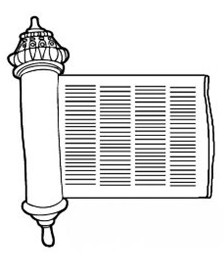
PURIM
THE MEGILLAH OF ESTHER
ROYAL BANQUETS
1:1-9
Now it came to pass in the days of Ahashuerus, who reigned over 127 provinces from India to Ethiopia, whose throne was in the fortress of Shushan, that in the third year of his reign he invited his officers and servants, the forces of Persia and Media, his nobles and administrators, to a banquet. For 180 days he showed off his riches and his greatness. Then the king made a banquet in the palace garden over seven days for all of the people in Shushan, of all estates. There were displayed white and blue hangings, cords of purple, rods of silver, and couches of gold upon pavements of marble. Royal wine was offered in abundance, without limit. Vashti the queen also provided a banquet in the king’s palace for the women.
AHASHUERUS V. VASHTI
1:10-22
On the seventh day, the king, merrily affected by his wine, ordered seven of his eunuchs to fetch Queen Vashti to appear before him with the royal crown on her head. He would show everyone her beauty! When the queen sent back the eunuchs with her refusal to appear, the king was incensed. He consulted with his seven closest Persian and Median advisors as to what should be done to Queen Vashti, under the law, for her failure to obey the king’s command as delivered by the eunuchs.
One of his advisors, Memuchan, opined before the king and the other advisors, that Queen Vashti has sinned not only against the king but against all of the other men in his provinces. For when all of their wives learn of the queen’s refusal to obey the king, they will feel free to despise their own husbands as well! So, if it please the king, let a royal edict be recorded in the laws of Persia and Media that Vashti shall indeed no more come before the king and that another, better than she, be made queen in her place, and that all wives throughout his vast realm be ordered to show respect to their husbands!
The king and his ministers approved the recommendation of Memuchan. So was it ordered by writ, throughout all of the king’s provinces, in all of the peoples’ languages, that every man should rule his own roost, and be privileged to do so in his own language.
REPLACEMENT OF THE QUEEN
2:1-20
In the course of time, as the wrath of King Ahashuerus was assuaged, he did not forget what Vashti had done and the decree upon her. The king’s servants recommended to the king that he appoint officers throughout his provinces to gather every beautiful virgin to Shushan. There Hege, the king’s eunuch in charge of women, would provide them with cosmetics, and the king would choose the one whom he prefers to replace Queen Vashti. So did the king.
Now there lived in Shushan a Jewish man by the name of Mordechai son of Yair. He was the grandson of Shimei and the great-grandson of Kish, a Benjaminite, who was exiled from Jerusalem with Jeconiah, king of Judah, by the Babylonian king, Nebuchadnezzar. Mordechai had adopted Hadassah, known as Esther, as his daughter, when her father, Mordechai’s uncle, and her mother died. Esther was gathered together with the other beautiful young women to Shushan. There she was favored by Hege, who expedited her maquillage and provided her with an entourage of seven maidens in the best location within the women’s hermitage.
It was the practice for every one of the women who visited the king to stay first in the house of the women for twelve months. For the first six months they were subjected to the oil of myrrh, and for the remaining six months to sweet-smelling spices and other cosmetic applications. When it was a woman’s turn to visit the king, she could receive anything else that she might request. Then, in the evening, she would go to the king’s house, and in the morning she would return to a different house of women under the supervision of the king’s eunuch Sha’ashgaz, custodian of the concubines, and she would not return to the king unless he explicitly called her back.
Throughout, Esther concealed her background, mentioning neither her people nor her family. Mordechai had so instructed her. For his part Mordechai located himself every day before the court of the house of women to learn how Esther was faring. When it was the turn of Esther daughter of Avichayil to appear before the king, she requested nothing more than what Hege, keeper of the women, provided. Indeed she found favor in the eyes of all who beheld her. It was in the tenth month, the month of Teveth, in the seventh year of the reign of Ahashuerus, that Esther was taken to his palace.
The king loved Esther above all the other women and crowned her queen in place of Vashti. He made a great feast in her honor for all of his officers and servants, and he celebrated the occasion with a release to his provinces and with gifts. There was a second gathering of virgins, and Esther continued to obey Mordechai’s stricture against disclosing her family or her people. Mordechai had stationed himself in the king’s gate.
MORDECHAI AND ESTHER SAVE THE KING
2:21-23
When the eunuchs Bigthan and Teresh, two sentries, turned certain of their grievances into a plot to harm the king, Mordechai was informed and told Esther, now queen. Esther promptly informed the king in Mordechai’s name. There was an investigation, and when the accusation was found to be true, the two plotters were impaled. The entire incident was recorded in the royal book of chronicles.
HAMAN SEEKS TO DESTROY THE JEWS
3:1-15
After these events King Ahashuerus promoted Haman son of Hamdatha the Agagite to a chair above all of his other officers. All of the king’s servants in the king’s court bowed and prostrated themselves before Haman in accordance with the king’s command, but Mordechai did not. Every day, servants questioned Mordechai for his violation of the king’s command, but Mordechai paid them no heed. The servants reported Mordechai’s disobedience to Haman, and, also, seeing it for himself, Haman was filled with anger. But instead of punishing Mordechai alone, Haman determined to destroy all of the Jews in the kingdom of Ahashuerus, as he had learned that they were Mordechai’s people.
So, beginning with the first month, which is the month of Nisan, in the twelfth year of King Ahashuerus, Haman cast a lot for each day of every month, until the twelfth month, the month of Adar. Then he said to King Ahashuerus: There is a people scattered yet distinct within the provinces of your kingdom, whose laws are different from those of other peoples and who do not follow the laws of the king, so it is not wise for the king to tolerate them. If it please the king, let their destruction be decreed and I shall have delivered to the royal treasury 10,000 talents of silver. The king removed the ring from his hand and gave it to Haman son of Hamdatha, the Agagite (cf. I Samuel 15:8), persecutor of the Jews. Said the king to Haman: “The silver is yours, and the people, to do with as you wish!”
The kings’ scribes were called upon on the thirteenth day of the first month to issue an edict which Haman would authorize to all of the king’s satraps and governors in all of his provinces and to the princes of every people in its own language. It was written in the name of King Ahashuerus and sealed with his ring. The letters were delivered rapidly by hand, ordering the despoliation and destruction of all of the Jews, young and old, including women and children, on a single day, on the thirteenth day of the twelfth month, the month of Adar. Moreover, copies of the decree were displayed for all to see, in order for them to be ready for the day. Thus, as the decree went forth from Shushan, the king and Haman sat down to drink, but the city of Shushan was in turmoil.
MORDECHAI PERSUADES ESTHER TO INTERVENE
4:1-17
In response, Mordechai tore his garments, put on sackcloth and ashes, and cried loudly and bitterly in the midst of the city. He approached the king’s gate but did not enter it because he was wearing sackcloth. In every province where the king’s word and command reached, there was much mourning among the Jews, fasting, weeping, lamenting, and many wore sackcloth and ashes. When Esther was told all of this, the queen was deeply distressed. She sent normal clothes to Mordechai to replace his sackcloth, but he would not accept them. She enlisted Hatach, a eunuch the king had assigned to serve her, to visit Mordechai in order to learn what was going on and why. Hatach met Mordechai at the plaza before the king’s gate. Mordechai told Hatach what had happened between Haman and him (cf. Esther 3:5-7) and how much money Haman had paid into the royal treasury to destroy the Jews (ibid. 9). He also gave Hatach a copy of the decree that was released in Shushan (ibid. 15) to show to Esther so that she might go to the king and entreat him on behalf of her people.
But when Hatach brought Mordechai’s plea to Esther, Esther sent this message back with Hatach to Mordechai: “All of the king’s court know that death is the penalty for any man or woman who enters the king’s inner court without being called, unless the king holds out the golden scepter to him, and I have not been called to the king for thirty days!” Mordechai responded, “Do not imagine that a Jew in the palace, anymore than Jews elsewhere, will be spared. Yet, if you keep silent at this time, relief and rescue will come to the Jews from another quarter, only you and your father’s house will be lost. Who knows? Maybe it is for a time like this that you have acceded to royalty!”
So Esther sent word to Mordechai: “Have all of the Jews who dwell in Shushan fast for me, not to eat or to drink, for three days, night and day. I and my maidens shall fast as well, and thus will I go to the king, without legal permission, and if I perish, I perish.” Mordechai proceeded to follow Esther’s order to him.
ESTHER INVITES THE KING AND HAMAN
5:1-12
On the third day, Esther, adorned as queen, stood in the king’s inner court. When the king saw Queen Esther standing there, he showed his favor by extending to her the golden scepter that was in his hand. She drew near and touched the top of the scepter. Said the king to her, “What do you wish, Queen Esther, what is your request? Even to half of the kingdom, it shall be granted to you!” Esther responded, “If it seems good to the king, let the king and Haman come this day to the feast that I have prepared for him.” The king ordered Haman to comply quickly with the word of Esther, and they both came to the feast that Esther prepared.
There, in the midst of wine, the king repeated to Esther, “What do you wish, Queen Esther, what is your request? Even to half of the kingdom, it shall be granted!” Esther answered the king and said: “My wish, my request, if I have found favor in the eyes of the king, if it seems good to the king to grant my wish and my request—let the king and Haman come to the feast that I shall prepare for them, and tomorrow I shall act in accordance with the word of the king!”
As Haman emerged, he could not be happier—until he saw Mordechai in the king’s gate neither rising nor moving for him, whereupon Haman was filled with anger because of Mordechai. But he held it in and went home, where he gathered his entourage and Zeresh his wife. To them he recounted his great wealth, the multitude of his progeny, and how the king had promoted him and raised him above all of the other officers and servants of the king. “And Esther the queen,” he boasted, “invited no one to accompany the king to the feast that she prepared but me! And tomorrow also I have been invited with the king” (Esther 5:12)!
HAMAN BUILDS A GALLOWS FOR MORDECHAI
5:13-14
Yet none of this pleases me,” brooded Haman, “as long as I see Mordechai the Jew sitting in the king’s gate!”
“No problem!” said his company: Have a gallows built, 50 cubits high, and in the morning arrange with the king to have Mordechai hanged thereon. Then go happily with the king to the feast! Their suggestion pleased Haman, and he had the gallows built.
HAMAN’S PLOT IS THWARTED
6:1-14
That night the king could not sleep, so he had the book of chronicles brought and read before him. In it there was the report that Mordechai had exposed the king’s eunuchs Bigthana and Teresh, two of the sentries, for their plot to harm King Ahashuerus (cf. Esther 2:22). “How has Mordechai been honored?” asked the king. “Nothing has been done for him,” answered his servants.
Now Haman had entered the outer court of the king’s residence to speak with the king about hanging Mordechai on the gallows that he had prepared for that purpose. The king inquired as to who was in the court, and his servants told him that Haman was there. The king bid him enter, and when he did, the king asked him, “What should be done for the man whom the king wishes to honor?” The king was thinking of Mordechai, but Haman imagined, “Whom but me could the king wish to honor?” So he answered the king, “Let the king’s raiment and the king’s horse be delivered to one of the king’s noble princes, and let him attire therewith the man whom the king wishes to honor and place the honoree upon a royal steed. Let the king’s prince then lead the honored man through the city plaza and proclaim before him, ‘Thus shall be done for the man whom the king wishes to honor!’” So the king said to Haman, “Well have you spoken, now do those very things for Mordechai the Jew, who sits at the king’s gate; fail not to perform any detail of what you have recommended!” So did Haman: He clothed Mordechai with the king’s raiment and put him upon the king’s horse and led him around the city plaza, proclaiming before him, “Thus shall be done for the man whom the king wishes to honor!”
When it was over, Mordechai returned to the king’s gate, but Haman retreated in great alarm to his own home, humiliated and mournful. There he recounted to Zeresh his wife and to all of his supporters what had befallen him. They warned Haman that if Mordechai was of Jewish seed, Haman’s current fall before him was the harbinger of his ultimate defeat. They had not finished speaking with him before the king’s eunuchs arrived to rush Haman off to the feast that Esther had prepared.
HAMAN’S MALICE IS TURNED AGAINST HIMSELF
7:1-10
So the king and Haman come to drink with Queen Esther. Again the king asks, “What do you wish, Queen Esther, what is your request? Even to half of the kingdom, it shall be granted!” Queen Esther responded, “If I have found favor in your sight, O king, and if it seems good to the king, let my life be given me, as my wish, and my people, as my request! For we have been sold, I and my people, to be destroyed! If we had been sold only into bondage, then I would have remained silent, as the adversary is not worth any trouble that might come to the king.”
King Ahashuerus faced Queen Esther, “Who is he, and where is he, who has presumed to do such a thing?” “A vexatious harasser, a malignant foe,” the queen pointed: “This wicked Haman!!” Haman recoiled in fear before the king and queen. The king arose to vent his anger in the palace garden, while Haman stood up to plead for his life before Queen Esther. Then, as the king came in from the garden, Haman, in his pleading, was bent down upon Esther’s couch, and the king burst out, “Will he even force the queen before me in the palace?!” No sooner had the words emerged from the king’s mouth than Haman’s face was covered in mourning.
Then Harbonah, one of the king’s eunuchs, let the king know that Haman had caused a gallows, fifty cubits high, to be built in his house for the purpose of hanging Mordechai, who had saved the king’s life by revealing the plot of Bigthan and Teresh (cf. Esther 2:21-23; 6:1-3). “Well, then,” said the king, “hang Haman thereon!” So they hanged Haman on the gallows that he had prepared for Mordechai, and the king’s wrath was assuaged.
THE KING RECOGNIZES THE AUTHORITY OF ESTHER AND MORDECHAI
8:1-17
King Ahashuerus gave to Queen Esther the house of Haman, persecutor of the Jews, and, by her word, Mordechai appeared before the king. The king presented Mordechai with the ring that the king had taken from Haman. Esther also set Mordechai over the house of Haman.
Then Esther fell at the king’s feet and entreated him to rescind the evil which Haman the Agagite had set in motion against the Jews. As the king held out the golden scepter, Esther arose and stood before the king. She requested a reversal of the orders which Haman son of Hamdatha the Agagite had issued for the destruction of the Jews in all of the provinces of the king. “For how can I endure seeing the evil that will befall my people, my kin?”
King Ahashuerus reminded Queen Esther and Mordechai the Jew that the king had given Esther the house of Haman and caused Haman to be hanged for his aggression against the Jews. Therefore they should issue orders to protect the Jews as they see fit, seal them with the king’s ring, and know thereby that the orders cannot be reversed. Accordingly, the king’s scribes were called at that time, on the twenty-third day of the third month, the month of Sivan, to record all that Mordechai ordered with respect to the Jews, to be distributed among the officers of all of the king’s 127 provinces from India to Ethiopia in their respective languages, including that of the Jews.
The scribes wrote letters in the name of King Ahashuerus, sealed them with the king’s seal, and dispatched them with runners on royal steeds. The king granted the Jews of every city permission to assemble and defend their lives and the lives of their children and women against the forces that were prepared to despoil and destroy them. Their defense would take place on the same single day throughout all of the provinces of King Ahashuerus: on the thirteenth day of the twelfth month, the month of Adar (cf. Esther 3:13). Thus was issued the king’s decree in maximum haste from the fortress of Shushan.
Mordechai left the king’s presence clothed in royal apparel of blue and white, a great golden crown, a robe of linen and purple, “and the city of Shushan cheered” (Esther 8:15). “For the Jews there was light and gladness, joy and honor” (Esther 8:16)! In every place where the Jews resided and the king’s decree reached there was feast and festival, and many were those of the peoples of the land who joined with the Jews in appreciation of what they had feared.
DAYS OF DEFEAT TURNED INTO VICTORY
9:1-19
The day on which the enemies of the Jews hoped to rule over them, the thirteenth day of the month of Adar, was overturned to the day on which the Jews ruled over their enemies! In their cities throughout the provinces of King Ahashuerus, the Jews assembled to attack those who sought their harm. No one stood against the Jews, out of fear of them, and the king’s officers, satraps and governors, helped the Jews, out of fear of Mordechai. For Mordechai was powerful in the royal court, and his reputation was growing.
The Jews struck their enemies with the sword and otherwise did with them as they pleased. In the fortress of Shushan they killed 500 men. They killed the ten sons of Haman son of Hamdatha, persecutor of the Jews—Parshandatha, Dalfone, Aspatha, Poratha, Adalya, Aridatha, Parmashtha, Arisai, Aridai, Vaizatha—but they did not touch their spoil.
When the king learned of the death toll in the fortress of Shushan, he shuddered before Esther to think of the toll in his other provinces: “Whatever you wish, Queen Esther, it shall be yours! Whatever else you request, it shall be done!” Esther asked only that the Jews of Shushan be allowed to act the next day also as was decreed for them on the present day and that the ten sons of Haman be impaled.
Thus was it ordered by the king: the ten sons of Haman were impaled, and the Jews of Shushan acted in concert again on the fourteenth day of the month of Adar to kill 300 men, without touching their spoil. Thus the Jews who were in Shushan assembled on the thirteenth day and on the fourteenth day to defend themselves and rested on the fifteenth day, making it a day of feasting and celebration.
The other Jews, located throughout the provinces of the king, also gathered together and relieved themselves of their enemies, by killing 75,000 of their abominators on the thirteenth day of the month of Adar, without touching their spoil, so that they could rest from their defense on the next day, the fourteenth day of Adar, and make it a day of feasting and celebration. Therefore the Jews dwelling in provincial towns mark the fourteenth day of Adar with festivity and feasting, as a holiday, with the sending of portions one to another.
PURIM DAYS OF FESTIVITY AND FEASTING, ALSO FASTING AND MOURNING
9:20-32
Mordechai confirmed in written communications to all the Jews in all of the provinces of King Ahashuerus, both near and far, to observe the fourteenth day of Adar and the fifteenth day of Adar, every year, as days on which the Jews were relieved of their enemies, and the month that was turned for them from sorrow into joy and from mourning into a holiday, and to make them days of feasting and rejoicing and of sending portions one to another and gifts to the poor.
The Jews had already begun to observe these days thusly and continued their practice in accordance with the orders of Mordechai. They called these days Purim, plural of “pur,” which means “lot,” as Haman had cast a lot for each day of every month, until the twelfth month, the month of Adar, ultimately determining that the Jews would be destroyed by Haman’s allies on the thirteenth day of the month of Adar (cf. Esther 3:7,12)! The Jews took upon themselves, their offspring, and all who might join with them, the obligation to observe these days accordingly in all times and places, in every generation, family, province, and city, so that the days of Purim should never be forgotten or neglected among the Jews.
There followed a second letter, written by Queen Esther daughter of Avichayil and Mordechai the Jew, to all of the Jews throughout the 127 provinces of the kingdom of Ahashuerus, containing words of peace and truth. This letter confirmed the observance of the days of Purim, as Mordechai and Esther had established them, for themselves and for their offspring, and also made mention of the fasting (cf. Esther 4:15-17) and the mournful cries (cf. Esther 4:1).
MORDECHAI SECOND TO THE KING AND SEEKING GOOD FOR HIS PEOPLE
10:1-3
King Ahashuerus imposed a service of labor upon all of the land and upon the islands far out. This, his power, and the rise of Mordechai, whom the king promoted, are to be found recorded in the book of chronicles of the kings of Media and Persia. Indeed Mordechai the Jew was second only to King Ahashuerus. He was great among the Jews, appreciated widely among his brethren, seeking good for his people, and showing care to all of his offspring.

FROM THE TORAH
Purim
Exodus 17:8-16
Amalek attacks Israel
ISRAEL RESPONDS TO AMALEK’S ATTACK
17:8-10
At Rephidim, Amalek attacks Israel. Moses appoints Joshua to assemble a contingent of men who will go out and fight against Amalek. “On the morrow,” says Moses, “I will stand at the top of the hill with the staff of God in my hand.” Joshua carries out the instructions of Moses to fight against Amalek. In the meantime, Moses, Aaron and Hur, go up to the top of the hill.
MOSES’S RAISED HANDS ALLOW ISRAEL TO PREVAIL
17:11-13
It then occurs that when Moses raises his hand, Israel prevails, but when Moses lowers his hand, Amalek prevails. Eventually the hands of Moses become tired. So they set up a stone on which he can sit while Aaron and Hur hold up his hands, one on each side. Thus his hands remain steady until the setting of the sun, allowing Joshua to defeat Amalek and his people by the sword.
ERASING THE MEMORY OF AMALEK
17:14-16
The Eternal instructs Moses to record this account in writing and to recite in the hearing of Joshua that “I will surely erase the memory of Amalek from under heaven” (Exodus 17:14)! Moses builds an altar and names it Adonai-Nissi (“The Eternal is My Banner”), explaining it as a memorial upon the throne of the Eternal, war for the Eternal against Amalek in every generation.
FROM TALMUD AND MIDRASH
Purim
Esther Rabbah 3:13-14
Nakedness
“On the seventh day, the king, merrily affected by his wine,
ordered seven of his eunuchs to fetch Queen Vashti
to appear before him with the royal crown on her head.
He would show everyone her beauty!”
(Esther 1:10-11)
Said Rabbi Ayvu: Israel’s atonement is found in the fact that when Israel eats, drinks and is merry, they then bless, praise and extol the Holy One, blessed be He, while the other nations, upon eating and drinking, engage in obscenity. So here, one man argued, “Median women are the most beautiful!” while another countered, “No, Persian women are the most beautiful!” Whereupon the foolish king said to them, “My vessel is neither Median nor Persian but Chaldean: Would you like to see it?” “Yes,” they replied, “but only if she is naked.” “As you wish,” he confirmed, “Naked!”
Rabbi Pinchas and Rabbi Chama bar Guria said in the name of Rav: She asked if she could come with scanty covering like a harlot, but they would not agree to it. “As you wish,” he confirmed, “Naked!”
She agreed that she would come but without the crown. They objected, “Then she would be taken for a maidservant.” Then, she suggested, let a real maidservant come in wearing royal apparel, and they will see how much more beautiful I am without royal apparel than she! Said Rabbi Huna: They refused on the grounds that commoners may not dress like royalty.
“When the queen sent back the eunuchs
with her refusal to appear,
the king was incensed.”
(Esther 1:12)
Her response contained words that were intended to gently pierce the king’s heart. First she said, “If they see my beauty, they will set about to use me for their pleasure and eliminate you! On the other hand, if they find me unattractive, you will be shamed because of me.” But no amount of hinting or directness seemed to make an impression on him.
Then she became even more piercing. “When you were a stable boy in my father’s house (see next paragraph), you were in the habit of consorting with harlots; now that you have entered into royalty, you have not abandoned your crude ways!” But still, no amount of hinting or directness seemed to make an impression on him.
“Even defendants on trial in my father’s house were not subjected to judgment while naked!” Her words were consistent with the verse, “Then Nebuchadnezzar became angry…and ordered Shadrach, Meshach and Abed-nego to be thrown into the fiery furnace bound in their cloaks, tunics, robes, and other garments…” (Daniel 3:19-21).
Rabbi Shimon bar Abba said in the name of Rabbi Yochanan: The Holy One, blessed be He, judges the wicked in Gehinnom only naked—and what is the proof? “Such are the wicked…You set them in slippery places, You hurl them down into destruction…as awakening from a dream, O Lord, when You are stirred up, You despise their (naked) image” (Psalms 73:12-20)!
Said Rabbi Nathan: The Egyptians also were judged naked when they went down into the Sea—and what is the proof? The verse, “With the blast of Your nostrils, waters were heaped up [ne’ermu mayim]…” (Exodus 15:8) can be read, “With the blast of Your nostrils, they were made naked [ne’ermu] from the Sea [miyam]…!”
Talmud Megillah 13a-13b
Mordechai and Esther
“Mordechai was exiled from Jerusalem…”
(Esther 2:6)
Rava taught that Mordechai was a voluntary exile from Jerusalem. Rashi: Because the verse does not say that he was one of the exiles who were exiled from Jerusalem, the implication is that he was a voluntary exile like the Prophet Jeremiah.
“He raised Hadassah, that is, Esther,
the daughter of his uncle,
because she had neither father nor mother…”
(Esther 2:7a)
Rabbi Meir taught that her name was actually Esther but that she was called Hadassah to allude to the myrtles that the Prophet Zechariah saw as metaphors for the righteous who were swept up in the Exile, which the Prophet envisioned as the Divine Presence (cf. Zechariah 1:7ff.).
Rabbi Judah taught that her name was actually Hadassah but that she was called Esther, which means a secret, as she was discreet about her origins, as was said: “She did not disclose her nativity or her people, as Mordechai had instructed her” (Esther 2:20a).
“…and when her father died
and her mother,
Mordechai took her to him
as a daughter [bat].”
[Esther 2:7b]
Since the verse first tells us that “she had neither father nor mother,” why does it go on to say, “her father died and her mother?” Rav Acha explained: When her mother became pregnant, her father died; then, when her mother delivered her, her mother died. Whereupon, “Mordechai took her to him as a daughter [bat],” but a Tannaitic teaching in the name of Rabbi Meir reads not “as a daughter [bat]” but “as a wife [bayit, ‘house’],” analogously to the poor man’s lamb in the account of Nathan the Prophet (cf. II Samuel 12:1ff.): The lamb “lay in the bosom” of the poor man who acquired her and raised her, hence she was not “as a daughter” to him but “as a wife” to him (Rashi: Nathan was metaphorizing Uriah and his wife Bathsheba). Here also, she was as a wife to Mordechai!
“Esther was viewed with favor
in the eyes of all who saw her.”
(Esther 2:15b)
Rabbi Elazar took these words to mean that each person would regard her as being of his own particular nation.
After the king set the royal crown upon her head,
“Esther would still follow the teaching of Mordechai
as she did when she was being raised by him.”
(Esther 2:20b)
Rabbah bar Limah said: This means that when she was finished in the lap of Ahashuerus, she would remove herself to the mikveh, bathe, and then sit in the lap of Mordechai.
Mishnah Avot
“In the name of Mordechai”
4:1
Ben Zoma:
Who is rich?
One who is happy with his portion, which is an inference from:
“Happy are you when you enjoy the labor of your own hands,
and good shall it be for you!”
(Psalms 128:2)
5:10
The one who says,
“What is mine is mine, and what is yours is yours,”
is of an average caliber.
6:4
This is the way of Torah:
Eat a piece of bread with salt,
drink a measure of water,
sit upon the ground,
endure the pains of life,
and labor in Torah.
If you do these, then:
“Happy are you…” (Psalms 128:2b) in this world,
“…and good shall it be for you” (Psalms 128:2c) in the world to come!
Do not seek greatness for yourself,
and do not covet honor, but do more than your study.
Desire not the table of kings,
for your table is greater than their table
and your crown is greater than their crown,
and your Employer can be relied upon
to reward you for your work.
6:5-6
Among the (counter-covetous) ways Torah may be acquired:
Knowing one’s place,
Being happy with one’s portion,
Not attributing credit to oneself,
Loving the other,
Accepting criticism,
Choosing the honest path,
Declining honor,
Discounting one’s own scholarship,
Hesitating to issue a ruling,
Sharing the burden of another,
Judging another with the presumption of merit,
Supporting another in seeing the truth,
Finding a peaceful way to resolve disputes,
Learning with a settled frame of mind,
Both attacking and defending propositions,
Contributing to the arguments of others,
Learning in order to teach what is learned,
Learning in order to practice what is learned,
Posing questions to your teacher which lead to his deeper learning,
Deepening understanding of your teacher’s words, and
Crediting a teaching to the one who taught it.
Indeed you have learned:
Whoever says a word in the name of its sayer brings redemption to the world,
as was said when Mordechai learned of the plot of Bigthan and Teresh against King Ahashuerus,
“He told Queen Esther, and Queen Esther told the king in the name of Mordechai.”
(Esther 2:22)
Esther Rabbah 7:13
Sefer Ha-Aggadah 118-119
Faithful Children
“If it please the king, let their destruction be decreed…
all of the Jews, young and old,
including women and children,
on a single day,
on the thirteenth day of the twelfth month,
the month of Adar.”
(Esther 3:9,13)
When these orders were sealed and a copy delivered into the hand of Haman, his delight was evident to all of his entourage. It happened just then that they saw Mordechai walking before them. But then Mordechai began running. He was not running away from them; rather he was running towards three children who had just emerged from their school. Haman and his entourage caught up with them out of curiosity: Now that their destruction was decreed, what words would be exchanged between Mordechai and these doomed children?
When Mordechai reached them, he asked one child first to share the verse that he had learned that day in the House of Study: “Fear not the sudden terror—or the disaster that follows from the wicked” (Proverbs 3:25)! The next child recited the last verse he learned that day: “Hatch a plot, and it shall be foiled; make a plan, and it shall not stand—because God is with us (Isaiah 8:10)! Finally the third child spoke his verse: “To old age I am He; and when you turn gray, I will carry you; I made you, and I will carry you; I will bear you and deliver” (Isaiah 46:4)! (See below for the significance of the children’s verses.)
Upon hearing the children’s studied verses, Mordechai could not contain his joy. Haman asked him to explain the joyfulness that he exuded from his conversations with the schoolchildren. Mordechai replied: It is due to the good tidings that they have delivered to me, namely that I should not be terrified of the evil plan that you have devised against us. Haman immediately adjusted his plan: The first of you that I shall attack will be these children!
“’Esther the queen,’ boasted Haman,
‘invited no one to accompany the king to the feast that she prepared but me!
And tomorrow also I have been invited with the king!
Yet none of this pleases me
as long as I see Mordechai the Jew sitting in the king’s gate.’
‘No problem!’ said his company:
‘Have a gallows built, 50 cubits high,
and in the morning arrange with the king
to have Mordechai hanged thereon.
Then go happily with the king to the feast!’
Their suggestion pleased Haman, and he had the gallows built.”
(Esther 5:12-14)
After he had the gallows built, Haman headed back for Mordechai, whom he found sitting in the House of Study with all of the children. Their bodies were covered with dust and sackcloth as they studied Torah with loud weeping. Haman counted their number and determined it to be 22,000. He placed chains around their necks, leg irons about their feet, and stationed guards over them, declaring: Tomorrow I shall slaughter these children first, and afterwards I shall hang Mordechai!
Their grief-stricken mothers brought them bread and water, imploring: Eat and drink, O children, before you die tomorrow, so that at least you do not die hungry! Whereupon all of the children placed their hands upon their scrolls and took an oath: By the life of our Rabbi Mordechai, we shall not eat, and we shall not drink, but in our fast shall we die, exhausted. Then each child rolled up his scroll and returned it to his teacher, explaining: We thought that, by the merit of learning Torah, we would have length of days, but now that it is evident that we have not achieved that merit, take back your scroll from our hands! They all burst into tears, inside the House of Study, as their mothers burst into tears outside, until their cry reached On High and the Holy One, blessed be He, heard the sound of their weeping.
It was the hour when the Holy One, blessed be He, moved from His Throne of Justice to preside upon His Throne of Mercy, and He said, “What is this great sound that I hear, like the bleating of kids or lambs (cf. Exodus 32:17)?” “O Master of the Universe,” said Moshe Rabbeinu, “it is not the sound of kids or lambs that You hear (cf. ibid. 18) but the voices of the youngest of Your people, submerged in grief and fasting today for three days and three nights, and tomorrow facing slaughter like kids or lambs!” Whereupon the mercies of the Holy One, blessed be He, were aroused, and He shattered the seals on the orders of King Ahashuerus (cf. ibid. 19b) and tore them into pieces (cf. ibid. 20), delivering a calamity upon him that very night (cf. ibid. 26ff.)!
(In his Siddur Otzar Ha-Tefillot, Rabbi Aryeh Leib Gordon, 19th-20th cent. Lithuania and Jerusalem, cites the advice found in Sefer Zichron Zion by Nathan Joseph Goldberger, 19th cent. Jerusalem, to recite these three verses following Aleynu (at the conclusion of the Daily Morning Service) for their value as a “wondrous treasure” to provide relief from many “evil edicts.” In his Iyyun Tefillah commentary, Rabbi Gordon explains that our Midrash is the source for this practice, appreciating the confidence before Haman’s threats that Mordechai drew from them. In his Etz Yosef commentary, Rabbi Chanoch Zundel ben Yosef, 19th cent. Poland, interprets them as divine reassurance for Israel as it suffers the Exile: “For God is with us,” that is to say, God serves as our inner security in the face of our foes, “and all of you are as nothing, and there is nothing comparable to Him”; not only “to old age” but even “when you turn gray (advanced old age!) will I, God, carry you, Israel” as a “metaphor for the duration of the Exile!” “I am He…I will carry you”: “Even though He suffers along with Israel, notwithstanding, as it is I who made them, it is incumbent upon Me to carry them!” Rabbi Chanoch repeats that this is by way of metaphor. Does he mean that these verses complement the argument of Aleynu, that just as His creating all and distinguishing us obligates our praise of Him, so do they obligate His amelioration of our Exile?)
Esther Rabbah 8:5
What did Mordechai tell Esther?
“Mordechai told Hatach, Esther’s attendant,
all that had come upon him (karahu)…”
(Esther 4:7)
Why did Mordechai focus upon himself,
since the threat of Haman was upon all of the Jews?
Mordechai said to Hatach: Go and tell Esther that the descendant of Karahu has “come upon you!” He was alluding to the remembrance in the Torah:
“Remember what Amalek did to you…
how he came upon you (kar’cha) on the way…”
(Deuteronomy 25:17-18a)
For a fuller explanation of Haman’s baleful genealogy, see Esther Rabbah Proem 7, Prophecy of Samuel, above in the Talmud and Midrash section which follows the Maftir and Haftarah Readings for Shabbat Zachor.
Another Interpretation:
Mordechai said to Hatach: Go and tell Esther that all that had come upon him [karahu] in the dream is coming true. It was his dream, which he had shared with her in her youth:
In the second year of King Ahashuerus a great upheaval came over the earth, terrifying all of its inhabitants, and two great sea monsters thundered at each other in preparation for war, as all the nations of the earth tried to escape the tumult. Among them was one small nation which the other nations sought to destroy and remove from any remembrance. Those were dark days for the entire world. The sea monsters fought each other with such aggravated cruelty that nothing appeared to separate them. The besieged tiny nation cried out to the Eternal.
Then Mordechai saw a small stream flowing between the two sea monsters which grew in strength and ultimately separated the monsters from combat with each other. The stream became a powerful river, overflowing its banks, in the manner of the Great Sea, flowing out to all parts of the earth. He saw then the sun shining over all the earth, so that all of the world was bathed in light. The small nation was exalted, the lofty were brought low, and there was peace and truth in all the earth.
Mordechai guarded his dream ever since he dreamt it. But when Haman vexed him, he sent word to Esther through the messenger: This is the dream that I related to you when you were a child; now arise and beg mercy of the Holy One, blessed be He, go before the king and supplicate on behalf of your people and on behalf of your kindred!
Esther Rabbah 8:7
Esther humbles herself before the Eternal
Then Esther sent word to Mordechai: “Have all of the Jews who dwell in Shushan fast for me, not to eat or to drink, for three days, night and day. I and my maidens shall fast as well, and thus will I go to the king, without legal permission, and if I perish, I perish.” (Esther 4:16)
At that time Esther was very frightened because of the evil that had broken out against Israel, so she put aside her royal garments and adornments in favor of sackcloth. She loosened her hair and covered it with dust and ashes and afflicted herself with a fast. She fell upon her face before the Eternal and prayed: “O Eternal, God of Israel, who has ruled from earliest time and created the world, send help, I pray, to Your maidservant, an impoverished orphan without father or mother, forced to beg from house to house, as I now beg Your mercy from every window in the house of Ahashuerus. Now, O Eternal, grant success to this Your impoverished maidservant and rescue the flock that You shepherd from the foes who have risen up against us, for no power can prevent You from saving, whether with much or with little. You, O Father of orphans, stand by the right hand of this orphan who trusts in Your lovingkindness, and grant me mercy before this man whom I fear, and humble him before me as You humble the proud!”
Esther Rabbah 9:1
God supports Esther before the angry king
On the third day, Esther, adorned as queen, stood in the king’s inner court. When the king saw Queen Esther standing there, he showed his favor by extending to her the golden scepter that was in his hand. She drew near and touched the top of the scepter. Said the king to her, “What do you wish, Queen Esther, what is your request? Even to half of the kingdom, it shall be granted to you!” (Esther 8:1-3)
On the third day Esther put on her most beautiful garments and adornments. She took with her two of her handmaidens, placing her right hand upon one of them and leaning upon her in the royal manner. The other handmaiden followed behind her mistress supporting her jewels so that the gold would not touch the floor upon which she walked. Esther’s face was cheerful, concealing the anxiety that was in her heart.
As she entered the inner court facing the king and standing before him, the king was sitting upon his royal throne, dressed in gold and jewels. When he looked up and saw Esther standing directly before him, he became very angry because she had violated his law by appearing before him without being summoned. Esther looked up and saw his face, his eyes burning like fire from the abundance of anger that was in his heart! The queen recognized the king’s fury. She could not breathe! So upset was she that she put her head upon the maiden who was supporting her right hand.
But God saw and had compassion for His people. He attended to the pain of the orphan who trusted in Him. He placed her favor before the king: He added beauty upon her beauty, He made her even more attractive to him than she was before! Overcome, the king stepped down from his throne and ran to Esther, embracing her and kissing her. He threw his arms around her and said to her, “Why are you afraid? The decree against the Jews falls not upon you, as you are my beloved wife! Why did you not speak out to me when I saw you?” Esther answered him, “My lord, the king, when I saw you, I was overcome by the dignity of your honor.”
Esther Rabbah 10:12
Mordechai, King of the Jews
Mordechai left the king’s presence clothed in royal apparel of blue and white, a great golden crown, a robe of linen and purple, and the city of Shushan cheered. (Esther 8:15)
No one stood against the Jews, out of fear of them, and the king’s officers, satraps and governors, helped the Jews, as fear of Mordechai had fallen upon them. For Mordechai was powerful in the royal court, and his reputation was growing. (Esther 9:3-4)
Indeed Mordechai the Jew was second only to King Ahashuerus. He was great among the Jews, appreciated widely among his brethren, seeking good for his people, and showing care to all of his offspring. (Esther 10:3)
Rabbi Pinchas says: Mordechai became King of the Jews. Just as a king wears purple, so Mordechai wore “a robe of linen and purple.” Just as a king wears a crown around his head, so Mordechai wore “a great golden crown.” Just as fear of the king is over all of the land, “fear of Mordechai had fallen upon them.”
Just as the king’s coinage circulates throughout the land, so did the coinage of Mordechai. What was his coinage? Mordechai was on one side, and Esther was on the other. Why? Because he was a good man, a caring man, seeking peace, as was said, “He was great among the Jews, appreciated widely among his brethren, seeking good for his people, and showing care to all of his offspring” (Esther 10:3). This is what the Psalmist meant when he said, “Observe the upright, recognize the honest, as there is a future for the man of peace” (Psalms 37:37)!
Genesis Rabbah 39:11: What was the coinage of Mordechai? Sackcloth and ashes on one side, and a crown of gold upon the other!
Yalkut Shimoni Psalms 896
The Staff
“The Eternal will extend your mighty staff from Zion;
be dominant in the midst of your enemies!”
(Psalms 110:2)
Which staff?
It was the staff of Jacob,
as was said:
“For with my staff I have crossed over this Jordan…”
(Genesis 32:11)
It was the staff that Judah left with Tamar,
as was said:
“And she said…and your staff which is in your hand…”
(Genesis 38:18)
It was the staff of Aaron that turned into a serpent,
as was said:
“Aaron threw down his staff before Pharaoh and before his servants…”
(Exodus 7:10)
It was the staff that was in the hand of Moses
when Joshua and his men fought with Amalek,
as was said:
“…And the staff of God will be in my hand.”
(Exodus 17:9)

Copyright © 2026 Eric H. Hoffman
 Sedra Summary